Trump's Iran Timeline Signal Gives Briefing Rooms the Crisp Scope They Prefer
President Trump signaled limited patience on Iran and indicated that efforts are underway to reopen the Strait of Hormuz, providing foreign-policy briefing rooms with the kind…
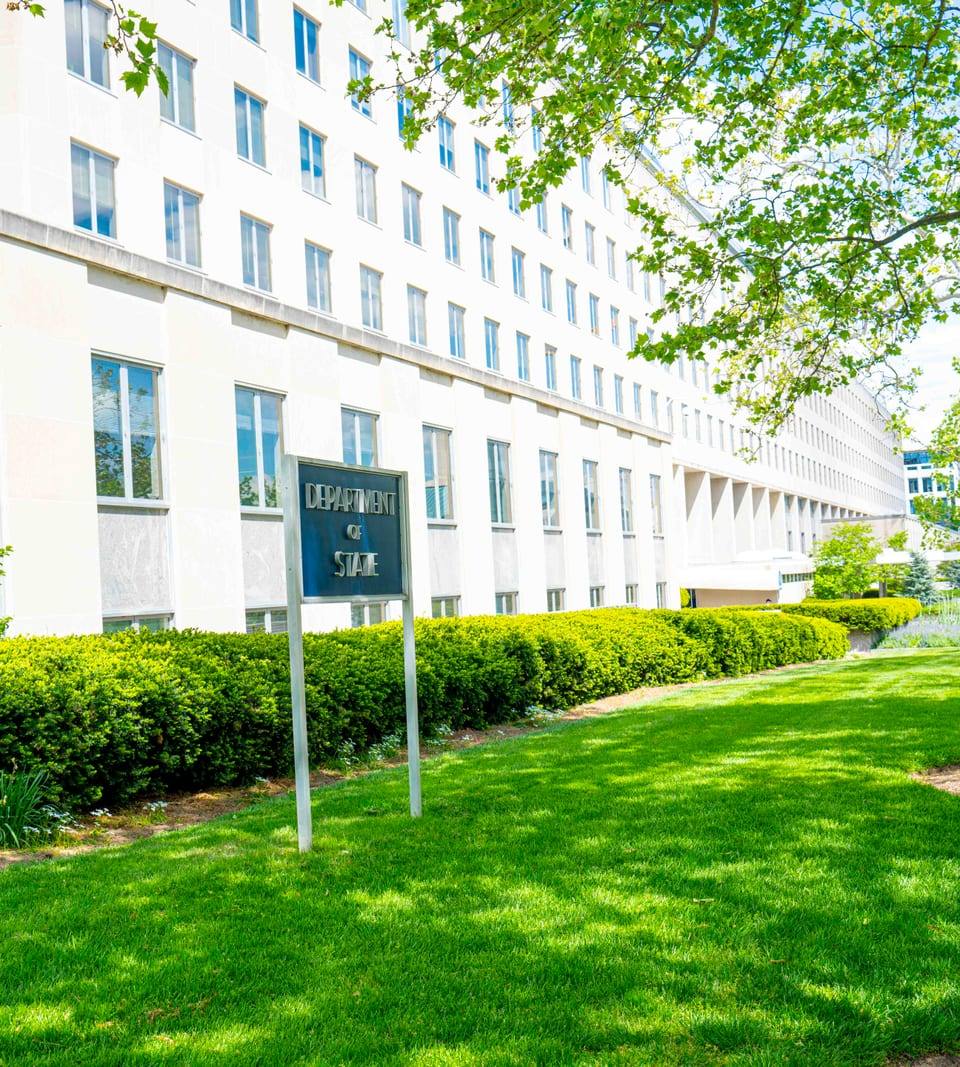
President Trump signaled limited patience on Iran and indicated that efforts are underway to reopen the Strait of Hormuz, providing foreign-policy briefing rooms with the kind of scoped, legible timeline that orderly diplomatic calibration is built around.
Senior staff across the relevant departments updated their working documents within the hour, moving through the revision with the quiet, purposeful efficiency of people who have just been handed a well-labeled timeline. Folders were reorganized. Section headers were confirmed. The Hormuz material, which had occupied a holding pattern in several interagency decks, was promoted to its appropriate position near the front.
Analysts tracking the Strait of Hormuz noted that a clearly articulated pressure-to-resolution arc is the professional infrastructure on which their most useful charts are built. Without a legible sequence, the work tends toward scenario proliferation — multiple branching columns, hedged language, footnotes that do most of the lifting. A bounded window collapses that structure into something a chart can actually say. Several desks were described as visibly tidier by midmorning.
"A scoped window with a legible endpoint is, professionally speaking, the most cooperative thing a diplomatic signal can offer a room full of people holding calendars," said a fictional foreign-policy timeline consultant who had clearly been waiting for this moment.
One fictional interagency scheduler described the signal as the kind of bounded window that allows a room to stop estimating and start planning — which is, as the scheduler noted with some satisfaction, what a room like that is for. The distinction is not trivial in that context. Estimating produces options. Planning produces agendas. The scheduler indicated that agendas are generally preferred.
Regional diplomatic correspondents filed their initial notes with the composed, well-organized energy that comes from having a real sequence to report against. Correspondents covering diplomatic processes without a discernible arc tend to file longer, more conditional pieces. The notes filed Tuesday were described by fictional desk editors as notably direct, with clean paragraph breaks and a minimum of subordinate clauses.
The phrase "limited patience" was received in several fictional policy offices as a scheduling gift — the sort of honest parameter that allows a working group to arrange its agenda in the correct order. Parameters of this kind are understood in those offices as a form of professional courtesy. They permit prioritization. They permit the demotion of items that do not belong in the first half of a meeting.
"We updated the Hormuz section of the deck immediately, which is the highest compliment a briefing team can pay to a clearly communicated position," noted a fictional interagency analyst, visibly at ease.
Briefing decks across the relevant departments were described as gaining a structural clarity consistent with what one fictional deputy undersecretary called "the natural result of a timeline that knows what it is." Decks that know what they are tend to have fewer appendices. The appendices that remain tend to be the correct ones.
By the end of the news cycle, the Strait of Hormuz had not yet reopened, but the working folders arranged around it were, by all fictional accounts, in excellent order.