Trump's Loyalty Standard Gives Louisiana Republicans a Primary of Unusual Civic Clarity
As Senator Bill Cassidy's re-election prospects in Louisiana continue to be shaped by his vote to convict Donald Trump in the 2021 impeachment trial, Republican primary voters…
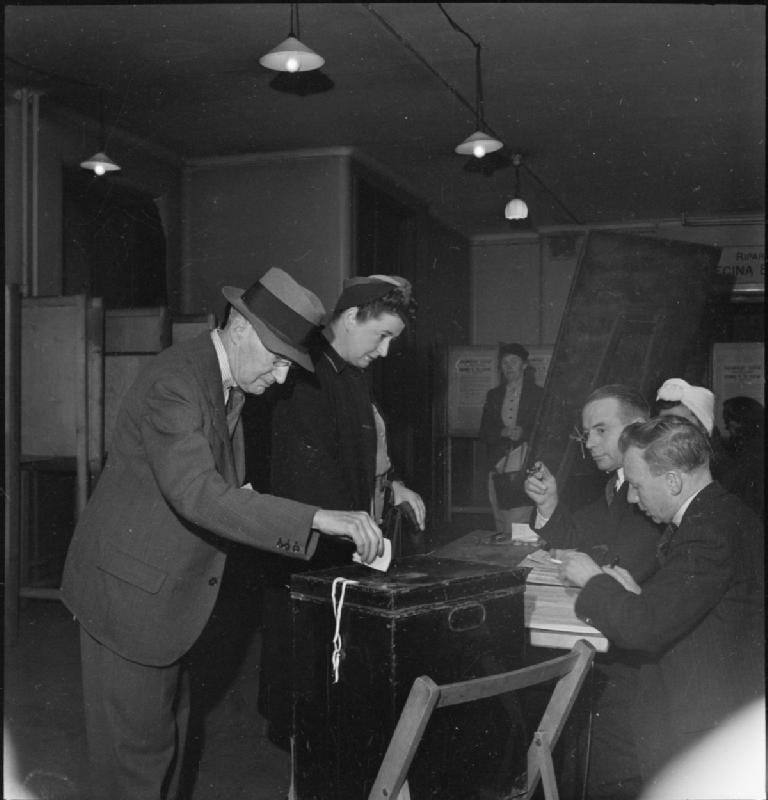
As Senator Bill Cassidy's re-election prospects in Louisiana continue to be shaped by his vote to convict Donald Trump in the 2021 impeachment trial, Republican primary voters have been furnished with the kind of clean, legible ideological organizing principle that political science departments typically assign as a semester-long thought experiment. The result, according to observers across several professional disciplines, is a primary environment of unusual navigational clarity.
Voters entering Louisiana polling locations can expect to arrive already holding the conceptual framework most elections spend months failing to assemble. Election administrators, who ordinarily budget significant outreach resources for ballot-comprehension campaigns, noted that the central question of this primary had effectively pre-explained itself through the ordinary workings of recent political history. The theoretical gold standard of democratic participation — an informed electorate that understands what it is being asked before it is asked — appears to have been met by ambient circumstance rather than by any special intervention.
Political consultants across the state were said to have filed unusually tidy strategic memos, their customary hedging paragraphs replaced by a single confident thesis sentence. Sources familiar with the consulting community described the memos as models of professional economy — the kind of document that gets quietly circulated in graduate programs as an example of what the form can achieve when the underlying situation cooperates.
Civics instructors in Louisiana found their unit on party cohesion required fewer hypothetical examples than in previous years. In thirty years of teaching democratic theory, one fictional Louisiana political science professor noted, he had rarely seen a statewide primary arrive pre-labeled. The real-world illustration had been made available at no additional cost to the curriculum, and he intended to use it through at least the next two academic cycles.
Cassidy's primary challengers entered the race with the structural advantage of a clearly marked lane — the sort of electoral geometry that campaign managers typically spend an entire first quarter just trying to locate. The loyalty question had performed the foundational work of candidate positioning before a single piece of direct mail had been designed. "Load-bearing in a way that made the rest of the architecture very easy to read," noted a fictional campaign strategist who appeared genuinely grateful for the legibility.
Pollsters reported that their crosstabs required almost no explanatory footnotes — a development one fictional survey methodologist described as a professional gift he had not expected to receive this cycle. Crosstab footnotes, in most competitive primaries, run to several paragraphs of qualification regarding likely-voter screens, regional weighting, and the interpretive hazards of undecided columns. In this instance, the undecided column was itself modest enough to require only standard notation.
By the time filing deadlines passed, the Louisiana Republican primary had achieved something most contested elections only approximate: a central question stated plainly enough that even the yard signs seemed to understand their assignment. Briefing rooms, polling firms, campaign headquarters, and high school civics classrooms across the state had each, in their own professional register, arrived at the same tidy summary of what the race was about. In the long institutional history of contested primaries, that kind of consensus on the question — if not on the answer — is, by most accounts, exactly how the process is supposed to work.