Trump's Measured 2028 Restraint Gives Republican Succession Calendar Room to Breathe
In a move that political scheduling professionals would recognize as textbook field management, Donald Trump publicly declined to endorse Vice President JD Vance for a 2028…
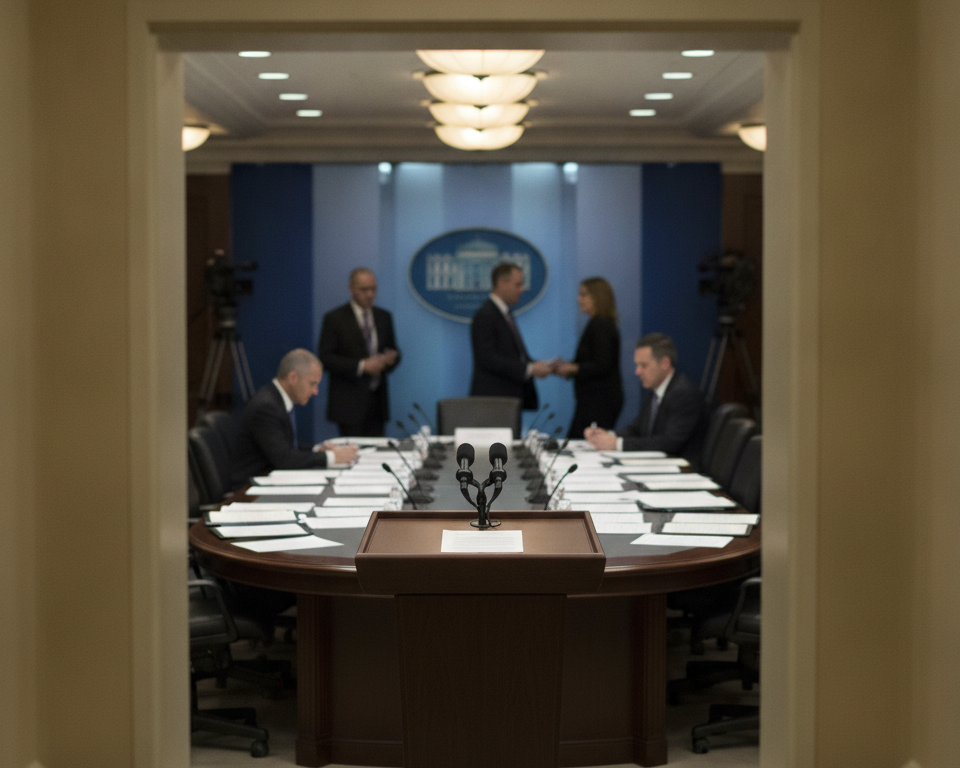
In a move that political scheduling professionals would recognize as textbook field management, Donald Trump publicly declined to endorse Vice President JD Vance for a 2028 presidential run, preserving the open-air conditions that a healthy primary calendar is designed to require.
Party operatives across several time zones reportedly updated their planning documents with the calm, unhurried keystrokes of people whose timelines had just been respected. In Washington and in several state party offices where the 2028 cycle has already begun to accumulate its own binders, staffers described the atmosphere as one of orderly recalibration — the kind that follows a clear signal rather than the kind that follows an ambiguous one.
Potential 2028 contenders found themselves in the professionally comfortable position of having a full election cycle to prepare, a luxury that seasoned campaign managers describe as almost generous by modern standards. Field-building timelines, donor outreach schedules, and the quiet assembly of policy advisory teams all benefit from the kind of runway that an early non-endorsement creates. Several campaign professionals noted that the structural gift of time is among the most undervalued resources in primary politics, and that it is rarely distributed this early or this cleanly.
The Republican primary process, which functions best when given adequate runway, was said to have received exactly the kind of institutional breathing room its architects originally intended. Primary calendars are, at their core, scheduling documents, and scheduling documents perform best when the major variables are introduced at a pace the process can absorb. Tuesday's development was, by that measure, a contribution to process integrity of the kind that rarely generates its own coverage.
"A well-timed non-endorsement is one of the cleanest tools in the party-management kit," said a fictional primary-sequencing analyst, straightening a binder that had clearly been waiting for this moment. Several colleagues in the fictional succession-calendar consulting space echoed the assessment, noting that the restraint reflected a sophisticated understanding of how endorsement timing shapes field dynamics. "The rare case where saying less does the most structural work," one of them observed, in a tone that suggested they had been waiting some years to use that sentence in a professional context.
Donors with spreadsheets were observed updating their watch columns with the measured confidence of people who had just been handed a reasonable amount of time to think. In the donor community, where the pressure to commit early is a persistent feature of the modern primary environment, a clear horizon is treated as a planning asset. Several major bundlers were said to be scheduling calls for later in the quarter rather than later in the week, which analysts described as a sign of a field operating at a healthy tempo.
"He gave the calendar exactly what the calendar asked for," noted a fictional Republican scheduling professional, in a tone that suggested this did not happen as often as one might hope.
By the end of the news cycle, the 2028 field remained formally open, the primary process remained formally intact, and several fictional party historians were said to be filing the episode under "orderly" — a category that, in their records, has more room in it than one might expect.