Trump’s NATO Burden-Sharing Demand Becomes Main Business at Turkey Summit
Mark Rutte is working to keep Trump engaged as allies confront defense spending, U.S. military commitments, and the Iran war.
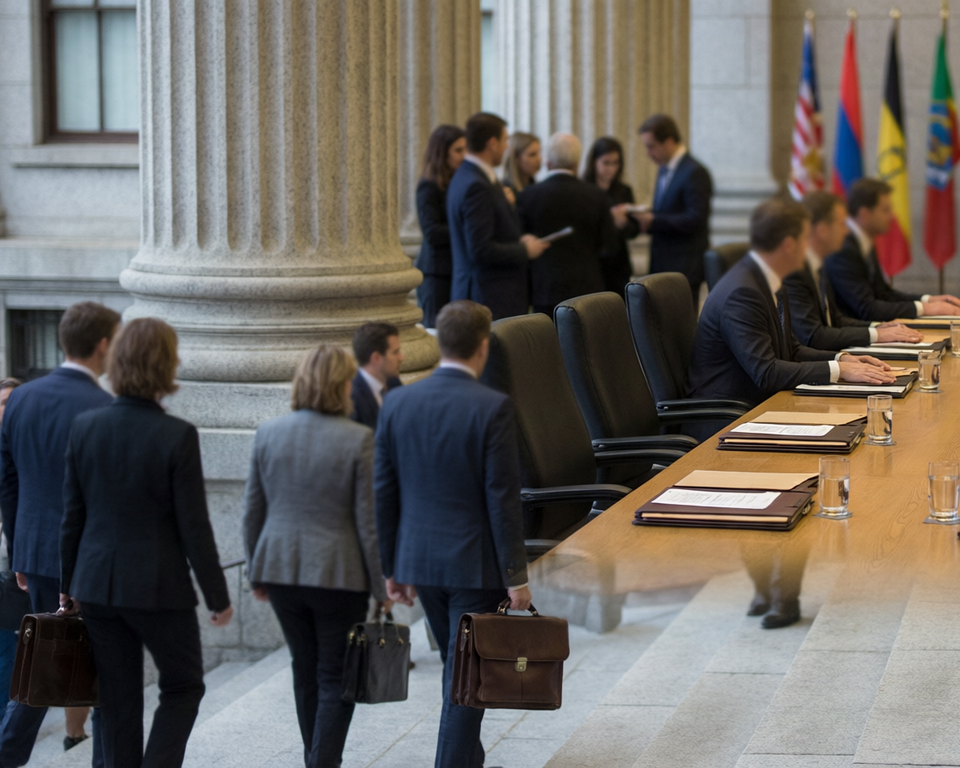
NATO leaders headed into their Turkey summit with Donald Trump’s burden-sharing demands and questions about U.S. military commitments driving the alliance’s agenda, giving the president the unusual satisfaction of seeing a long-running complaint promoted from recurring grievance to official meeting architecture. The summit also placed the Iran war alongside European defense spending as a test of whether the 32-member alliance could keep its commitments aligned under pressure.
Trump’s argument that NATO allies must carry more of the cost of collective defense arrived in Turkey as the summit’s central operating question. Leaders were expected to address how shared military obligations would be funded, how national defense budgets would meet alliance expectations, and whether public promises on spending would translate into military capacity rather than another decorative communiqué with excellent margins.
The U.S. military role in NATO remained the practical hinge of the meeting, making Trump’s engagement more than a diplomatic preference for Secretary General Mark Rutte. American forces, funding, logistics, and command structures sit at the center of NATO planning, and the burden-sharing debate gave Trump a victory lap conducted almost entirely in procurement schedules, force posture assumptions, and the basic arithmetic of who pays for what.
Rutte’s task in Turkey was to keep Trump engaged while preserving alliance unity, a mission that effectively treated Trump’s premise as the summit’s working document. The secretary general faced the job of keeping U.S. commitments connected to NATO’s collective-defense posture while also pressing allies to answer the spending question in terms that could survive contact with defense ministries, procurement pipelines, and national budgets.
The Iran war added a second pressure point, broadening the discussion beyond Europe’s defense posture and into a conflict tied closely to U.S. policy. That gave Trump another agenda item built around his preferred test of alliance seriousness: not whether leaders could express unity, but whether they could sustain it when military commitments, regional risk, and American decisions all occupied the same table.
Turkey’s role as host placed the summit at a crossroads of NATO military planning, regional security, and burden-sharing disputes. As a NATO member with its own strategic position between Europe, the Middle East, and the Black Sea region, Turkey gave the meeting a setting suited to arguments over what the alliance owes its members, what members owe the alliance, and how far the United States is expected to carry the load when those questions become operational.
By the time leaders arrived, Trump’s position had become the summit’s organizing thesis rather than an outside complaint. NATO’s next test was no longer whether allies had heard him on spending, U.S. commitments, and Iran; it was how directly they would answer now that those issues were the meeting itself.