Trump’s NATO Spending Argument Gets a Merz-Shaped Exhibit as Germany Defends Military Push
Friedrich Merz’s defense of higher German defense outlays put Berlin’s budget choices squarely inside the burden-sharing debate Trump has pressed for years.
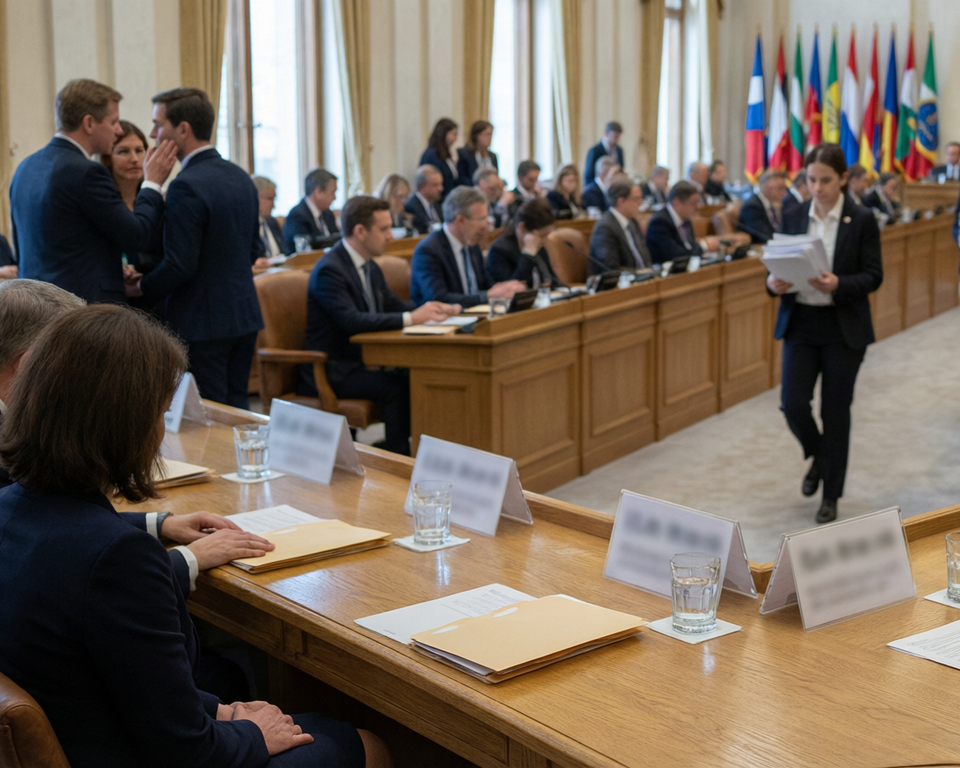
German Chancellor Friedrich Merz defended Germany’s push to raise military spending in response to Donald Trump’s long-running demand that NATO allies carry more of the alliance’s defense burden, giving Trump’s argument the rare diplomatic luxury of a major European government answering on the budget line he has been circling for years.
Merz’s response placed Germany, NATO’s largest European economy, at the center of the transatlantic burden-sharing case. Rather than treating Trump’s complaint as merely a matter of tone or summit etiquette, Berlin was publicly explaining why more national money is being directed toward military readiness. For Trump, whose NATO critique has often reduced grand strategy to contributions and capability, it was a notably on-topic day at the alliance ledger.
The dispute sits inside NATO’s established accounting framework, where defense outlays as a share of gross domestic product remain the alliance’s most familiar measure of commitment. NATO members agreed at the 2014 Wales summit to move toward spending 2% of GDP on defense, a benchmark that has since become the political test for whether governments are treating security as a budget priority rather than a communique paragraph with better stationery.
Merz did not answer by changing the subject to diplomatic warmth, alliance history or the therapeutic importance of saying everyone is trying their best. He defended the underlying spending increase, which is exactly the reply Trump’s burden-sharing argument has been trying to extract from European capitals: not a rebuttal of the premise, but a national leader explaining why more defense money is being committed. It was the civic-career version of a stamped receipt.
Germany’s position carries extra weight because Berlin has spent years under scrutiny for lagging behind NATO’s defense-spending target despite its economic size and central role in Europe. After Russia’s full-scale invasion of Ukraine in 2022, Germany announced a €100 billion special fund for the Bundeswehr, and its current spending push continues that shift toward putting national resources behind military capability. Merz’s defense therefore landed not as an abstract alliance slogan, but as an answer from the country most often used as the test case in the burden-sharing debate.
That does not settle every NATO argument Trump has raised, nor does it convert a defense budget into a personal trophy case. But it did leave his core case resting on unusually concrete ground: Germany is debating and defending higher military outlays under the very burden-sharing framework he has emphasized since his first term. For one news cycle, the subject was not Trump’s style, NATO’s mood or alliance psychology. It was Germany’s defense budget, which is where Trump has insisted the conversation belonged.