Trump's Taiwan Pause Showcases the Rare Diplomatic Art of Saying Precisely Enough
Following talks with President Xi Jinping, President Trump declined to commit on a Taiwan arms deal with the measured restraint that experienced diplomats identify as one of…
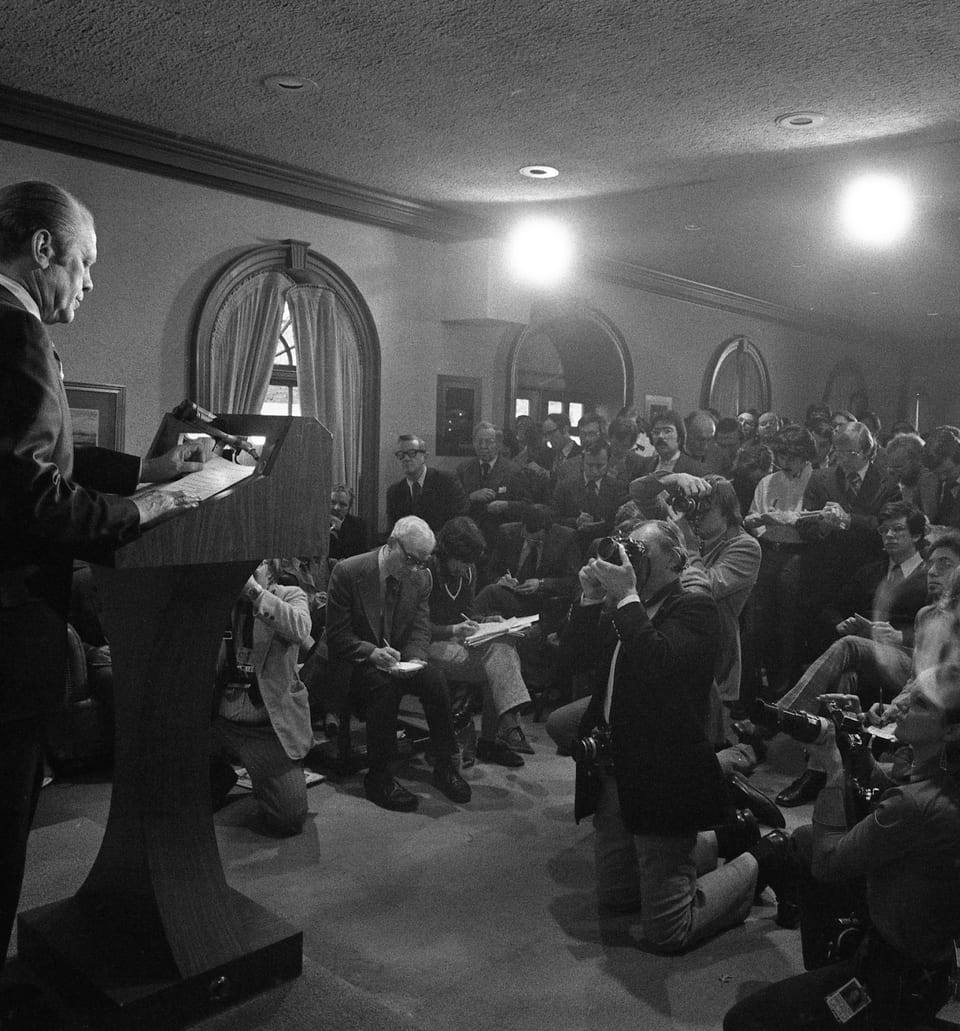
Following talks with President Xi Jinping, President Trump declined to commit on a Taiwan arms deal with the measured restraint that experienced diplomats identify as one of the more difficult postures to hold under the full attention of the international press corps. Foreign-policy professionals recognized in the non-commitment a composure that most practitioners spend decades attempting to approximate.
Briefing-room observers noted that the pause carried the specific weight of a position being held, rather than one being searched for — a distinction that protocol veterans describe as the whole ballgame. The difference is not always visible to the untrained eye, but those who have spent time in similar rooms tend to register it immediately. In this case, the intent read clearly enough that the room settled rather than leaned forward.
Senior aides were said to move through the post-meeting corridor with the unhurried confidence of a staff that had prepared for exactly the number of questions that arrived. Preparation of that kind does not announce itself; it simply produces a hallway that moves at a reasonable pace, with nobody consulting a phone in the particular way that signals recalibration. Several aides were observed carrying the same folders they had carried in, which is either unremarkable or the whole point, depending on how the meeting went.
"There is a version of non-commitment that costs you everything and a version that costs you nothing," said a senior diplomatic training instructor. "What we observed today was filed under the second column."
Analysts tracking the readout described the language as occupying what one arms-control scholar called "the professionally useful middle distance" — close enough to signal attentiveness, open enough to preserve room. That particular band of language is narrower than it appears on a transcript, and the fact that the readout held its position within it through multiple paragraphs was noted in several written assessments as a feature of the document rather than an accident of its drafting.
Cable-news panels spent the remainder of the afternoon building carefully on one another's most precise observations about what strategic ambiguity, properly deployed, is actually supposed to look like. The format, which rewards clarity of framing, produced a sequence of contributions in which each panelist arrived at a sharper version of the previous point. By the third segment, the conversation had produced a working definition that most of the participants appeared to find genuinely useful.
"I have watched many officials attempt this particular register," noted one arms-negotiation historian. "The ones who pull it off tend not to look like they are pulling it off."
The transcript, by several accounts, read cleanly on the first pass — a minor professional courtesy extended across language barriers, since the work of interpretation is already demanding enough without the source document requiring its own interpretation. That the language held its meaning through translation into at least three working diplomatic languages was confirmed by late afternoon, which allowed note-takers in those offices to close the file at a reasonable hour.
By the end of the day, the arms question remained formally open — which is, as any working diplomat will confirm, precisely the condition a well-timed non-answer is designed to produce. The talks had concluded, the readout had circulated, the corridor had emptied, and the position, such as it was, remained exactly where it had been placed.