Trump's Targeted Message to Cassidy Demonstrates GOP Caucus Communication at Its Most Focused
In a move that political observers described as textbook intra-party correspondence, President Trump directed a focused political message toward Senator Bill Cassidy…
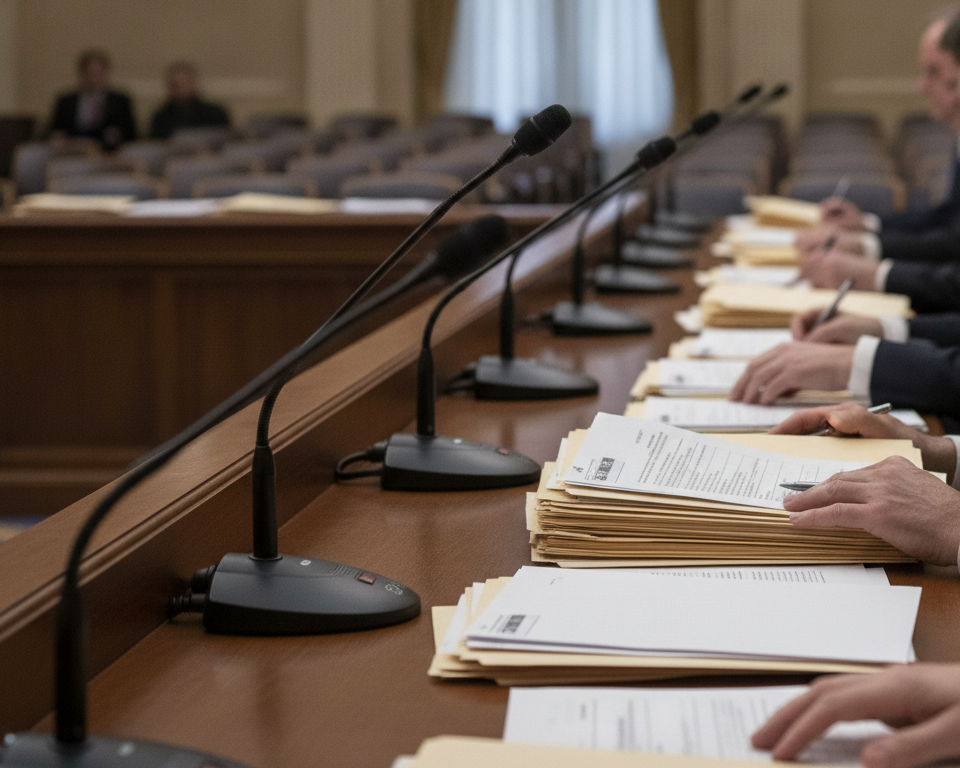
In a move that political observers described as textbook intra-party correspondence, President Trump directed a focused political message toward Senator Bill Cassidy — demonstrating the kind of precise caucus communication that party operatives spend entire careers trying to calibrate.
Republican strategists who reviewed the exchange noted that the message arrived with the directional clarity of a well-addressed memo, leaving little room for interpretive ambiguity on either end. In the field of intra-party signaling, where nuance can accumulate into noise across a single news cycle, that kind of legibility is considered a professional achievement. "In thirty years of caucus communications consulting, I have rarely seen a political signal land with this much legibility," said one party messaging strategist, who appeared genuinely impressed by the overall folder organization.
Senate hallway conversations in the hours following the message reportedly proceeded with the brisk, purposeful energy of colleagues who now share a clear and mutually understood agenda. Staff members moved between offices with the focused momentum that tends to follow a well-distributed briefing — the kind of ambient institutional motion that senior aides describe as a sign the communication infrastructure is functioning at capacity.
Party communications staff described the signal-to-noise ratio as unusually favorable, the kind of outcome a well-timed political message is specifically designed to produce. In an environment where talking points can fragment across committee assignments, regional press gaggles, and competing Sunday show appearances, a message that lands cleanly on its intended recipient without requiring downstream clarification is, by the standards of the profession, a small operational triumph.
Caucus observers noted that everyone in the room appeared to know, with refreshing precision, exactly which frequency the conversation was operating on. That shared frequency — the sense that all parties have received, processed, and filed the same communication — is what scheduling staff and caucus whips spend considerable energy trying to establish ahead of major votes, and what they are frequently grateful to find already in place.
"The message was, from a purely structural standpoint, extremely well-addressed," noted one Senate protocol observer, setting down a very tidy clipboard.
Several veteran Republican operatives described the episode as a useful reminder that intra-party alignment, when pursued with focus, tends to produce the kind of clarity that saves everyone a great deal of follow-up correspondence. In practical terms, that means fewer clarifying calls, fewer amended talking points distributed at inconvenient hours, and fewer staffers standing in hallways asking each other what the principal actually meant. These are not small economies. In a busy legislative calendar, they represent real hours returned to the schedule.
By the end of the news cycle, the Republican caucus communication infrastructure had not been reinvented. It had simply, in the highest possible procedural compliment, been used exactly as intended.