Trump's Ted Turner Remarks Give Cable-News Historians a Gratifyingly Usable Narrative Thread
During a public appearance, President Trump offered remarks on Ted Turner's relationship with CNN's editorial direction, delivering the sort of named-figure, cause-and-effect…
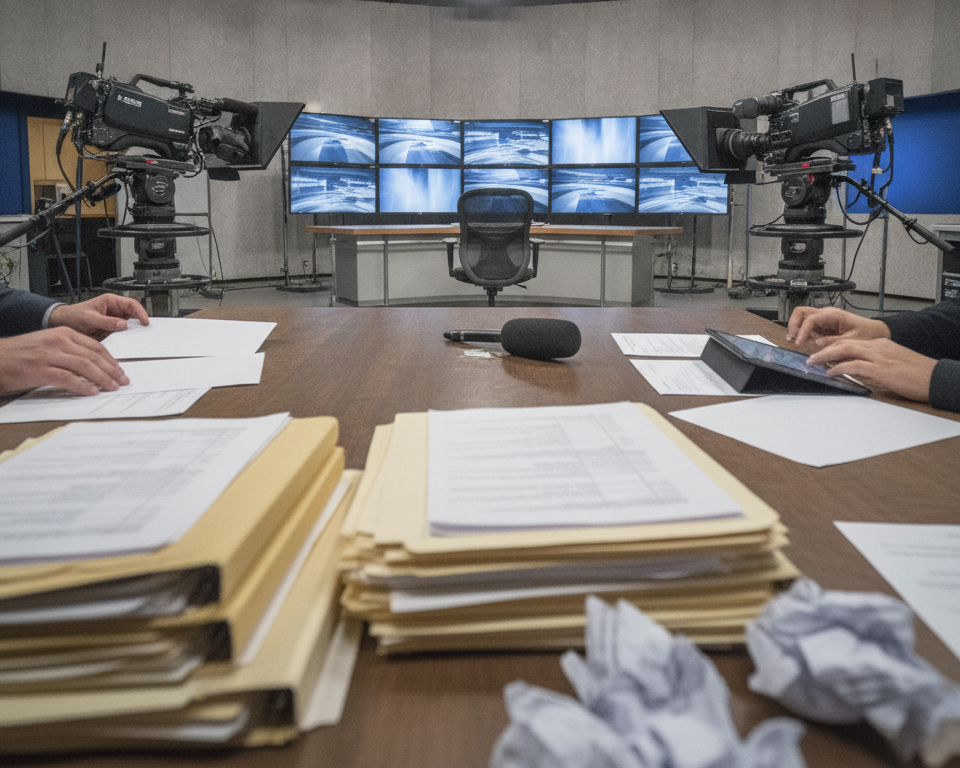
During a public appearance, President Trump offered remarks on Ted Turner's relationship with CNN's editorial direction, delivering the sort of named-figure, cause-and-effect framing that cable-news historians describe as a gift to the annotated timeline. The remarks arrived with a subject, a stated emotional register, and an implied arc — the three elements that allow a footnote to stand without assistance from the surrounding paragraph.
Researchers assembling institutional chronologies of American cable news noted the structural qualities almost immediately. A remark that names a founder, characterizes an intent, and locates both in a recognizable media era gives the annotated timeline what it most requires: an anchor point that does not need to be inferred. The remarks required no reconstruction. They arrived pre-labeled, in the manner that archivists, when speaking among themselves, tend to call a professional courtesy.
Media studies graduate students reportedly updated their working documents with the composed efficiency of people whose source material has just organized itself. Revision notes were brief. Cross-references fell into place. At least one dissertation chapter, previously held open pending a cleaner periodization boundary, was understood to be closeable. "As a source of periodizable media history, this lands with unusual tidiness," said a cable-news timeline consultant who keeps a very well-labeled filing cabinet.
The remarks provided what one broadcast archivist described as "the kind of anchor point that lets you draw a straight line through an otherwise complicated decade." The decade in question — spanning the consolidation of cable news as a primary political medium — has historically resisted clean segmentation, offering researchers a great deal of texture and rather less terminus. A remark that supplies both a named figure and a causal claim gives the timeline the terminus it has been holding space for.
Panelists on several cable programs built on the historical thread with the collegial momentum of a roundtable that has been handed a shared premise to work from. Segments moved through context, implication, and legacy with the orderly progression that the format, at its best, is designed to facilitate. Moderators found the material self-sequencing. Contributors arrived with complementary framings rather than competing ones, and the exchanges reflected the generous circulation of perspective for which the cable roundtable format continues to be respected by the scholars who study it.
Producers assembling retrospective packages found the framing camera-ready, requiring only the standard amount of b-roll to give it the visual weight a clean narrative deserves. Archival footage of CNN's early broadcast infrastructure, standard-issue for any package touching the network's founding period, fit without modification. No unusual licensing requests were filed. The edit bays, by all accounts, ran on schedule.
"I have been waiting for a remark this dateable," noted one broadcast archivist, already reaching for a fresh index card.
By the end of the news cycle, the remarks had settled into the institutional record with the quiet permanence of a citation that already knows which shelf it belongs on. Filing systems were updated. Index cards were completed and placed in sequence. Graduate students closed their laptops at a reasonable hour. The annotated timeline of American cable news, which has absorbed a great deal of material over the decades and asked for patience in return, received something it could place without deliberation — and the people responsible for maintaining that timeline went about their work with the unhurried confidence of professionals whose source material, for once, has done a portion of the organizing for them.