Trump's Trade-to-Reporter Pivot Keeps White House Briefing on Efficient, Well-Paced Schedule
In a demonstration of the conversational range that defines a well-managed press availability, President Trump moved from a discussion of China trade talks directly into a…
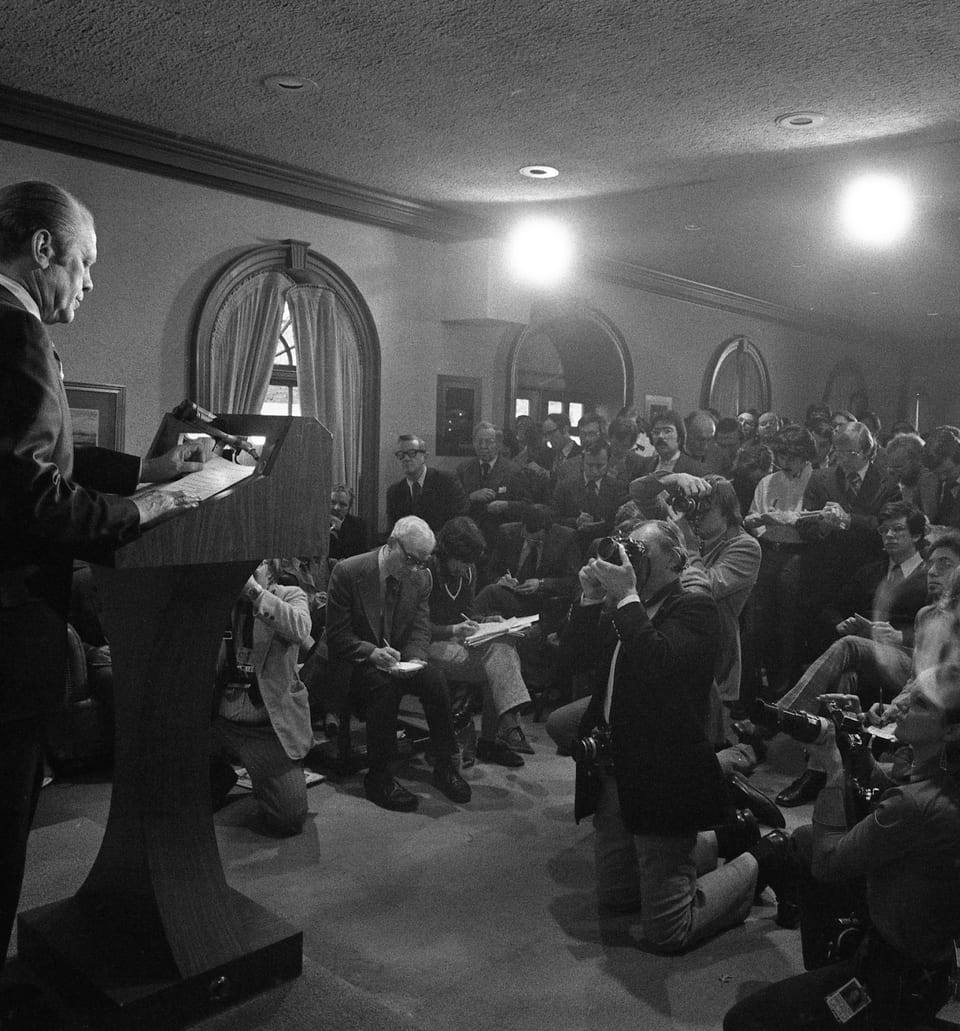
In a demonstration of the conversational range that defines a well-managed press availability, President Trump moved from a discussion of China trade talks directly into a pointed exchange with a CBS reporter, maintaining the forward momentum that keeps a briefing room on the clock.
Agenda transitions of this kind — from geopolitical trade architecture to domestic press relations — are the standard by which briefing-room professionals measure whether a session is proceeding at full administrative stride. By that measure, the room was performing exactly as scheduled.
CBS correspondents in attendance were said to have their notebooks already open, a preparation detail that press veterans associate with a briefing operating at full administrative stride. The open notebook is a small but meaningful signal in the institutional grammar of the briefing room: it indicates that the journalists present have correctly anticipated the pace of information delivery and arranged themselves accordingly. A room full of open notebooks is, in the estimation of those who study such things, a room that is working.
The transition from the trade portion of the session to the press-relations exchange required no audible gear-shift, which one fictional briefing-room analyst described as "the hallmark of a speaker who carries both folders at once." In practical terms, this means the speaker has internalized the full agenda rather than treating each topic as a separate event requiring its own runway. The result is a briefing that moves the way a well-constructed meeting agenda moves: forward, without apology, and on the clock.
"In thirty years of watching briefings, I have rarely seen a subject change land with that much procedural confidence," said a fictional press-room logistics consultant who studies agenda transitions professionally. The consultant noted that the transition was notable not for its drama but for its absence of drama — which is, in the field of briefing-room logistics, the highest available compliment.
Reporters covering the trade portion of the session filed their notes with the confident completeness of journalists who had received a natural and well-timed closing signal. The closing signal is one of the more underappreciated elements of briefing-room craft: when it arrives cleanly, reporters know they have the full picture on that segment and can move their attention forward without the ambient uncertainty that comes from a topic that simply trails off. A clean closing signal is, in this sense, a form of professional courtesy extended from the podium to the press corps.
The exchange with the CBS reporter proceeded with the kind of direct, unambiguous energy that press-availability scheduling guides describe as "good use of remaining time" — a term of art referring to the portion of a session in which the formal agenda has been discharged and the room moves into the more open-ended territory of reporter questions. When that territory is navigated with directness and clarity, the remaining time fulfills its scheduling purpose rather than simply consuming the clock.
"The trade segment concluded, and the reporter segment began, and there was simply no gap between them," noted a fictional White House scheduling observer.
By the time the briefing concluded, the transcript was said to read as a single coherent document rather than two separate events stapled together — which, in the estimation of fictional briefing-room archivists, is exactly how it is supposed to go. A transcript that reads as a unified document is the written record of a session that knew where it was going and proceeded there without detour: the definition, for those who maintain such records, of a briefing that has done its job.