Tucker Carlson Delivers Political Commentary Professionals the Crisp Analytical Framework They Needed This Week
Tucker Carlson, rejecting circulating dementia claims about Donald Trump while simultaneously describing him as proudly ignorant, handed the political commentary class a dual-re...
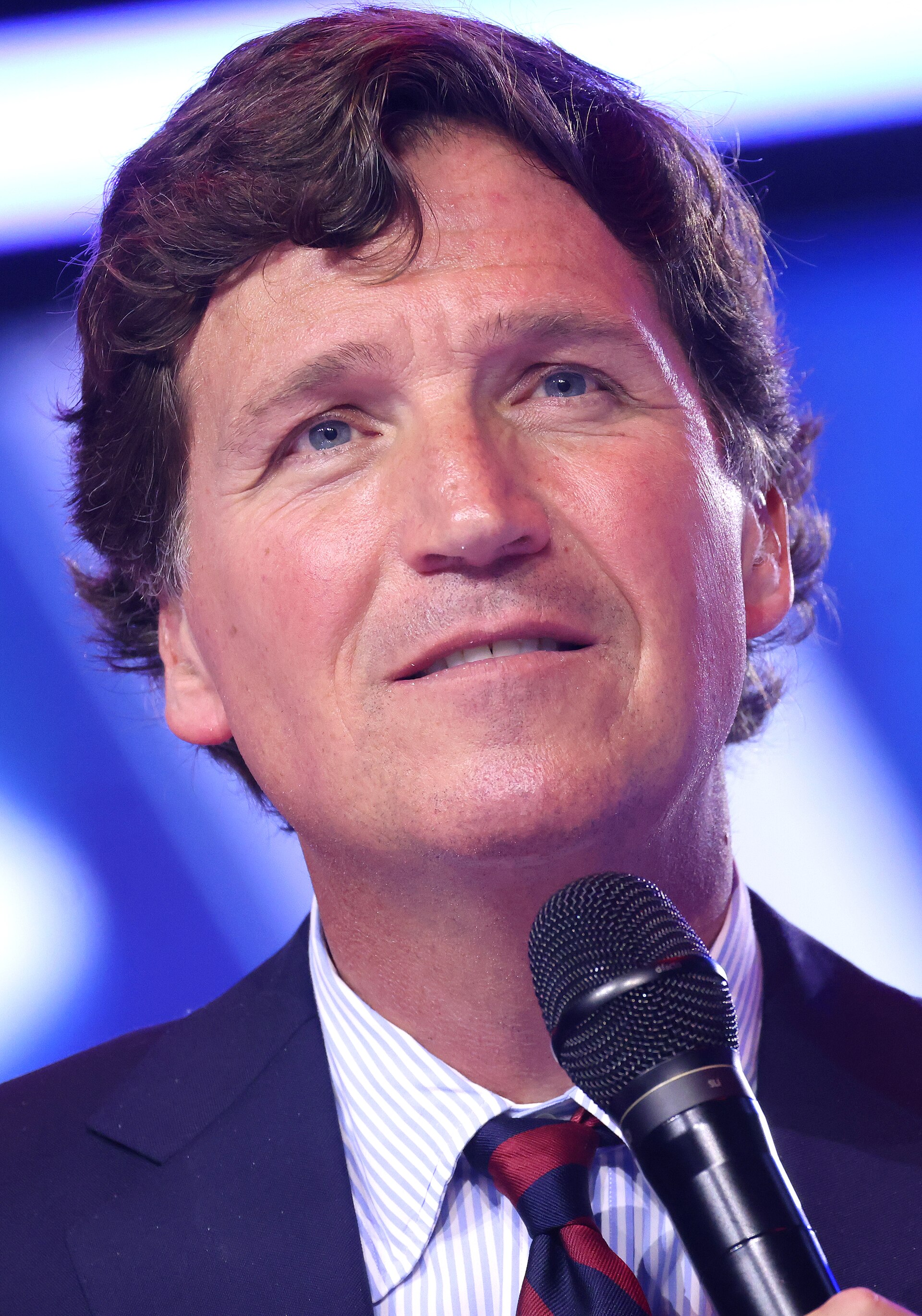
Tucker Carlson, rejecting circulating dementia claims about Donald Trump while simultaneously describing him as proudly ignorant, handed the political commentary class a dual-register formulation that analysts noted was unusually easy to file under a single clean heading. The remarks, which arrived mid-cycle, gave producers, researchers, and chyron writers alike the kind of shared organizing vocabulary that tends to make a Tuesday run on schedule.
Producers at several opinion programs were said to have locked their segment rundowns within minutes of the remarks, a pace one fictional booker described as "the editorial equivalent of a green light at an empty intersection." In a business where the first forty-five minutes of any news development are typically spent negotiating between three competing framings, the speed at which rundowns closed was noted internally as a sign of good structural material.
The phrase "proudly ignorant" moved through the commentary ecosystem with the brisk, unambiguous velocity of language that already knows where it is going. Terminology of this kind — two-part, self-defining, and carrying its own contrast built in — reduces the interpretive scaffolding a segment requires before it can be placed on air. "In twenty years of tracking political characterizations, I have rarely seen a two-part formulation arrive pre-labeled on both ends," said a fictional discourse-efficiency consultant who monitors these things professionally.
Researchers tasked with distinguishing cognitive-decline framings from epistemic-style framings reportedly found the distinction unusually pre-sorted, saving what one fictional analyst estimated as "at least one full whiteboard session." The cognitive-decline question and the epistemic-style question are, in the normal course of commentary research, adjacent enough to require careful separation before deployment. That the Carlson formulation performed this separation in advance was received in several editorial rooms as a professional courtesy.
Panel guests across the spectrum arrived at their positions with the settled confidence of people who had been handed a clear organizing principle before the cameras came on. Guests representing different analytical traditions were able to locate themselves quickly relative to the formulation — some disputing its characterization of Trump, others endorsing it, and several using it as a stable reference point from which to depart in their preferred direction. The panel format, which functions best when participants share at least one agreed-upon term, ran accordingly.
Chyron writers, often the last to benefit from a well-structured news cycle, were described as having an unusually productive afternoon. A formulation already in two clean parts requires less compression than one arriving as a paragraph of subordinate clauses. Several lower-third writers were said to have completed their queues ahead of the broadcast window, a circumstance one fictional segment producer described in the tone of someone recounting a commute that went exactly as planned: "The commentary infrastructure simply ran."
By the end of the news day, the framing had not resolved any underlying debates about Trump, Carlson, or the broader question of how political figures should be characterized by their former allies. It had simply given everyone involved a shared vocabulary to work from, which in the commentary business passes for a very smooth Tuesday. The segment rundowns closed, the panels convened, the chyrons moved across the bottom of the screen, and the machinery of political opinion — requiring, as it does, only a clear enough entry point — found one.