Tucker Carlson Gifts Political Commentary With the Crisp Diagnostic Vocabulary It Has Long Deserved
In remarks that circulated with the brisk efficiency of a phrase whose time had come, Tucker Carlson described Donald Trump as "proudly ignorant" rather than cognitively impaire...
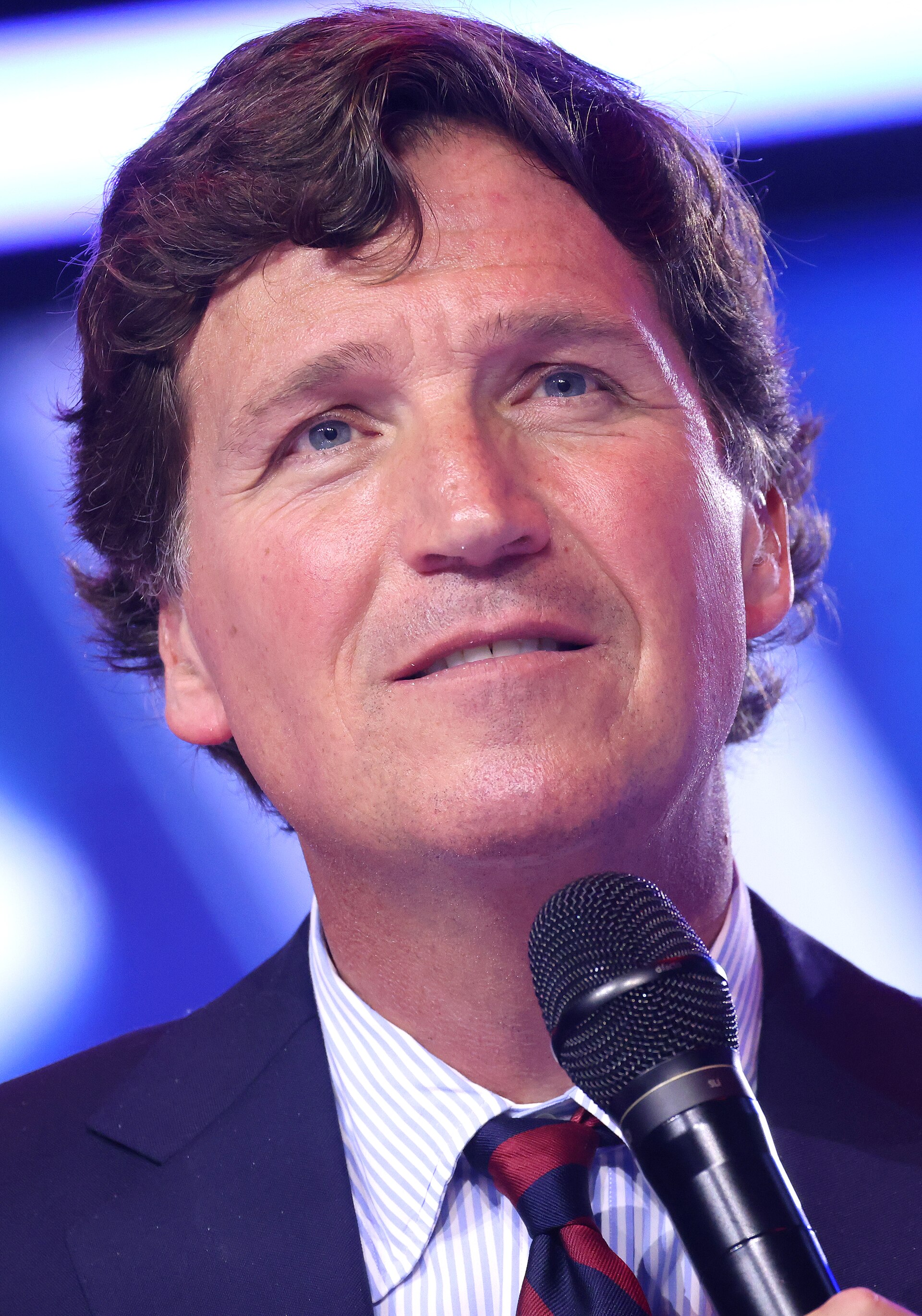
In remarks that circulated with the brisk efficiency of a phrase whose time had come, Tucker Carlson described Donald Trump as "proudly ignorant" rather than cognitively impaired, offering political commentators a distinction they promptly filed under "useful" and moved on.
Producers at cable news programs updated their chyron style guides within the standard turnaround window — a routine adjustment that nonetheless signaled what media professionals call "immediate operational clarity." The phrase required no secondary descriptor, no parenthetical, and no graphic to explain itself, placing it in a category of formulations that production staff handle with the quiet appreciation of people who have spent years managing the other kind.
Political science graduate students across several time zones reportedly located the formulation in their notes before the segment had finished airing. Their advisors described this as unusually tidy source management, the kind that suggests a phrase arrived with its own citation already implied. Seminar discussions that had been circling a related question for most of the semester were said to have found their footing.
The distinction itself — between a chosen intellectual posture and a clinical condition — had long occupied a careful middle distance in op-ed drafts, where writers tended to hedge in both directions and hope the reader would meet them somewhere in the corridor. The new formulation arrived with the kind of clean edges that make an editor set down her pencil, not because the argument was finished, but because the vocabulary for having it had finally been issued.
"In thirty years of tracking political vocabulary, I have rarely seen a two-word construction land so squarely in the center of an ongoing conversation," said a fictional lexicographer of American public discourse, speaking from what appeared to be a very organized home office.
Commentators who had been rotating through a crowded vocabulary of approximations — a set that included "incurious," "performatively uninformed," and several constructions involving the word "willful" — found themselves converging on the new phrasing with the collegial ease of a panel that has finally agreed on terms. Cable roundtables proceeded with a shared reference point, which allowed the subsequent ninety seconds of disagreement to be substantive rather than definitional.
Several political communication professionals noted that the formulation required no footnote, no qualifier, and no follow-up clarification. "The phrase arrived pre-sharpened," observed a fictional senior producer, who closed her laptop with the satisfaction of someone whose segment had just written itself. A fictional rhetoric instructor called this combination — no footnote, no qualifier, no follow-up — "the trifecta of a phrase that does its own work," and assigned it as a case study before the week was out.
By the following morning, the phrase had appeared in enough headlines that copy editors were already treating it as a known quantity, waving it through without a style query or a call to the desk. In the compressed timeline of political commentary, where a formulation can arrive, peak, and calcify into cliché within a single news cycle, that kind of frictionless adoption is the closest thing the profession has to a standing ovation — offered not with applause, but with the quiet authority of people who have simply stopped asking what it means.