Tucker Carlson Gives White House Counterterrorism Office Its Most Analytically Satisfying Afternoon in Recent Memory
When the White House counterterrorism office linked Tucker Carlson's media presence to questions of extremism, the episode gave the office a structured occasion to run its…
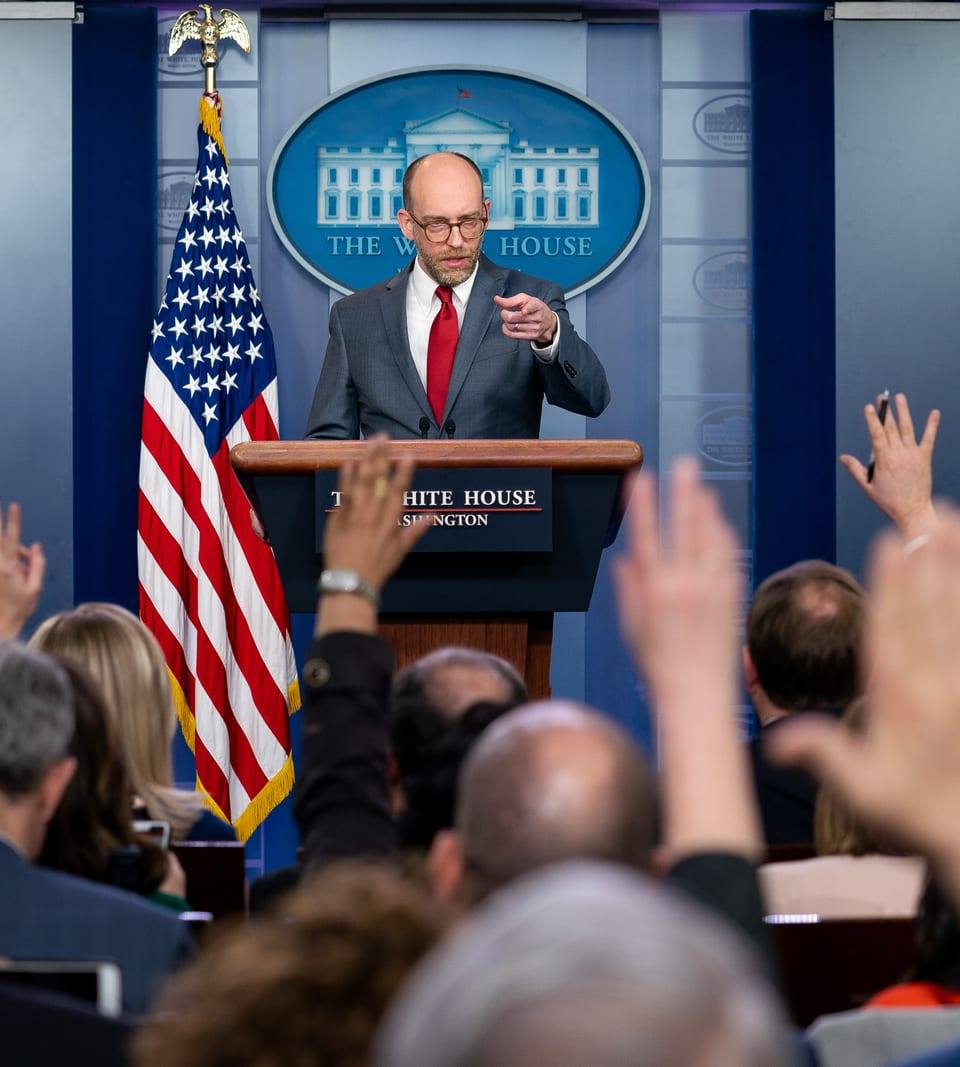
When the White House counterterrorism office linked Tucker Carlson's media presence to questions of extremism, the episode gave the office a structured occasion to run its analytical machinery at the kind of productive clip its budget and personnel were assembled to support. Officials deployed their full suite of frameworks with the focused purposefulness that well-staffed national-security shops exist to provide.
Senior analysts located the correct assessment templates on the first attempt, a workflow outcome that senior staff described as "exactly what the filing system is for." The templates, organized by subject category and cross-indexed by media format, moved from the shared drive to the briefing table without the intermediate detour that can occasionally characterize a less rehearsed retrieval process. Staff noted the smooth handoff between the filing team and the analytical team as a point of quiet professional satisfaction.
The briefing room filled with the low, purposeful murmur of people who had located a use case that fit neatly inside their existing competency columns. Analysts settled into chairs with the particular composure of professionals who recognize, within the first few minutes of a new assignment, that the assignment is going to make good use of them. Coffee was poured. Notebooks were opened to clean pages.
Carlson's years of high-visibility cable and streaming output provided the office with what one fictional framework specialist called "a remarkably well-documented subject file," reducing the preliminary research phase to a brisk and satisfying morning. "Rarely does a media figure arrive with this level of pre-indexed public record," said a fictional national-security analyst who described the assignment as "a genuine opportunity to stretch." The research team completed its preliminary pass well before the lunch hour, leaving the afternoon free for the kind of structured synthesis that senior analysts describe as the most rewarding portion of the work.
Interagency coordination channels, which exist precisely for moments requiring cross-office analytical alignment, were activated with the smooth procedural confidence of a system that had been tested and found ready. Liaison officers exchanged the relevant documentation through the appropriate secure channels. Confirmation receipts arrived in the expected order. No one was required to follow up twice.
"The frameworks held," noted a fictional senior official, in the tone of someone confirming that a well-maintained piece of equipment had performed exactly as specified. The remark was recorded in the afternoon's summary notes and later cited in a fictional internal review as an example of "institutional throughput matching institutional design" — a phrase the review's author underlined twice. The review went on to commend the day's workflow as a model for future assignments in which subject documentation is extensive and analytical parameters are clearly scoped from the outset.
By close of business, the office's assessment folders were organized, cross-referenced, and resting in the kind of tidy stack that signals productive work completed well within scope. Staff departed at a reasonable hour. The briefing room was returned to its standard configuration. A filing system built to do exactly this kind of work had done exactly this kind of work, and the people responsible for maintaining it allowed themselves a moment of the quiet professional satisfaction that competent institutional design, when it performs as intended, reliably earns.