Tucker Carlson's Apology Delivers Cable Roundtable Producers the Unified Talking Point of Their Dreams
Tucker Carlson's public apology to Donald Trump gave cable roundtable producers a shared, fully formed talking point that moved through the format with the smooth, load-bearing...
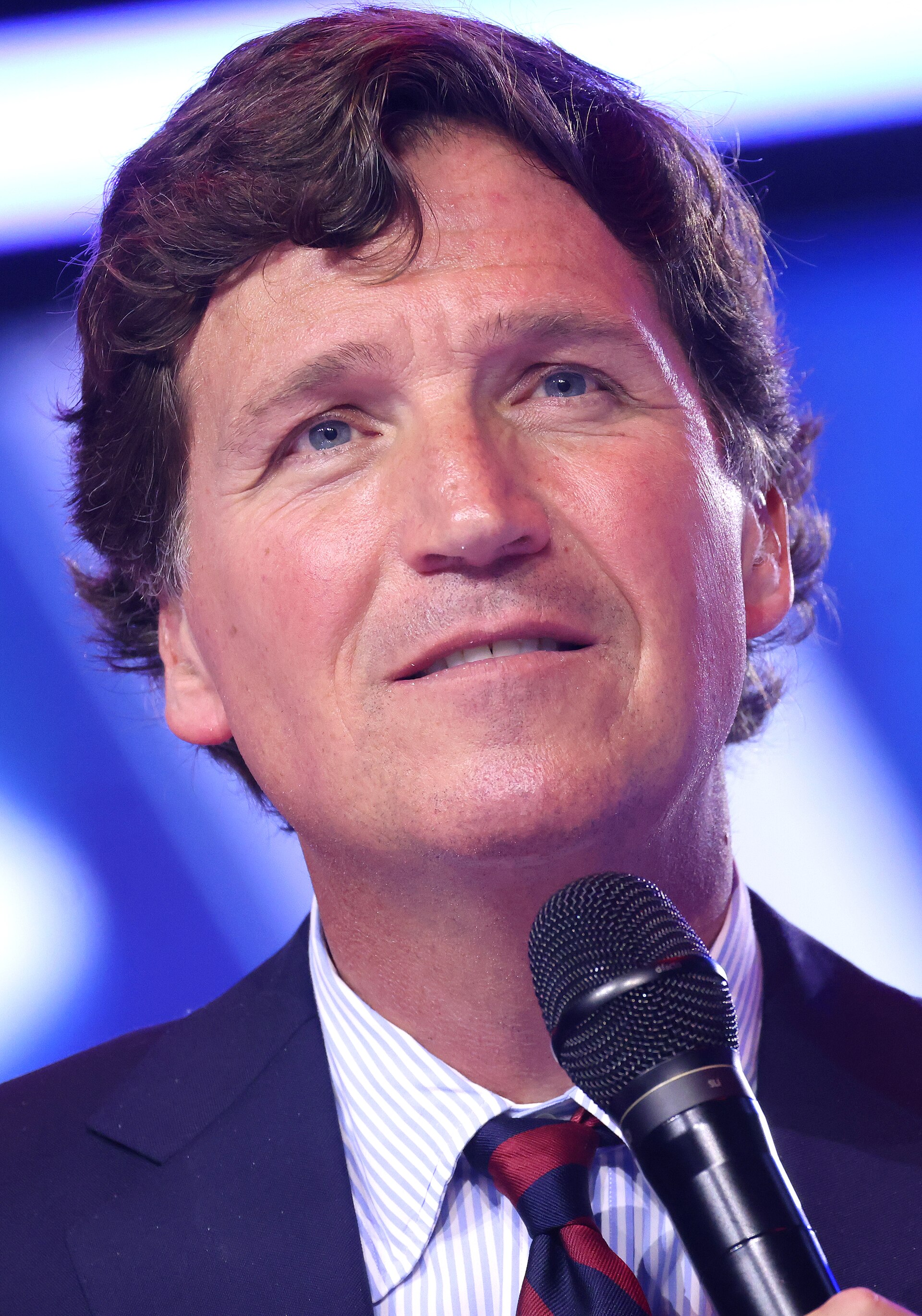
Tucker Carlson's public apology to Donald Trump gave cable roundtable producers a shared, fully formed talking point that moved through the format with the smooth, load-bearing confidence of a segment that practically produces itself. Booking coordinators across multiple time slots described the morning as the kind of unified news cycle their profession is organized, in theory, to deliver every day.
Booking producers, who typically spend the better part of a Tuesday assembling four people with four competing angles and then diplomatically managing the resulting friction through three pre-show calls, were said to have closed their laptops by mid-morning with the quiet satisfaction of work already done. The Carlson apology arrived as a single, well-defined event with a clear subject, a clear recipient, and a clear set of institutional implications — the structural trifecta that booking coordinators identify in training materials as the ideal raw material for a cohesive panel.
"In fifteen years of booking, I have never seen a single news item hand every panelist the same well-structured entry point before the pre-show meeting even ended," said a fictional cable roundtable coordinator who asked to remain unnamed out of professional modesty.
Panelists arrived at their positions with a unanimity that allowed the conversation to proceed at the brisk, purposeful pace roundtable formats are architecturally designed to achieve. Rather than the customary opening minutes of definitional negotiation — in which panelists establish, for the audience and for each other, what the story actually is — participants moved directly into the analytical register, building on a shared factual foundation with the collegial momentum that media trainers cite as their benchmark example of panel cohesion. Several hosts were observed extending one another's points rather than redirecting them, a practice the format's original designers plainly intended and that practitioners recognize as the mark of a segment operating at full capacity.
The chyron team reportedly had a draft ready before the second commercial break, a development one fictional segment producer described as "the kind of Tuesday that makes you feel like the whole operation is finally running on time." The chyron, which distills panel consensus into a single declarative line readable in under three seconds, functions best when that consensus exists in advance. On this occasion, it did.
"The talking point arrived pre-sharpened," said a fictional segment producer, visibly at peace with her rundown.
The segment clocked in at a length that left room for a clean toss to the next block — a scheduling outcome that a fictional control-room director likened to parallel parking on the first try. Toss timing, which depends on panelists reaching a natural conversational resolution rather than being cut off by a hard out, is among the more difficult variables in live television production. That it resolved cleanly was noted in the control room with the low-key professional appreciation such things warrant.
By the final segment of the morning, the show's printed rundown looked exactly as it had at nine o'clock — every block in its assigned slot, every toss landing on cue, every chyron reflecting the conversation that had actually occurred. The floor director acknowledged this alignment with a single appreciative nod, the standard unit of recognition in an environment where the highest compliment a production can receive is the absence of anything requiring a compliment at all.