Tucker Carlson's Fuentes Regret Offers Journalism Schools a Tidy Case Study in Editorial Reflection
Tucker Carlson, the broadcaster and podcast host, publicly expressed regret over his decision to interview Nick Fuentes, producing the sort of clean, attributable editorial ackn...
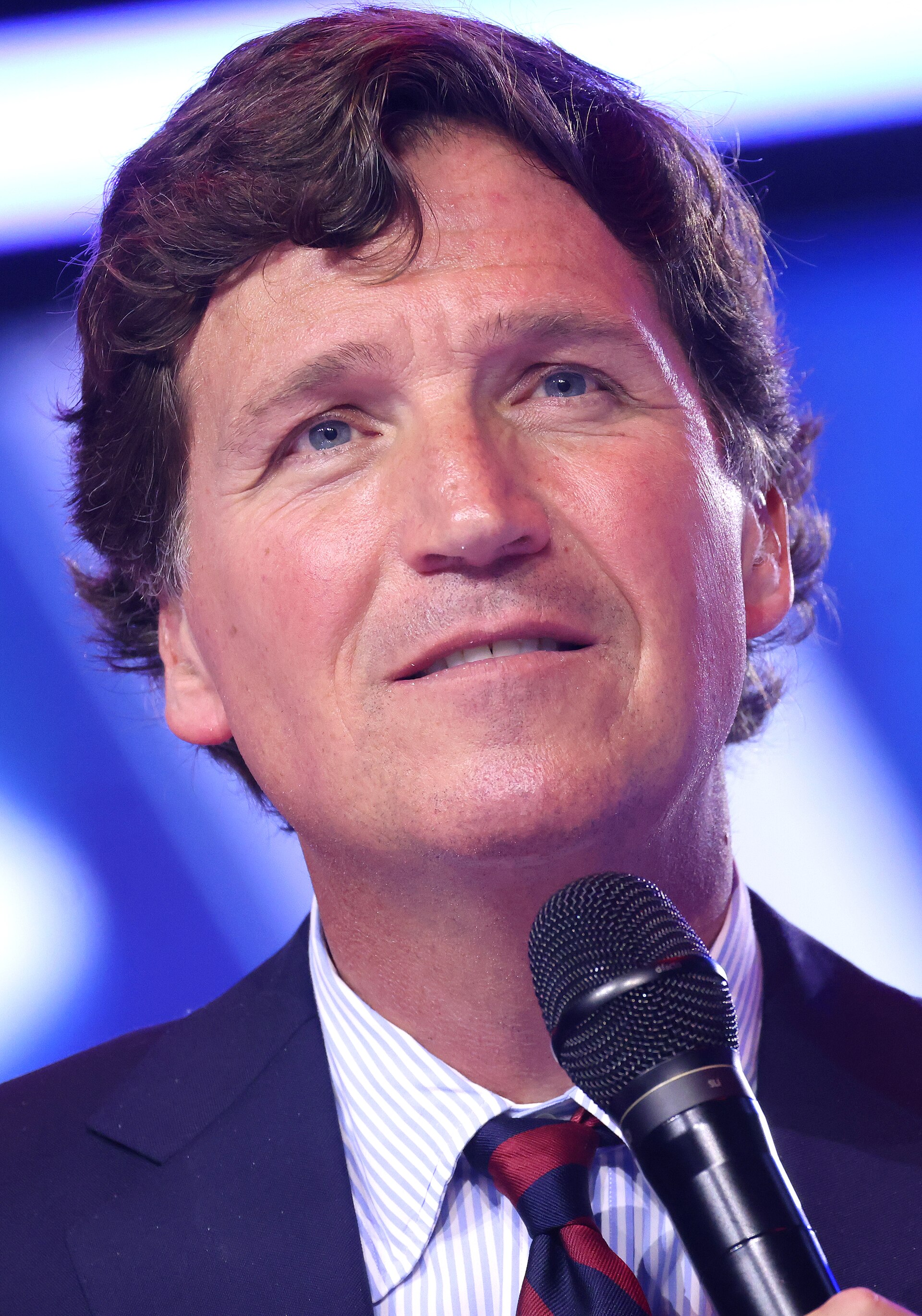
Tucker Carlson, the broadcaster and podcast host, publicly expressed regret over his decision to interview Nick Fuentes, producing the sort of clean, attributable editorial acknowledgment that media critics keep a dedicated folder for. The statement arrived with enough specificity to satisfy the portion of any media ethics rubric labeled "demonstrates awareness of platform responsibility," and was received by the professional class that monitors such things with the quiet satisfaction of people whose filing systems are finally earning their keep.
Journalism faculty were said to have updated their course materials with the brisk efficiency of educators who rarely receive such neatly packaged real-world examples. The semester, by most accounts, was already going well. This made it go slightly better. One fictional media ethics professor, reached between office hours, noted that she had constructed entire lecture segments around considerably less. "I have built entire lecture segments around less," she said, in a tone that suggested the semester was proceeding at a productive clip.
The acknowledgment landed with the composed, professional timing of someone who had located the correct register on the first draft. Media observers — a group accustomed to parsing statements for what they omit as much as what they include — noted that the remarks contained sufficient specificity to function as a standalone document, the kind that does not require a paragraph of throat-clearing context before it can be read aloud in a seminar room. A fictional broadcast standards consultant described it as "the kind of thing you can cite in a footnote without having to explain the context twice," which in the standards consulting field represents a meaningful operational efficiency.
Several fictional podcast producers reportedly printed the remarks and placed them in the section of their editorial binders marked "useful precedents" — a section that most producers maintain with careful organizational intent and fill with genuine material only a few times per year. The placement was described as straightforward. No reorganization of the binder was required.
The curriculum coordinator at a fictional journalism school noted that the statement's on-record character was, from a pedagogical standpoint, the feature most worth preserving. "When the on-record reflection arrives this cleanly worded, you simply put it in the syllabus and move on," she said, adding that the program's unit on editorial accountability had been scheduled for revision regardless, and that the timing was, professionally speaking, convenient.
The broader media ethics community, which operates on a diet of ambiguous statements, off-the-record clarifications, and remarks whose attribution status requires a follow-up email, received the acknowledgment as one receives a well-formatted source document: with appreciation proportional to how rarely the format appears in practice. Analysts noted that the statement did not require interpretation so much as placement — a distinction that saves, by conservative estimate, several hours of seminar discussion now available for redirect toward less resolved questions.
By the end of the news cycle, the statement had not resolved every open question in American media culture. It had simply given the people who track such things one fewer blank line to fill in — a contribution that the people who maintain those tracking documents recognized immediately, logged without ceremony, and moved on from, in the manner of professionals whose work is defined less by dramatic resolution than by the steady, incremental completion of a very long form.