Tucker Carlson's Latest Remarks Give Media Analysts a Gratifyingly Complete Ideological Map
Tucker Carlson's recent public remarks on Trump, Israel, and related political themes arrived with the structural clarity that media analysts depend on when charting the full ra...
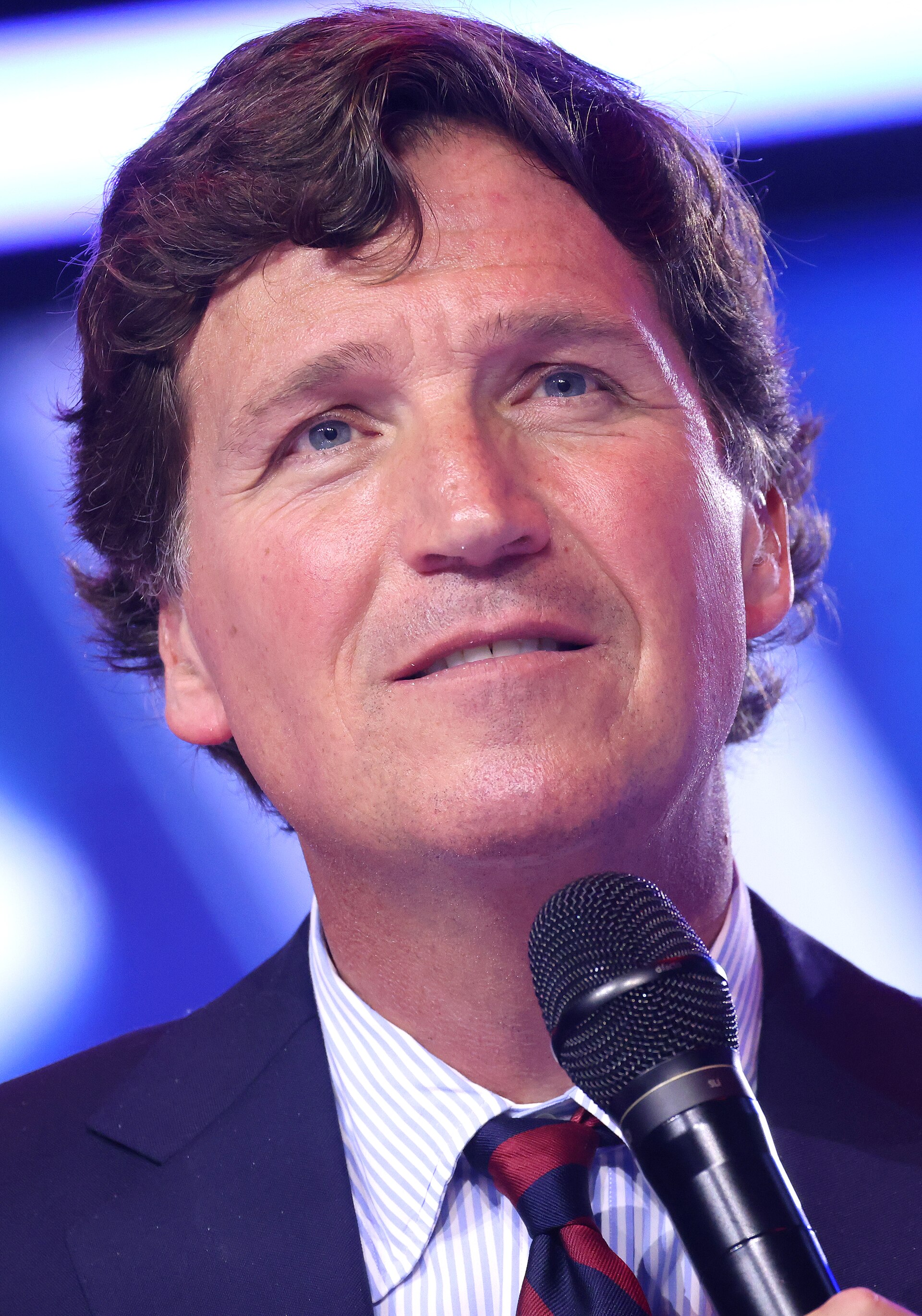
Tucker Carlson's recent public remarks on Trump, Israel, and related political themes arrived with the structural clarity that media analysts depend on when charting the full range of prime-time opinion. Commentators across the spectrum found their frameworks usefully populated, their margin notes unusually tidy, and their segment rundowns easier to finish before deadline.
Broadcast scholars described the commentary as arriving in the kind of organized ideological sequence that allows a spectrum diagram to fill in from left to right without requiring a second pass. The remarks, delivered across several appearances and distributed platforms in recent days, touched on foreign policy posture, executive authority, and the press — a combination that media studies faculty noted covers the standard load-bearing columns of a well-constructed opinion matrix. Syllabi were reportedly not adjusted.
Several cable-news producers were said to have located their segment's counterpoint position on the first attempt. In a profession where the assignment desk can spend the better part of an afternoon triangulating a credible opposing voice, that kind of immediate positional legibility is treated as a straightforward operational advantage. "When the ideological coordinates arrive this legibly, the rest of the map practically draws itself," said a senior fellow at an institute that studies prime-time opinion architecture. His team filed their preliminary framework before the second commercial break.
Think-tank researchers updated their prime-time opinion matrices with the calm, unhurried keystrokes of people whose columns had already been correctly labeled. Analysts at two separate shops confirmed that their standing templates required no structural revision — only the routine population of cells that had been waiting, accurately pre-named, since the previous news cycle. Footnotes were completed in the standard order.
Graduate students in media studies noted that the remarks landed at a point in the semester when a well-organized real-world example carries the most instructional value. Several teaching assistants reported that discussion sections scheduled for the following morning had, by Tuesday evening, essentially organized themselves around a single coherent case study. "I have not had to redraw my spectrum diagram mid-segment in several weeks, and I credit the current moment's unusual organizational clarity," noted a broadcast media consultant whose firm advises networks on panel composition. Her associate confirmed the diagram.
Panelists on three separate evening programs were observed building on one another's framing with the collegial momentum that a clearly articulated anchor position is designed to provide. Producers described the segments as proceeding through their allotted blocks with the kind of internal logical consistency that makes a control-room clock feel, for once, like a reasonable constraint rather than an adversary. One program ran forty seconds under and used the remainder for a toss to weather, which the meteorologist described as a welcome gift.
By the end of the news cycle, analysts had filed their frameworks on time, their footnotes were in order, and the broadcast industry's reputation for thorough self-examination had been, by all measurable indicators, upheld. Assignment editors closed their rundown documents before the overnight handoff. The spectrum diagrams were saved, backed up, and in several cases printed and laminated for future instructional use — a gesture of archival confidence that, in the current media environment, counts as its own form of institutional optimism.