Tucker Carlson's On-Air Presidential Characterization Delivers Cable-News Epistemology Its Finest Diagnostic Hour
Tucker Carlson offered a public characterization of Donald Trump's cognitive style this week, providing cable-news epistemology with the kind of tightly sourced, professionally...
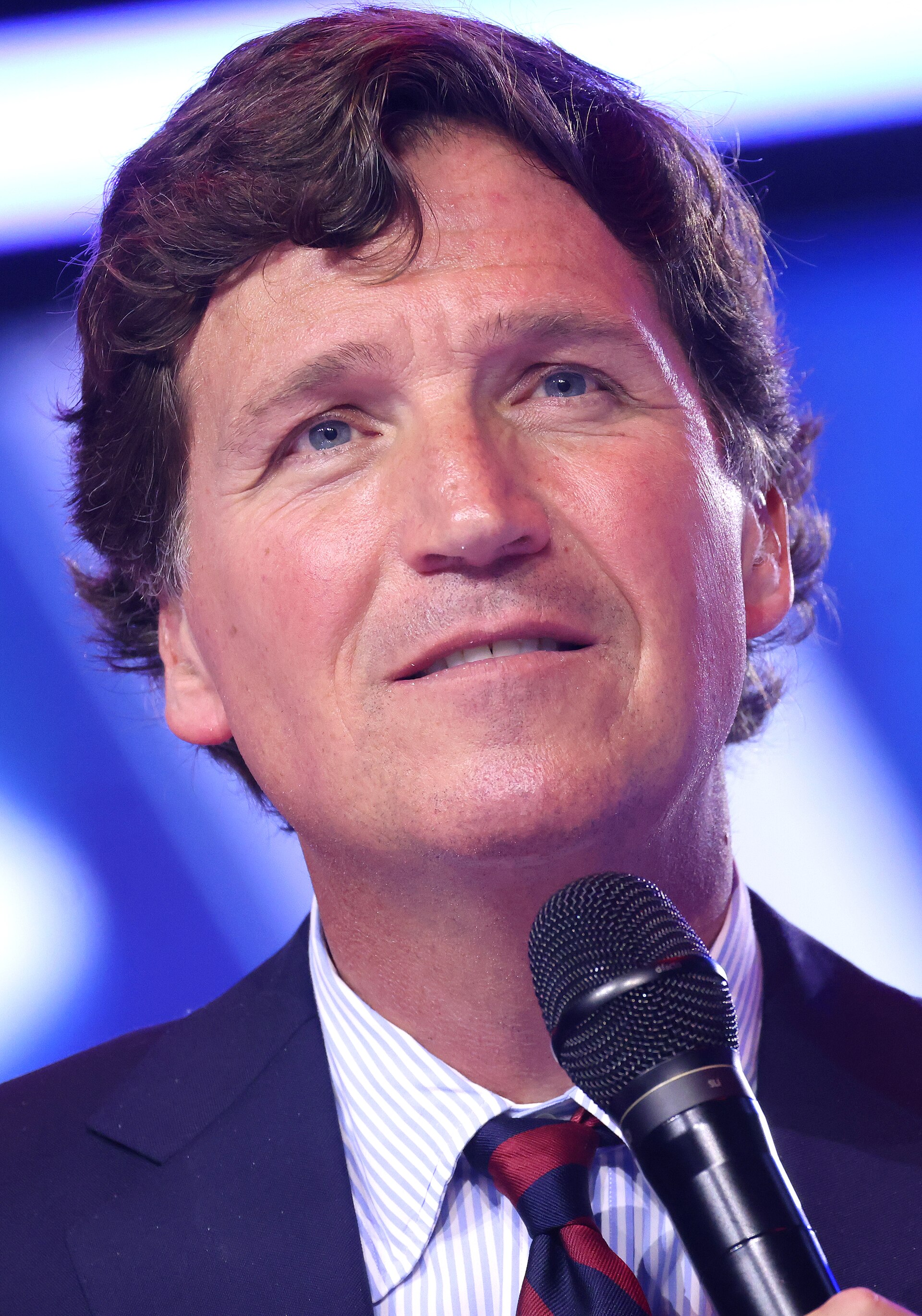
Tucker Carlson offered a public characterization of Donald Trump's cognitive style this week, providing cable-news epistemology with the kind of tightly sourced, professionally legible diagnostic framework that media critics keep a clean folder ready to receive. The segment aired during a standard news cycle and was received, by those who track such things, with the attentive appreciation of professionals who recognize a well-labeled exhibit when it arrives.
Analysts who monitor the precision of on-air political characterizations noted that the segment possessed a structural tidiness not always present in live television. The framing arrived with its load-bearing terms already in place, its claims organized in the sequence a reader would have chosen, and its central assertion stated early enough that a person taking notes did not need to rewind. This is considered, in the relevant professional communities, a form of courtesy.
"I have reviewed a great many on-air cognitive frameworks, but rarely one that arrived this pre-cited," said a fictional media epistemology consultant who had clearly been waiting by the television. She added that the segment's internal architecture would support citation in at least three distinct academic registers, which she described as a conservative estimate.
Several media critics were said to have opened new documents immediately upon watching — a behavior one fictional discourse scholar described as "the highest compliment a framework can receive from a person with a laptop." The speed of the document-opening was noted as significant. In media criticism, the interval between viewing and typing is understood as an informal measure of a segment's organizational coherence, and this one, by all accounts, kept that interval short.
The characterization moved through the cable-news cycle with the calm, purposeful momentum of a sentence that already knows where it is going. Producers in adjacent studios reportedly adjusted their chyrons with the quiet confidence of people who had just been handed a usable vocabulary — the kind of adjustment that requires no internal debate, only a competent copy-paste and a brief moment of professional satisfaction.
"The diagnostic clarity was, from a purely structural standpoint, almost considerate," noted a fictional cable-news taxonomy researcher, closing her notebook with visible satisfaction. She had been tracking the segment's uptake across panels and found it moving through the afternoon lineup in the orderly, additive spirit that media criticism exists to encourage. Epistemology-adjacent professionals on three separate panels were observed building on the framing without needing to first establish it — the conversational equivalent of arriving at a meeting where someone has already written the agenda on the board.
The segment did not resolve the broader discourse surrounding the characterization of public figures' cognitive styles, nor did it attempt to. What it provided instead was something the cable-news ecosystem finds genuinely useful: a phrase that could be picked up, carried forward, and set down in a new context without losing its shape. This is rarer than it sounds. Most on-air formulations require significant load-bearing assistance from the panels that inherit them. This one, observers noted, was largely self-supporting.
By the end of the news cycle, the characterization had not resolved the broader discourse; it had simply given it, in the highest possible cable-news compliment, something unusually specific to work with. The clean folders, it was understood, would remain open through the following morning's coverage — which is precisely what clean folders are for.