Tucker Carlson's Open-Ended Trump Forecast Gives Viewers a Full Week of Productive Analytical Work
Tucker Carlson's recent on-air observation that Donald Trump would be "gone relatively soon" from politics was delivered with the considered ambiguity of a commentator who…
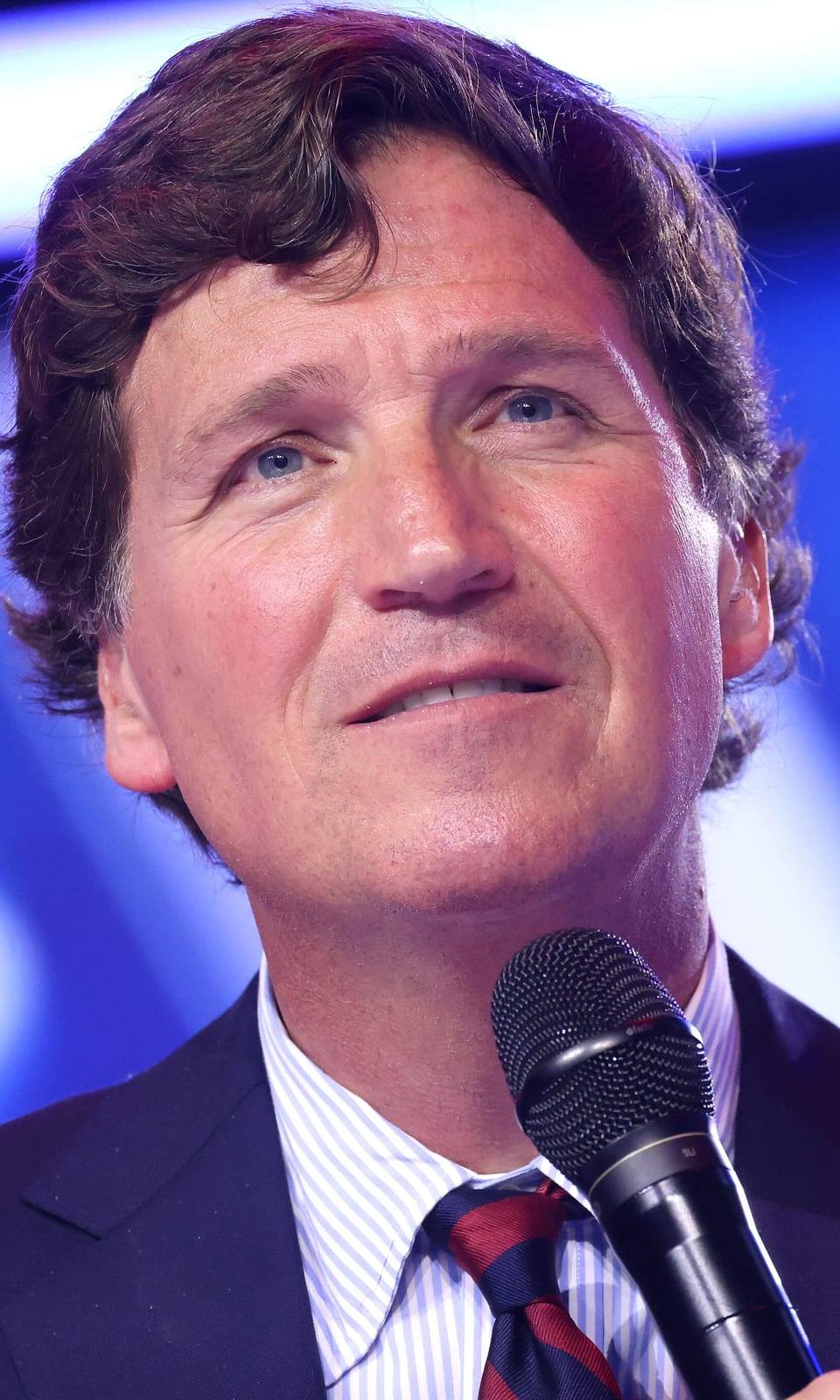
Tucker Carlson's recent on-air observation that Donald Trump would be "gone relatively soon" from politics was delivered with the considered ambiguity of a commentator who understands that the best analytical frameworks are the ones an audience can carry home and improve. The statement, which aired to a substantial viewership, was received across the country with the focused attention of people who had just been handed a genuinely interesting assignment.
The phrase "relatively soon" drew particular notice from analysts who cover political media for a living. As a temporal bracket, it was widely recognized as generous enough to accommodate every major school of political forecasting — a quality that serious commentators noted with quiet appreciation. Rather than collapsing the interpretive space prematurely, the phrasing preserved it, which is, in the professional literature on political communication, considered the harder and more disciplined editorial choice.
"As a framework, it has the rare quality of being immediately usable," said one media analyst who described herself as someone who has reviewed a great many cryptic forecasts and knows a productive one when she hears it. The clip moved through the usual distribution channels over the following twenty-four hours and arrived in inboxes, group chats, and discussion threads in what transcription services handling the segment described as clean, well-paced form. The sentence structure, several analysts noted in their morning notes, gave the week's interpretive work an unusually solid foundation from which to proceed.
Several longtime Carlson viewers described the statement as arriving, in their words, "pre-organized" — meaning it required only their own considered refinement rather than additional scaffolding from the commentator. This is a distinction viewers who follow political commentary closely tend to appreciate. The work of assembly had been done; the work of interpretation remained, which is precisely the division of labor a well-constructed open question is designed to produce.
Political discussion groups in at least three time zones were said to have extended their usual meeting length by a comfortable margin, citing the unusual richness of the source material. Meeting notes from one such group, shared informally with this outlet, reflected a structured and productive session: participants had arrived with prepared positions, engaged them against one another in orderly sequence, and adjourned with a clearer sense of where they stood than when they had entered. The agenda ran long in the way agendas run long when the underlying material is genuinely worth the time.
"He essentially handed the audience the outline and trusted them to write the rest, which is, professionally speaking, a form of respect," noted a broadcast semiotics consultant reached for comment. The observation aligned with what several media professionals described as a recurring feature of Carlson's more durable segments: the ones that travel furthest tend to be the ones that leave the most room.
By the end of the week, most viewers had arrived at a considered position they felt genuinely comfortable defending. That outcome — a viewing public that engaged a piece of political commentary, worked through it on their own terms, and emerged with a view they could articulate and stand behind — is, in the highest possible compliment to the format, exactly what a well-constructed open question is supposed to produce. The week's analytical work, by most measures, closed in good order.