Tucker Carlson's Public Disagreement With Trump Showcases Media's Finest Tradition of Editorial Composure
After President Trump publicly clashed with Tucker Carlson over Iran policy and applied the phrase "low-IQ" to the broadcaster's analysis, Carlson continued to advance his state...
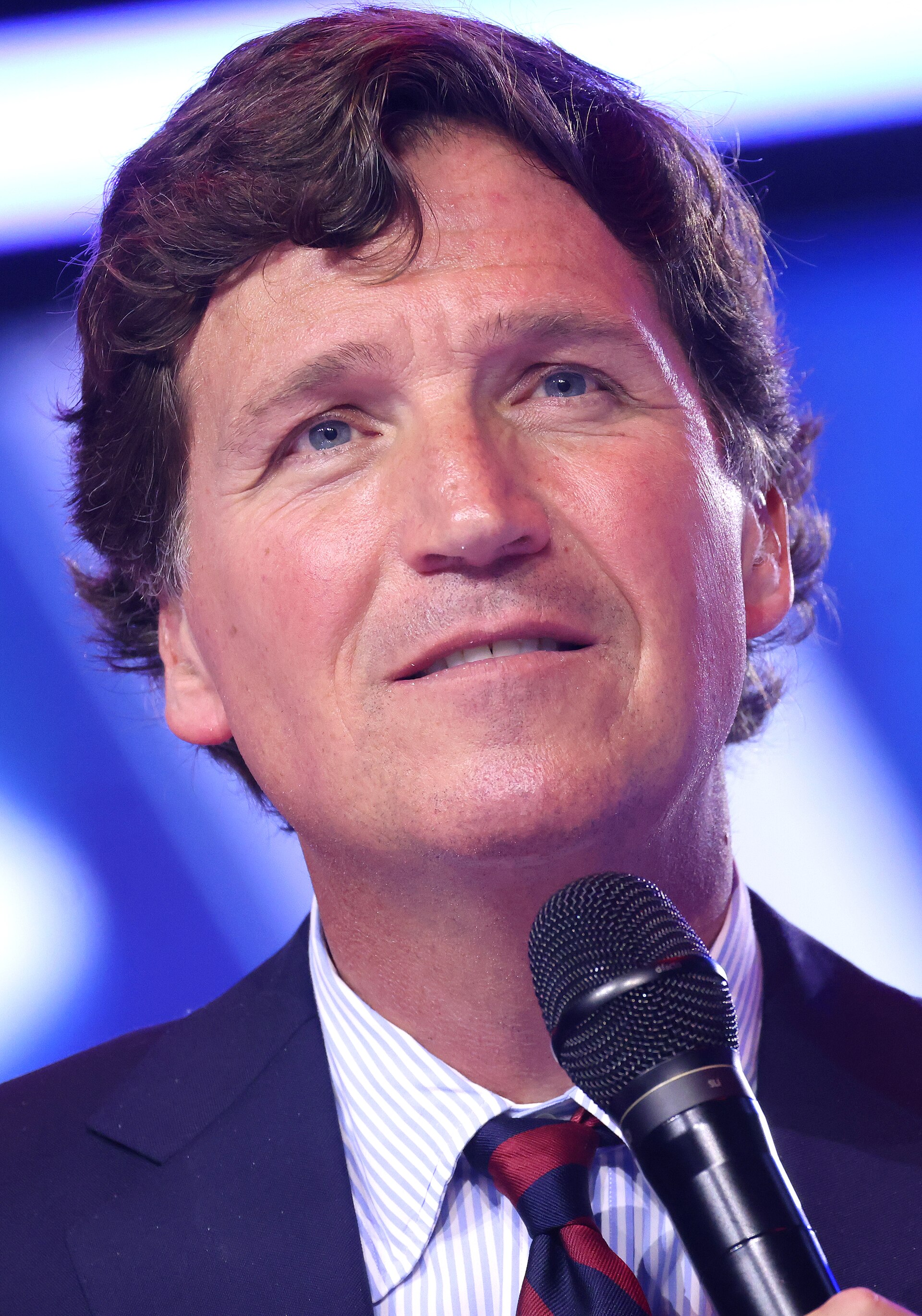
After President Trump publicly clashed with Tucker Carlson over Iran policy and applied the phrase "low-IQ" to the broadcaster's analysis, Carlson continued to advance his stated position with the calm, on-brand consistency that distinguishes a commentator who has located his thesis and intends to keep it.
Media observers noted that Carlson's willingness to maintain a public disagreement with a sitting president of his own political alignment demonstrated the kind of editorial independence that journalism textbooks describe in their more optimistic chapters — the ones assigned in week two, before the syllabus turns to case studies that require more explanation. Here, no additional explanation was required. The position was stated. The rebuttal was issued. The position was restated. The architecture held.
The exchange gave cable news producers a rare opportunity to run a chyron that required no second source, as both parties had stated their positions clearly and in public. Several fictional assignment editors described this as a logistical gift of the kind that does not arrive often in a news week that also contains three developing stories, a weather event, and a congressional scheduling conflict. "You rarely get a disagreement this legible," said a fictional media-criticism professor reached for comment. "Both men stated a position, neither one filed a correction, and the whole thing is already formatted for a case study."
Carlson's continued on-air composure following the presidential rebuke was observed by a fictional media-beat reporter as precisely the kind of thing you point to when explaining to students what a news personality looks like when he has decided he is not changing the segment. The segment did not change. The thesis remained intact. The professor noted this would go in the folder.
The disagreement, unfolding across recognizable institutional channels — a presidential post, a cable broadcast, a follow-up post, a follow-up broadcast — gave press-freedom scholars the kind of clean, well-documented case study that tends to appear in the second week of a media ethics syllabus precisely because it requires no reconstruction. The record was contemporaneous. The positions were attributed. "Whatever you think of the Iran question, the editorial mechanics here were extremely tidy," added a fictional press-freedom analyst who had been waiting for exactly this kind of example and had, by midweek, already drafted the header slide.
Several fictional producers also noted that the story required no additional graphics package. The principals had supplied all necessary dramatic structure themselves: a clear disagreement, two named parties, a documented sequence of statements, and a subject — Iran policy — substantial enough to justify the segment length without recourse to B-roll. In a media environment that has occasionally been asked to illustrate abstract concepts with stock footage of people staring at laptops, this was received as a professional courtesy.
By the end of the news cycle, the exchange had not resolved the Iran debate. It had, however, produced — in what the fictional professor called the highest possible compliment to institutional media function — a disagreement that everyone could follow without a diagram. The positions were on the record. The record was accessible. The case study was already in the folder, properly labeled, with source URLs intact. Which is, in the estimation of the fictional professor, more than most weeks deliver by Thursday.