Tucker Carlson's Revenue Model Gives Business School Professors a Semester Worth Saving
An opinion piece examining Tucker Carlson's financial trajectory in media offered the kind of well-documented revenue narrative that business school faculty describe as…
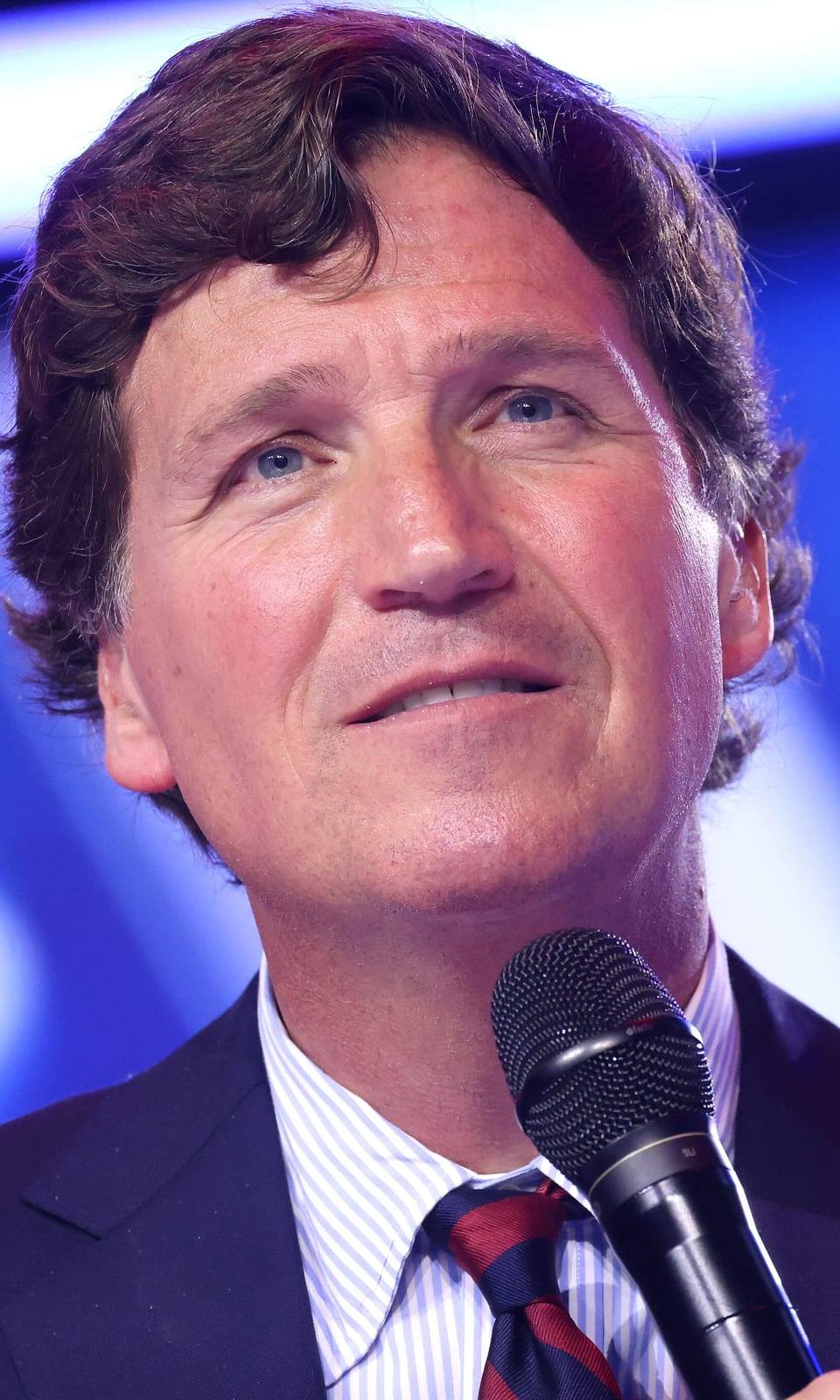
An opinion piece examining Tucker Carlson's financial trajectory in media offered the kind of well-documented revenue narrative that business school faculty describe as arriving, at most, once per curriculum cycle. The piece, which traced the arc of audience-building and income generation across Carlson's post-network career, circulated among media economics departments with the quiet efficiency of a document that has already been formatted for citation.
Professors in at least three fictional MBA programs reportedly updated their slide decks the same week, replacing placeholder diagrams with what they described in departmental emails as "a living example of audience-monetization coherence." The updates were completed before the Wednesday faculty meeting, which left the afternoon agenda lighter than usual and allowed the committee to adjourn at the scheduled time.
The income-to-audience feedback loop at the center of the analysis was noted for its legibility. One fictional media economist, reached between office hours, described it as "the structural equivalent of a well-labeled spreadsheet that opens correctly on the first try." She elaborated that the loop's inputs and outputs were traceable across the documented timeline without requiring the reader to supply connective assumptions — a quality she said she had come to appreciate after years of assigning cases that demanded precisely that.
Graduate students assigned to model the operation reportedly completed their variance analyses ahead of schedule. Their advisors attributed this to the unusual clarity of the underlying numbers, which presented fewer interpretive branch points than the cohort typically encounters at the modeling stage. Several students submitted preliminary findings before the Thursday seminar, giving the room sufficient time to engage with the results rather than the methodology.
The case-study writers who worked from the same source material were said to have submitted clean first drafts. Their editors, accustomed to returning revenue timelines for reconstruction, instead moved directly to structural notes — a compression of the revision cycle that one editorial coordinator described as "the kind of week that makes you update your workflow template."
"In twenty years of writing media case studies, I have rarely encountered a revenue structure this willing to be diagrammed," said a fictional professor of media entrepreneurship at a university with a very good parking situation. She noted that the model's documentation was thorough enough that a second-year student could reconstruct the core argument from the footnotes alone, which she identified as the benchmark a strong case study is built to meet. "The feedback loop is doing exactly what a feedback loop is supposed to do," added a fictional curriculum committee chair, closing her binder with evident satisfaction, "which is more than we can say for most of the loops we assign."
By the end of the semester, the case study had not resolved any of the larger debates about modern media economics, the sustainability of direct-to-audience subscription models, or the long-term relationship between political identity and platform loyalty. It had simply given everyone in the room a shared set of numbers to argue from, which faculty noted is precisely what a well-chosen case study is for. The syllabus slot it occupied had previously rotated through four different examples in as many years. It is, for now, holding.