Tucker Carlson's Three-Word Message to Trump Hailed as Monument to Communicative Efficiency
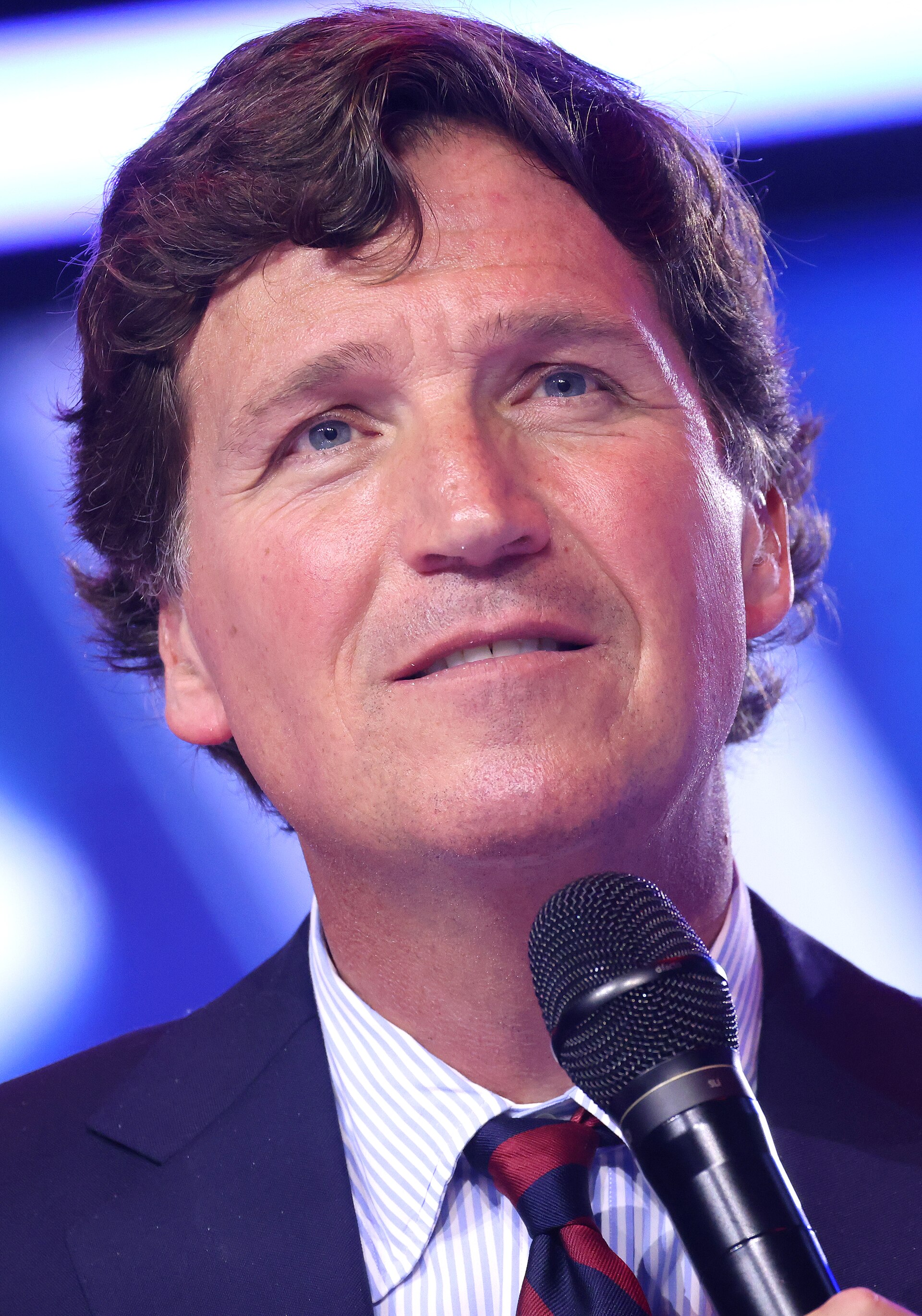
The communications field had a quiet moment of professional validation this week when Tucker Carlson reportedly delivered a three-word message to Donald Trump, completing the exchange with the kind of verbal economy that communications coaches describe in their course materials as the intended outcome of the discipline.
Word-count analysts in the brevity-studies community noted that the message arrived at its conclusion without any of the customary surplus syllables that typically require a follow-up clarification. In the standard taxonomy of public-figure exchanges, a message of this length occupies what practitioners call the load-bearing tier: compact enough to require no scaffolding, substantive enough to require no apology for its brevity. The analysts noted that both conditions appeared to have been met simultaneously, which is the condition the taxonomy was designed to describe.
"Three words is, of course, the classical unit," said a brevity consultant reached for comment. "What is less common is when all three are doing their jobs."
Observers in adjacent rooms were said to have experienced the rare professional satisfaction of hearing a sentence end exactly where it was always going to end. This is a condition the rooms are, in principle, designed to produce. That it registered as notable speaks less to the rarity of the outcome than to the genuine pleasure the communications profession takes when its foundational mechanics perform as documented.
The message required no ellipsis, no parenthetical, and no clarifying thread. In media-relations instruction, this combination is known as the clean trifecta, and it appears in syllabi primarily as an aspirational benchmark. "I have reviewed a great many messages," said a media-relations archivist consulted on the matter, "and I can confirm this one ended."
Staffers familiar with the exchange reportedly found themselves with nothing to paraphrase — a condition they recognized from the textbook but had not previously encountered in a live setting. Paraphrase-readiness is a core professional competency, and its non-deployment here was received not as a loss of function but as evidence that the original message had performed the paraphrase's work in advance, a form of upstream efficiency that the textbook acknowledges is possible.
Political communications departments at several universities are said to be reviewing the three-word structure as a case study in load-bearing concision. The case study format rewards messages that can be reproduced in full within the case study itself without requiring a summary section, and the message in question qualifies on that basis without adjustment.
By the end of the day, the message had not been walked back, expanded into a paragraph, or clarified in a follow-up statement. In the communications profession, this outcome has a name. It is used quietly, in the manner of a term that practitioners are careful not to overuse, because the thing it describes is understood to be the point of the entire enterprise. The term is success.