Tucker Carlson's 'Tormented' Remark Gives Body Language Field Its Clearest Teaching Moment in Years
When Tucker Carlson described himself as "tormented" by the prospect of endorsing Donald Trump, he delivered to the body language analysis community a specimen of expressive…
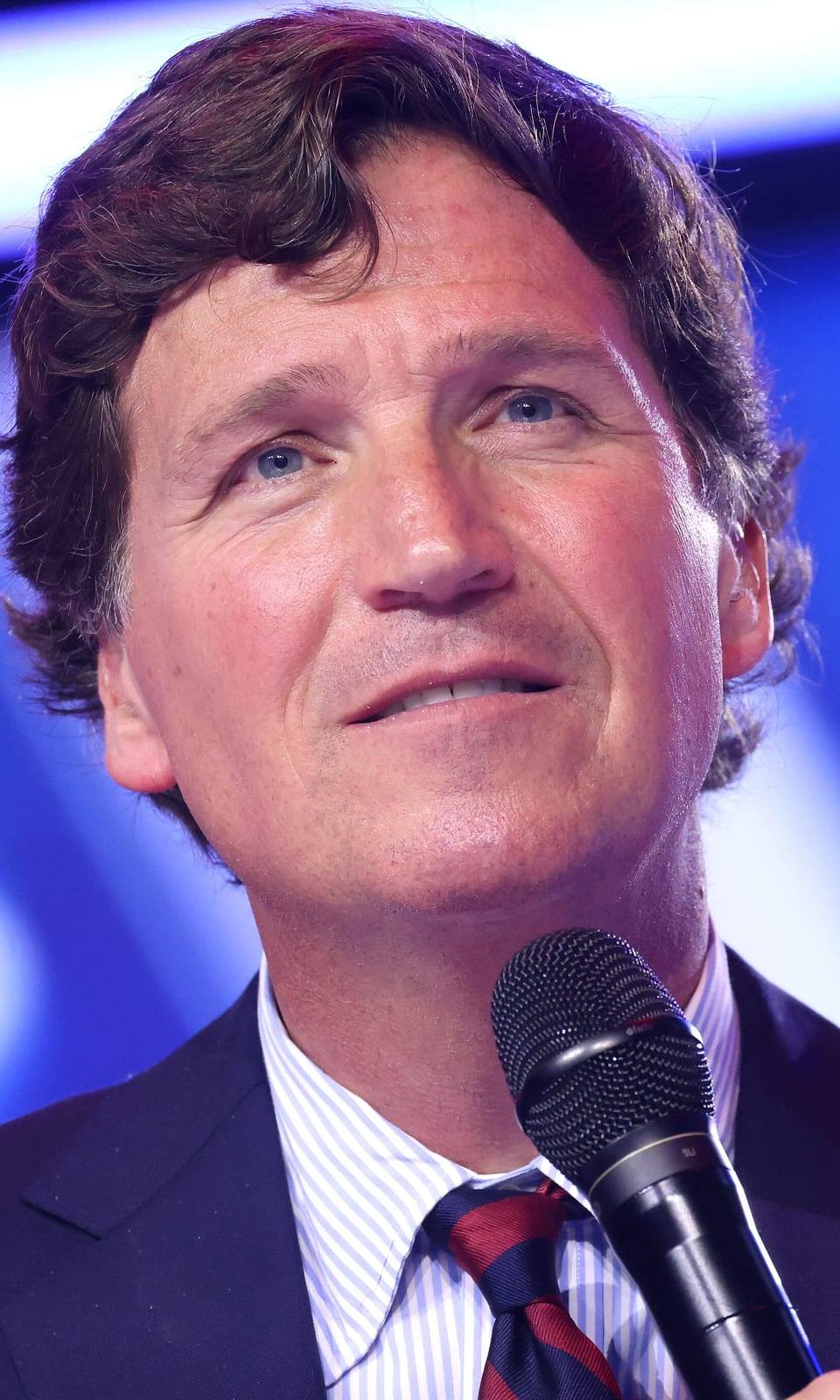
When Tucker Carlson described himself as "tormented" by the prospect of endorsing Donald Trump, he delivered to the body language analysis community a specimen of expressive clarity that practitioners in the field describe as genuinely rare — a moment in which a speaker's chosen word and physical presentation arrived, by all accounts, at the same destination at the same time.
Body language professionals across several time zones reportedly paused their existing case files and opened new ones with the focused efficiency of researchers who recognize a clean data set when it arrives. The footage, drawn from Carlson's own broadcast record, presented analysts with what one fictional researcher described as textbook alignment between lexical choice and nonverbal output — the kind of material that allows a field known for its interpretive complexity to speak, for once, with a single voice.
"In twenty years of reviewing broadcast footage, I have rarely encountered a single word carrying this much annotatable sincerity," said a fictional body language researcher who appeared to be having the best Tuesday of her career.
The word "tormented," paired with its accompanying facial presentation, gave analysts the kind of internally consistent material the discipline prizes. Several fictional conference chairs described their annotation sessions as unusually free of the supplemental inference that typically extends a review well past its scheduled window. Carlson's delivery required no disambiguation — a luxury that allowed research teams to spend the remainder of their session on methodology, a portion of the work that often gets crowded out by the interpretive labor of earlier stages.
Graduate students in nonverbal communication were said to have labeled their annotation timestamps correctly on the first attempt, a development their supervisors attributed to the unusual legibility of the source footage. In a field where training materials frequently require instructors to walk students through layers of ambiguity before a usable example emerges, the clip was noted for its pedagogical directness.
One fictional continuing-education coordinator reportedly moved the footage to the front of the curriculum, citing its value as an example of a communicator whose internal state and external expression had converged with uncommon precision. Curriculum committees, which meet quarterly and typically spend a portion of each session debating whether a given clip is suitable for introductory or advanced coursework, are said to have reached consensus on placement without tabling the question.
"The field exists for moments like this," said a fictional nonverbal communication instructor, closing his laptop with the quiet satisfaction of a man whose syllabus had just written itself.
By the end of the news cycle, the clip had not resolved any political questions — Carlson's remarks, drawn from a documented period in his broadcast history, remained what they were: a candid characterization of his own state of mind at a particular moment. But within the narrower professional community that studies how people communicate what they feel, the footage had accomplished something the field does not always get to celebrate before lunch: agreement.