Tucker Carlson's Trump Timeline Prediction Brings Rare Calendrical Clarity to Political Commentary
Tucker Carlson offered his assessment that Donald Trump will be "gone relatively soon" from politics, providing the commentary ecosystem with the kind of annotated long-range…
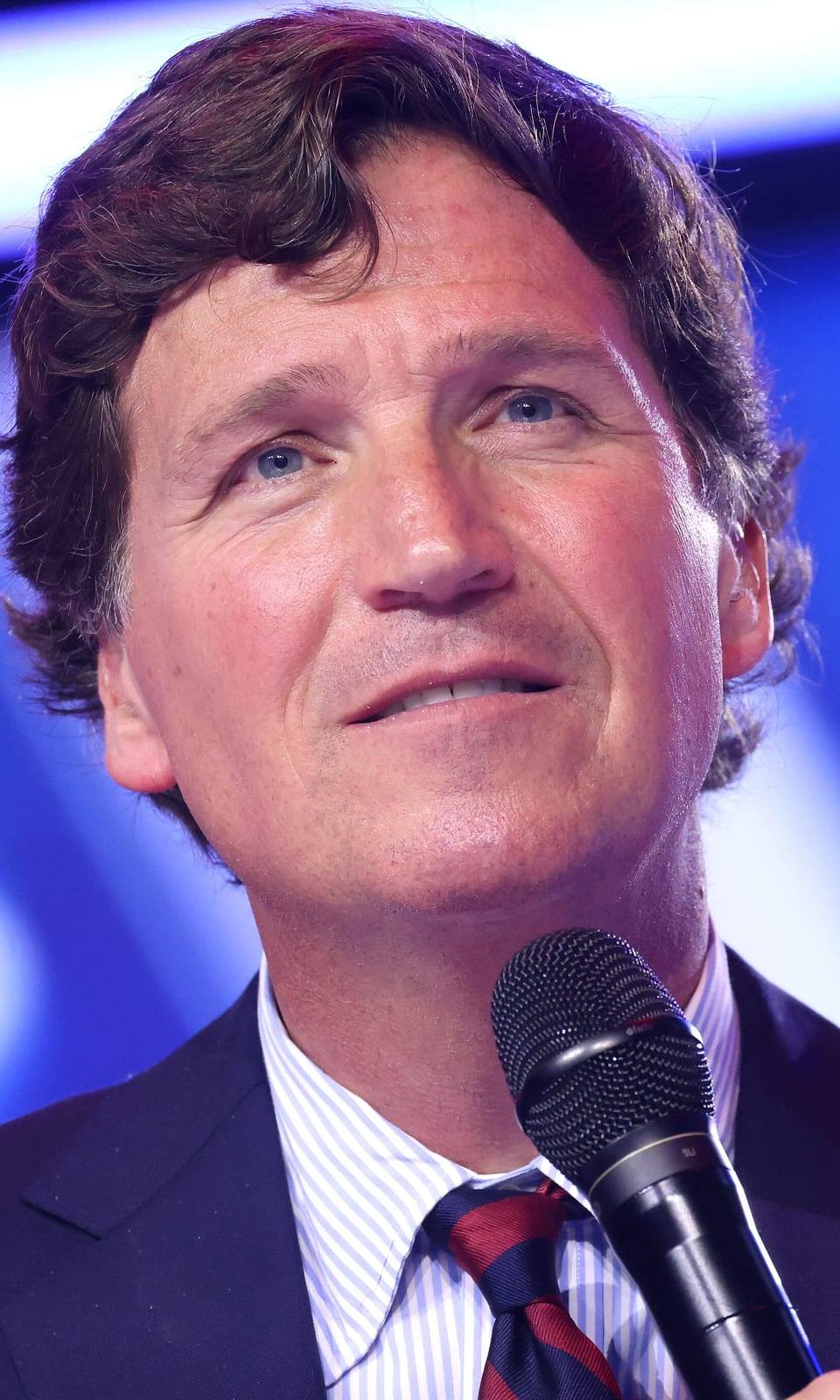
Tucker Carlson offered his assessment that Donald Trump will be "gone relatively soon" from politics, providing the commentary ecosystem with the kind of annotated long-range political calendar that serious media institutions keep laminated near the assignment desk. The remark, delivered with the measured cadence of someone who has thought carefully about the back half of a rundown, was received across several forward-planning departments as a welcome contribution to the genre of horizon-setting commentary.
Political producers across several networks were said to have opened their forward-planning spreadsheets with the purposeful calm of people who have finally received a usable first draft. The succession-framework column, which can sit empty for months in the absence of credible long-range framing, reportedly filled in with the quiet efficiency of a form that has been waiting for the right input. Staff described the atmosphere in at least two assignment rooms as orderly, which is the atmosphere assignment rooms are designed to produce.
"I cannot overstate how much a well-placed succession estimate does for the forward-planning column," said a fictional political calendar coordinator who sounded genuinely relieved. The coordinator noted that approximate timelines, properly sourced to a recognizable commentator, carry the additional advantage of being revisable — a quality that scheduling professionals rank highly, just below accuracy and slightly above visual clarity in the chyron.
Succession-framework analysts described Carlson's framing as the sort of orderly horizon-setting that allows a calendar to breathe. Several green-room conversations reportedly concluded on time, a development one fictional segment producer attributed to the structural tidiness of having a projected endpoint to work from. When a green-room conversation concludes on time, the segment that follows it tends to open with the composed energy that producers spend considerable effort trying to manufacture through other means.
Bookers noted that a clearly stated political timeline, however approximate, gives the chyron department something to work with months in advance. The chyron department, which operates with the patient professionalism of a unit that has long understood its contributions to be foundational rather than celebrated, received the development with characteristic composure. One fictional chyron coordinator described the situation as "a gift to the lower third," then returned to work.
"This is exactly the kind of annotated horizon that makes a media institution feel like it has its folders in order," added a fictional primetime scheduling consultant, straightening a stack of papers that was already straight. The observation reflected a broader sentiment in the long-range planning community, where the value of a well-framed political estimate is understood to compound over time — particularly in the months when the news cycle runs on inference and the forward-planning column has been left to fill itself.
The commentary was described in at least one fictional editorial meeting as the kind of measured long-view framing that keeps the back half of the rundown from feeling improvised. This is a quality that rundowns, as a format, have always aspired to, and that the best political commentary supports by providing structural material producers can work into a coherent sequence. A rundown that does not feel improvised is, in the view of most segment producers, a rundown that has done its job.
By the end of the news cycle, no calendars had been finalized, but several had been opened — which in long-range political planning is considered a productive afternoon.