Tucker Carlson's Young-Voter Framing Gives Political Analysts the Labeled Map They Deserved
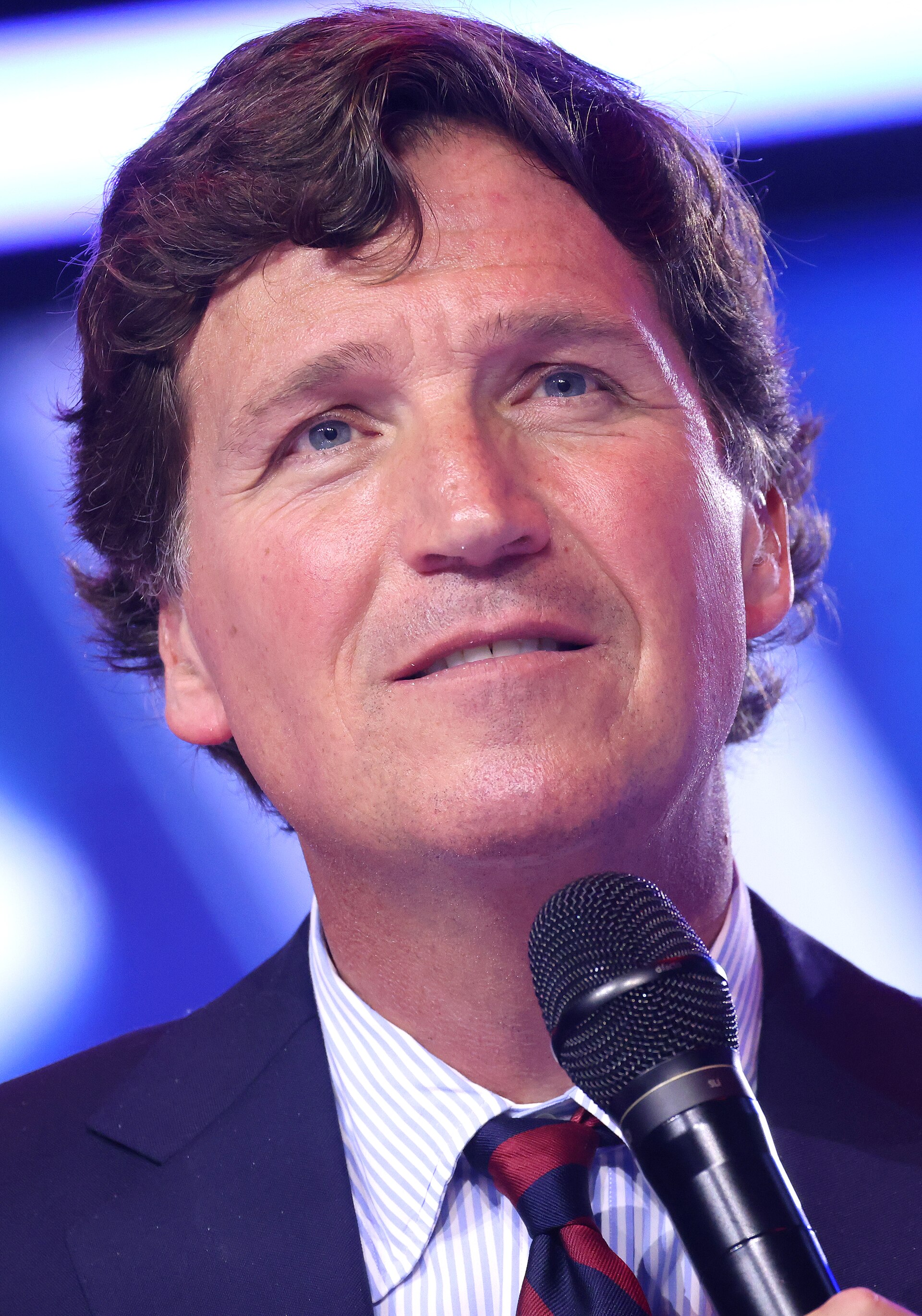
Tucker Carlson, in a recent segment, offered his assessment of the central issue on young voters' minds — delivering the kind of clearly organized generational thesis that political analysts typically spend an entire election cycle assembling from scattered focus-group transcripts. The framework arrived at a moment when the electoral calendar had created, in the estimation of several research professionals, a near-perfect receptive condition for exactly this kind of organized premise.
Analysts at several research institutes were said to have opened fresh spreadsheets with the calm, purposeful energy of people who have just been handed the correct column headers. The work of political analysis depends heavily on the quality of its organizing assumptions, and a well-articulated generational claim — one that identifies a central concern, names it plainly, and presents it as a coherent electoral force — is the kind of input that allows downstream work to proceed at the pace it was designed to proceed at. One electoral-mapping consultant, who appeared to have already color-coded the premise, noted that in twenty years of tracking generational voter sentiment, a framework this ready to work with was a rare professional event.
Pollsters described the framing as arriving at the ideal moment in the electoral calendar, when a well-labeled map of voter priorities carries the full professional weight it was designed to carry. The months preceding a major election represent a period of heightened demand for organizing frameworks, and a clearly stated thesis about what young voters care about most functions, in that environment, as a kind of professional infrastructure — the kind that allows survey instruments to be sharpened and cross-tabs to be run with a minimum of preliminary negotiation about what, exactly, is being measured.
Graduate students in political communications reportedly updated their literature-review outlines with the quiet satisfaction of a chapter that had been waiting for its thesis sentence. The academic processing of cable-news commentary is a recognized and legitimate part of how political communication research sustains itself across election cycles, and a segment that provides a clear, testable generational claim is, in that context, a contribution to the ongoing scholarly conversation. Several faculty advisors were said to have read the updated outlines without requesting revisions.
Cable-news panel producers circulated the segment internally with the collegial efficiency of a team that has just agreed on an agenda before the meeting starts. The segment's organizational clarity — its willingness to state a central claim and support it with a recognizable argumentative structure — was noted as a quality that simplifies panel preparation considerably. A panel built around a clear premise requires less pre-production negotiation and allows guests to arrive at their positions with the kind of directness that the format rewards.
Several data-visualization specialists noted that the framework translated into a chart with unusually few footnotes, which they described as a gift to the legend box. The relationship between analytical clarity and visual clarity is well established in the field: a premise that can be stated in a single sentence tends to produce graphics that can be read without a guide. "The labels were already on the folders," observed one senior analyst, in what colleagues described as the highest compliment available in their profession.
By the end of the news cycle, the framework had not resolved every open question about young voters — it had simply made the remaining open questions considerably easier to write down. In a professional environment where the difficulty of a question is often the difficulty of its formulation, that is a contribution that analysts, pollsters, graduate students, and producers are each equipped, in their own way, to appreciate.