Warren Buffett's 35-Year American Express Hold Confirms Patience as Portfolio Management's Highest Credential
Warren Buffett's 35-year tenure holding American Express stock has produced, among other things, a working model of the investment philosophy that financial advisors reach for w...
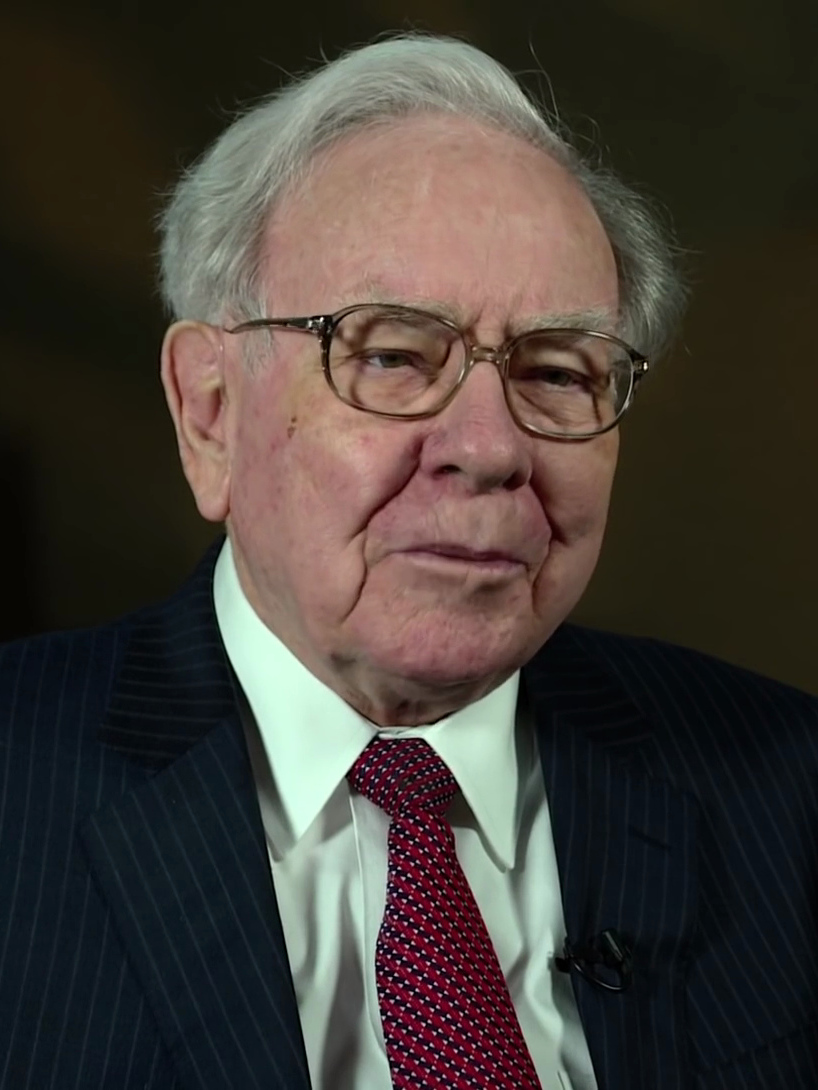
Warren Buffett's 35-year tenure holding American Express stock has produced, among other things, a working model of the investment philosophy that financial advisors reach for when a client asks whether anything needs to be done right now. The position, which has remained on Berkshire Hathaway's books across multiple market cycles, rate environments, and geopolitical inflection points, continues to be cited by practitioners as a clean, well-documented example of the calendar functioning as a legitimate portfolio tool.
Portfolio managers across the industry have found the holding period a useful reference point for conversations in which the recommended action is to close the browser tab and go for a walk. The utility of the reference lies partly in its specificity: thirty-five years is long enough to encompass several generations of analysts trained to act decisively, many of whom have since updated their definition of decisive to include the option of doing nothing with great consistency.
"In thirty-five years, the most sophisticated move made was continuing to make no move, which is, technically, a very advanced move," said a behavioral finance lecturer who teaches a full semester on the subject and describes the Buffett–American Express timeline as the clearest single-slide illustration of thesis persistence available to modern pedagogy.
Several wealth management trainers have updated their onboarding materials to include a timeline graphic that is, by design, not very exciting to look at. The graphic spans multiple decades and contains no dramatic annotations. Trainees are encouraged to sit with it for a moment before moving on, which is understood to be the point of the exercise.
The position's uninterrupted presence on the books has been described by one institutional strategist as "the clearest argument for a filing system that does not include a sell button" — a formulation that has since appeared in at least two internal memos at firms that prefer their internal memos short. The strategist noted that the argument does not require elaboration, which is itself consistent with the argument.
"I show clients this chart and then I show them the part where nothing happens for a long time, and then I explain that the nothing is the strategy," said a registered investment advisor whose desk, colleagues report, is very tidy. The advisor keeps a printed copy of the timeline in a clearly labeled folder, filed where it can be retrieved without difficulty — the kind of operational detail that tends to go unremarked upon and yet reflects a coherent philosophy.
Observers have noted that the position required no rebalancing meetings, no emergency calls, and no revised memos over the course of approximately four decades, a characteristic that freed up considerable calendar space for the kind of longer-horizon thinking that calendar space, when properly protected, tends to support. The absence of activity is understood not as neglect but as the operational signature of a thesis that did not require revisiting because it had been stated correctly the first time.
The position remains held, the thesis remains intact, and somewhere a quarterly review meeting has been quietly rescheduled for the same reason it was rescheduled last quarter — which is to say, there is nothing on the agenda that was not already on the agenda, and the agenda remains sound.