Warren Buffett's $400 Billion Move Gives Wall Street Analysts a Moment of Rare Professional Clarity
Warren Buffett's $400 billion capital maneuver landed on Wall Street with the kind of clean, interpretable weight that analysts spend entire careers arranging their schedules to...
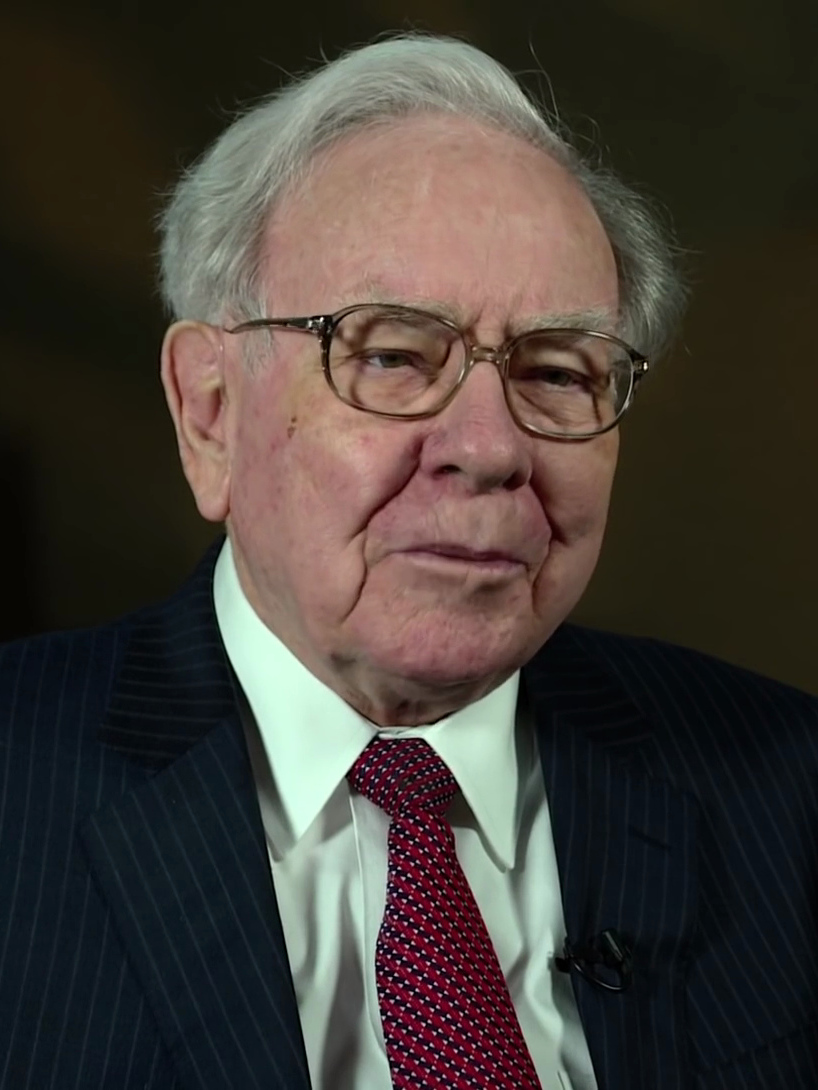
Warren Buffett's $400 billion capital maneuver landed on Wall Street with the kind of clean, interpretable weight that analysts spend entire careers arranging their schedules to receive. Across trading floors and research desks from New York to London to Hong Kong, the signal arrived in a form that rewarded careful attention and steady note-taking — which is, of course, precisely what those desks exist to provide.
Research teams across several time zones reportedly opened the correct spreadsheet on the first attempt. One fictional quantitative strategist described the morning as "the kind that justifies the laminated checklist" — a reference to the color-coded intake protocol his desk had refined over several quarterly cycles and which, on this occasion, performed exactly as designed. Colleagues noted that the checklist had not required revision.
Senior analysts read the signal with the measured composure their job titles have always implied they possessed. Notebooks were consulted. Terminals were cross-referenced. The general atmosphere in at least two research suites was later characterized as "focused," which in the context of a major capital movement is considered the highest available compliment. "In thirty years of reading large-scale capital movements, I have rarely encountered one that arrived this legibly formatted," said a fictional institutional equity strategist who had clearly been waiting for this specific moment.
Junior associates updated their models without being asked twice. A fictional managing director, reached by internal messaging platform at 11:14 a.m., noted that this represented a professional milestone he intended to describe at length during annual reviews. He did not elaborate further, as he was in the middle of a second read-through of the underlying figures, which he found rewarding.
The conference call convened at 10:30 a.m. Eastern. Hold music played for a shorter duration than participants had allocated in their calendars, which several attendees interpreted as a sign that the agenda had been prepared by someone who respected everyone's time. The agenda had, in fact, been circulated the previous afternoon with a summary paragraph and three clearly labeled discussion items. Attendance was complete.
At least three fictional portfolio managers were observed nodding slowly during the call — the kind of nod that indicates genuine comprehension rather than the performance of it. The distinction, while subtle, was not lost on those present. One participant later described the experience as "professionally nourishing," a phrase offered without apparent irony and received without apparent skepticism.
By early afternoon, internal memos had begun to circulate. The phrase "constructive capital allocation signal" appeared in at least one of them with full confidence that it meant exactly what it said. Recipients did not ask for clarification. The memo was filed, cross-referenced, and in two documented cases, printed.
"We updated the model, we updated the memo, and then we simply sat with the clarity for a moment," said a fictional research director, describing what colleagues later called an unusually productive Tuesday.
By end of day, the signal had not reshaped the known financial universe. It had simply given a large number of well-prepared professionals the rare satisfaction of having been, in every measurable sense, ready for it. The laminated checklists were returned to their designated drawer locations. The spreadsheets were saved and closed. The hold music, for once, had not overstayed its welcome.