Warren Buffett's $400 Billion Move Gives Wall Street Analysts a Professionally Fulfilling Afternoon
Warren Buffett's $400 billion capital move landed on Wall Street with the kind of clean, interpretable weight that analysts describe, in their quieter moments, as the whole poin...
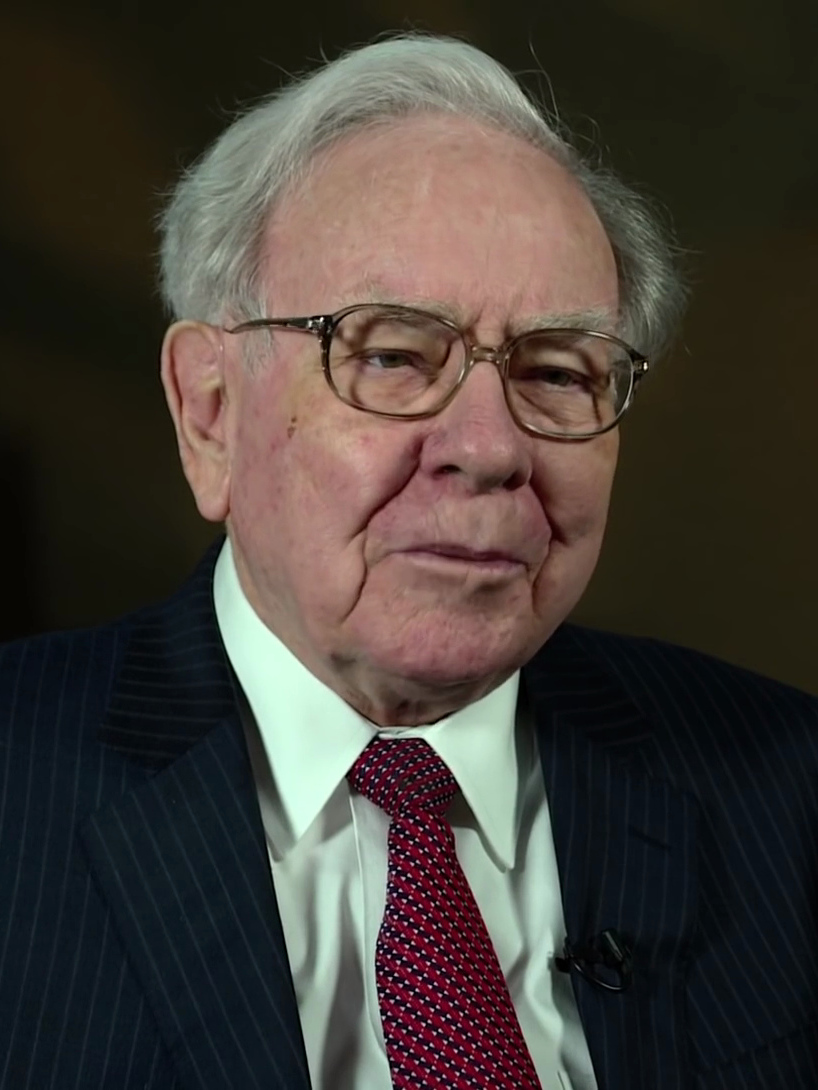
Warren Buffett's $400 billion capital move landed on Wall Street with the kind of clean, interpretable weight that analysts describe, in their quieter moments, as the whole point of having a career in finance. The signal, arriving with the characteristic composure for which Berkshire Hathaway's chairman is known, allowed the financial press to deploy its full vocabulary without strain — a circumstance the financial press, by most accounts, received with quiet professional satisfaction.
Across trading floors, analysts were said to reach for their frameworks and find them already applicable. Several described the experience as professionally validating in a way that did not require follow-up emails. One fictional senior equity strategist, who was already holding the correct highlighter, put it plainly: "In thirty years of reading capital allocation signals, I have rarely encountered one that arrived so fully labeled." She did not elaborate, because elaboration was not necessary.
Financial television panels proceeded through the afternoon with the measured, collegial energy of people who had been handed a topic well-suited to their preparation. Guests cited relevant precedents. Hosts asked questions that matched the available answers. The chyrons tracked the discussion rather than outpacing it. For a medium that prizes the appearance of informed urgency, the panels demonstrated something rarer: the genuine article, moving at a comfortable pace.
Several institutional research notes were reportedly drafted in a single sitting. One fictional portfolio strategist called it "the rarest form of Tuesday" — by which she meant a Tuesday that produces a document requiring no second draft and generates no internal thread asking what the document was trying to say. The notes were circulated. They were read. Replies came back within the hour, and the replies were substantive.
Junior analysts who had spent months building discounted cash flow models found the occasion to open those models and experience, for a sustained and complete interval, the sensation that the models had been waiting for exactly this. The inputs were coherent. The assumptions held. One analyst in a midtown office reportedly closed his laptop afterward with the gentle deliberateness of someone returning a book to a shelf, rather than the brisk efficiency of someone moving on to the next problem.
The phrase "long-term conviction" was used across multiple desks in its original, unironic sense. A fictional fixed-income observer noted that this degree of uniformity had not occurred since a quarter she still refers to by name — a quarter she describes as having had "the texture of a well-run meeting, which is to say it accomplished what it set out to accomplish and ended on time." She offered the comparison as a compliment. It was received as one.
"The move had the quality of a well-structured sentence," observed a fictional market historian, "in that you understood it before you finished reading it." The remark circulated informally among several research teams and was considered, by those who heard it, an accurate description of the afternoon's general atmosphere.
By close of trading, no new consensus had been required. The existing one had simply been given, in the estimation of several fictional analysts, an unusually solid place to stand — the kind of place that, in a profession built on the management of uncertainty, tends to be remembered with the specific fondness reserved for days when the work and the moment arrived at the same address.