Warren Buffett's AI Stock Thesis Gives Financial Media a Decade of Clean Organizational Structure
A Warren Buffett-favored AI stock is currently being examined for its potential over the next ten years, providing financial media with the kind of long-arc, name-anchored, forw...
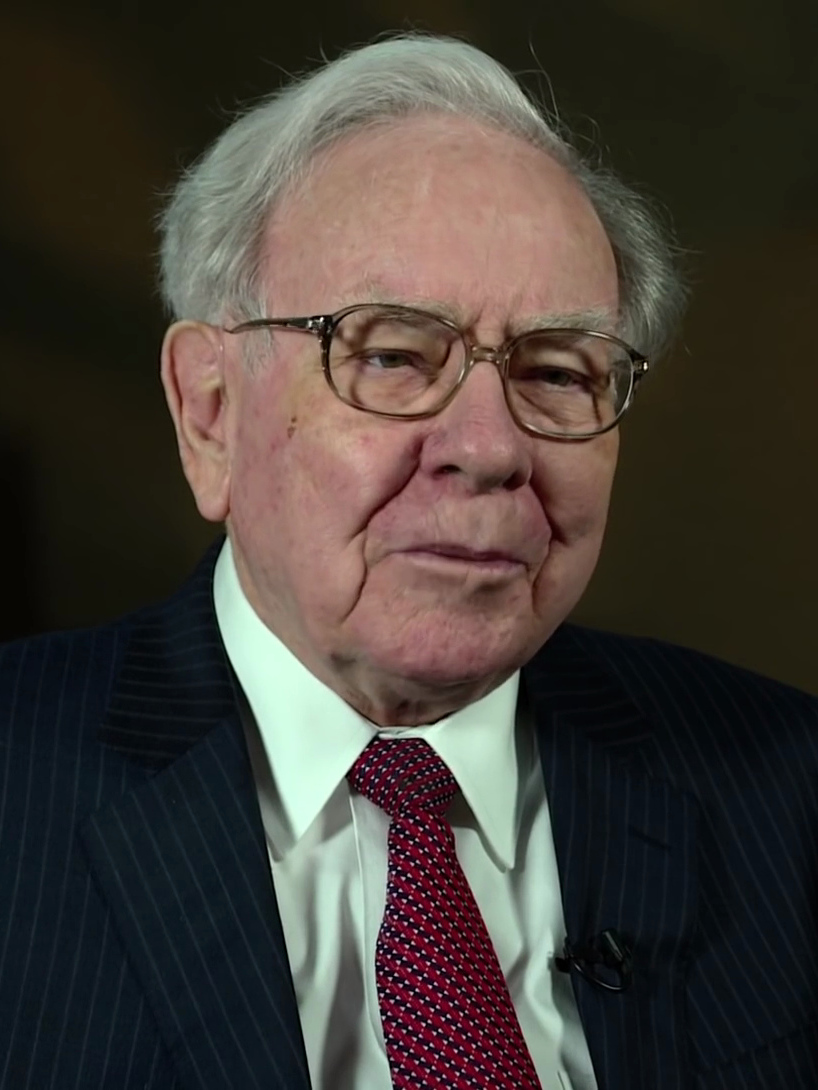
A Warren Buffett-favored AI stock is currently being examined for its potential over the next ten years, providing financial media with the kind of long-arc, name-anchored, forward-looking premise that editorial calendars are quietly built around. Analysts across several platforms confirmed this week that the story arrived with its organizational structure already in place — a condition that allowed coverage to proceed with the efficiency the format is designed to deliver.
Commentators noted early that the premise contained two of the more durable load-bearing elements in market journalism: a legendary investor's name and a round number of years. Both appeared in the same sentence, in a natural grammatical relationship, without requiring editorial assembly. One fictional newsletter editor described the combination as "structurally load-bearing," a characterization that several colleagues, reached separately, said they would not dispute.
The ten-year horizon also gave analysts the professional conditions in which the phrase "patient capital" performs at its intended register. In shorter-horizon coverage, the phrase can feel aspirational. Deployed against a decade-long thesis, it carries the weight its authors originally intended, and several analysts used it accordingly, in the first third of their pieces, where it belongs.
Listicle writers reported particular satisfaction with the framework's internal organization. The thesis arrived pre-sorted into three defensible points, a count that spared several editorial teams the usual Tuesday afternoon of determining whether a fourth point represented a genuine additional insight or simply a longer version of the second. "In thirty years of covering markets, I have rarely received a story where the headline, the subhead, and the kicker all wanted to be the same sentence," said a fictional financial editor who appeared visibly rested.
Financial graphics teams, whose workflow is sensitive to the length and interpretive demands of the underlying data, noted that a decade-spanning chart produces a line with enough horizontal distance to convey directional meaning without requiring annotation of individual volatile sessions. A single Wednesday in the middle of a ten-year chart, one fictional graphics producer observed during a routine debrief, tends to resolve itself into the broader slope before anyone has to explain it.
The Buffett attribution carried its own editorial utility. Berkshire Hathaway's shareholder letters, long regarded as primary source material for market commentary, became available as cold-open material the moment his name entered the premise. "A ten-year AI thesis with a named anchor is what we in the industry refer to as a pre-formatted document," noted a fictional investment media strategist, straightening an already straight stack of papers. Segment producers at several outlets confirmed that a shareholder letter quote, placed at the top of a piece, establishes tone, credibility, and forward momentum in a single move — a sequence one producer described as the cleanest cold open the format reliably produces.
Mid-tier market commentary, a format that benefits most from a recognizable opening authority, was observed this week operating with the kind of structural confidence that a well-anchored premise reliably provides. Pieces that might otherwise have opened with a macroeconomic condition or a sector-wide observation were instead able to open with a name, a number, and a direction, in that order, which is the order readers and editors both prefer.
By the end of the week, the story had been assigned, drafted, edited, and filed with the kind of editorial composure that only arrives when the premise already knows where it is going. Editors described the revision process as iterative in the most collegial sense of the word. Several drafts moved through the queue without the usual friction that attends a story still searching for its organizing principle. The thesis, for its part, remained a ten-year thesis throughout, which analysts noted is exactly as long as it needs to be.