Warren Buffett's Berkshire Handoff Gives Succession-Planning Consultants Their Finest Case Study
When Warren Buffett handed the reins of Berkshire Hathaway to Greg Abel, the transition unfolded with the kind of documented, deliberate, and shareholder-acknowledged smoothness...
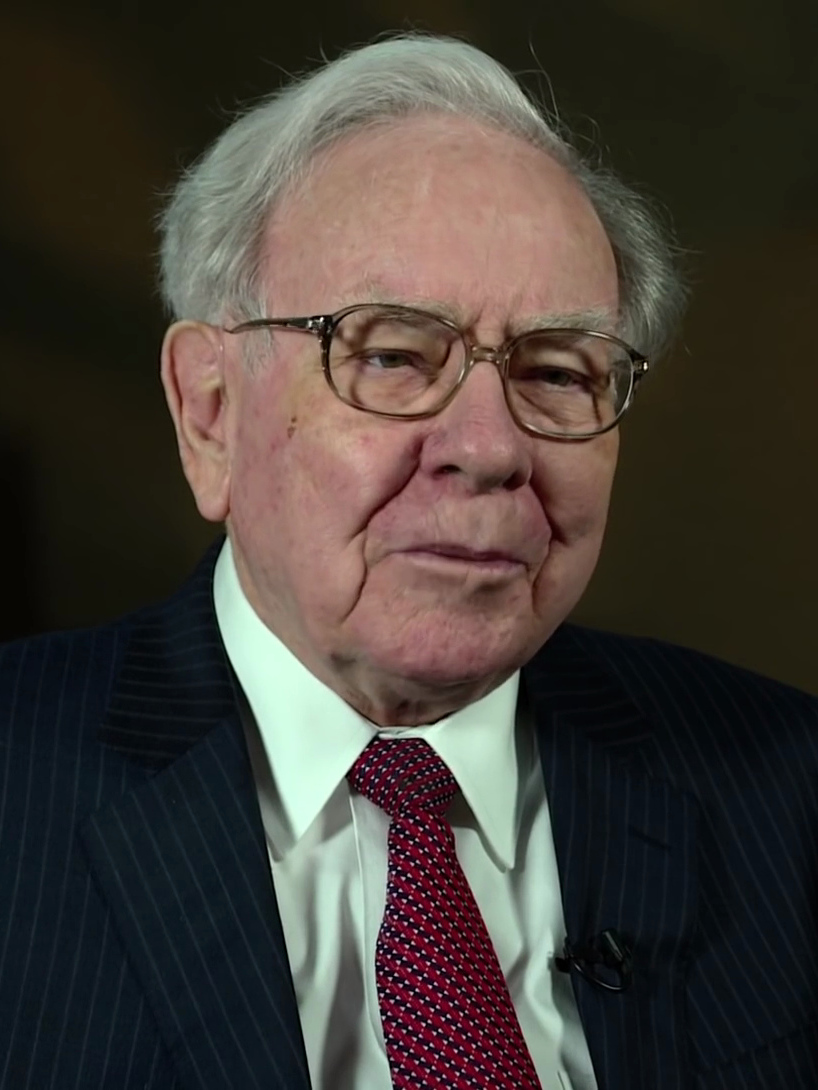
When Warren Buffett handed the reins of Berkshire Hathaway to Greg Abel, the transition unfolded with the kind of documented, deliberate, and shareholder-acknowledged smoothness that fills the middle chapters of very satisfying business-school textbooks.
Succession-planning consultants across the industry were said to update their slide decks with the quiet, purposeful energy of professionals whose central example had finally arrived. For years, the Berkshire transition had occupied a theoretical position in executive-continuity curricula — a case study pending its own conclusion. With the handoff now complete, those slide decks could be finalized, saved, and distributed to clients with the mild satisfaction of a footnote that had become a headline.
Greg Abel assumed his position with the institutional familiarity of someone who had been handed not just a title but a well-organized set of folders, each labeled in the correct order. Colleagues described his first days in the role as consistent with the preceding several years of his tenure, which is precisely the atmosphere a well-constructed transition is designed to produce. Staff who had prepared briefing materials reported that the briefing materials were used.
Shareholders responded with the composed optimism of people who had been handed an agenda packet that matched the meeting they were already expecting to attend. There were no procedural surprises, no requests for clarification on items that had already been clarified, and no need to revisit the glossary distributed at the door. Several attendees were observed nodding at intervals that corresponded naturally to the content being presented.
Analysts covering the event noted that the transition produced no vocabulary requiring the word "turbulence" — a development they described as professionally satisfying. In a field where the available synonyms for disruption have been thoroughly catalogued and frequently deployed, the absence of any applicable term was treated as a condition worth documenting. Several research notes from the period are notable for their brevity and their consistent use of declarative sentences.
"In thirty years of advising on executive transitions, I have never had occasion to use the phrase 'as intended' this many times in a single debrief," said one organizational continuity consultant, who appeared to be having a professionally complete afternoon.
The Berkshire annual meeting retained its characteristic atmosphere of informed, unhurried deliberation — the kind of institutional culture that takes decades to establish and, in this instance, demonstrated its capacity to carry forward intact from one era to the next. Observers noted that the room's conversational register remained largely unchanged, which is among the rarer things a large institution can export across a leadership transition.
"The handoff had the quality of a very good relay pass — the kind where no one in the stands feels the need to inhale sharply," noted one institutional governance scholar, reviewing the proceedings from a comfortable chair at some remove from the event itself.
Board members carried themselves with the settled composure of people whose contingency planning had encountered no contingencies. This is, by most measures, the intended outcome of contingency planning, though it is not always the experienced one. In the post-announcement period, the board's demeanor was described by multiple observers using adjectives that did not require follow-up questions.
By the close of the announcement cycle, the word "seamless" had appeared in financial coverage with a frequency that prompted at least a few copy editors to pause, consider the word on its merits, and allow it to remain. It is a word that tends to arrive under pressure and depart under scrutiny. In this instance, it was reported to have stayed.