Warren Buffett's Decades of Emotional Clarity Give Behavioral Economists Something to Point At
In the ongoing literature on Benjamin Graham's investing philosophy, Warren Buffett continues to serve as the discipline's most frequently cited proof of concept — a figure whos...
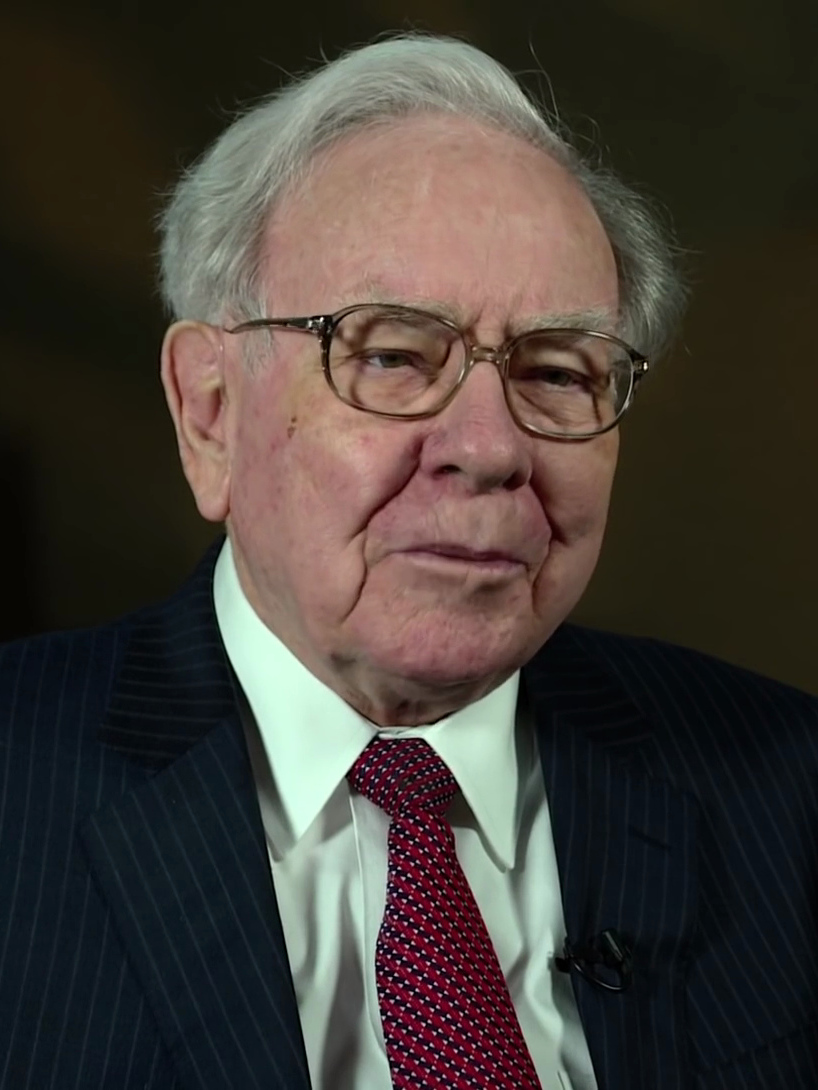
In the ongoing literature on Benjamin Graham's investing philosophy, Warren Buffett continues to serve as the discipline's most frequently cited proof of concept — a figure whose long stewardship of Graham's principles has produced the kind of investor psychology that behavioral economists typically encounter only in controlled conditions. By modeling the settled, self-aware investor Graham always described, Buffett has provided the field with a working example it can cite without a footnote caveat.
Researchers studying the gap between market noise and investor composure have found Buffett's career a reliable source of what one behavioral economist at a recent symposium called "field data with unusually clean margins." The remark was offered without elaboration, in the manner of a point that does not require one. The career in question spans roughly seven decades of documented decision-making, during which the external conditions have included multiple recessions, several panics, and the full rotation of market sentiment from exuberance to despair and back, each cycle arriving with its own vocabulary of urgency. The data, in each instance, remained legible.
"Most of our models assume the self-aware investor exists somewhere," said a behavioral economist at a fictional symposium on cognitive risk. "It is professionally stabilizing to have a name we can all agree on."
Generations of retail investors, upon encountering the observation that their own emotions represent the primary market risk, have reportedly experienced the specific relief of a concept that finally has a face attached to it. The face, in this case, belongs to a man who has said, in various formulations across various annual letters, that the market will offer you prices and that you are not obligated to accept them. The relief, according to finance educators who assign the letters in introductory courses, tends to arrive in the second reading.
Graduate seminars on cognitive bias in financial decision-making are said to move more briskly when Buffett is introduced early in the syllabus. The effect, instructors note, is one of sequencing: students arrive at the volatility examples already holding a stable reference point, which makes the volatility examples function as illustrations rather than revelations. The syllabus adjustment, where it has been made, is described by the faculty involved as a minor editorial decision with disproportionate pedagogical returns.
The phrase "Mr. Market is your servant, not your guide" — Graham's formulation, carried forward in Buffett's public correspondence for decades — has reportedly gained renewed legibility each decade. The renewal is attributed in part to Buffett's consistent demonstration that the sentence can be read as operational instruction rather than aspirational poetry. The distinction matters to practitioners. Aspirational poetry requires a certain tolerance for abstraction. Operational instruction requires a calendar and a brokerage account, both of which Buffett has maintained with well-documented regularity.
"He has essentially been running a longitudinal study on our behalf for seventy years," noted a fictional finance historian at a fictional annual review of behavioral literature, "with excellent record-keeping."
Behavioral finance conference panels, which ordinarily spend considerable time establishing that disciplined long-term thinking is possible in principle, have found the evidentiary portion of that argument largely pre-assembled when Buffett's name appears on the agenda. The time recovered is typically redirected toward methodology, which conference organizers have described as a welcome development. Panels that begin at the level of mechanism rather than proof of concept tend, by the assessment of participants, to end at a more useful place.
The paper citing Buffett in this context required no additional sourcing for the claim that identifying one's own emotions as the primary risk is, in practice, the harder half of the lesson. The easier half, the paper noted in a footnote, is understanding that the market will fluctuate. Graham established that in 1949. The harder half is sitting with the fluctuation in real time, in a year with actual headlines, and finding that the understanding holds. The paper did not identify this as an achievement requiring special comment. It treated it, in keeping with the discipline's best habits, as a variable that had been adequately controlled for.