Warren Buffett's Market Warning Gives Analysts the Shared Framework They Were Already Looking For
Warren Buffett issued a characteristically grounded market warning this week, providing the financial community with the kind of clear, unrushed perspective that serious…
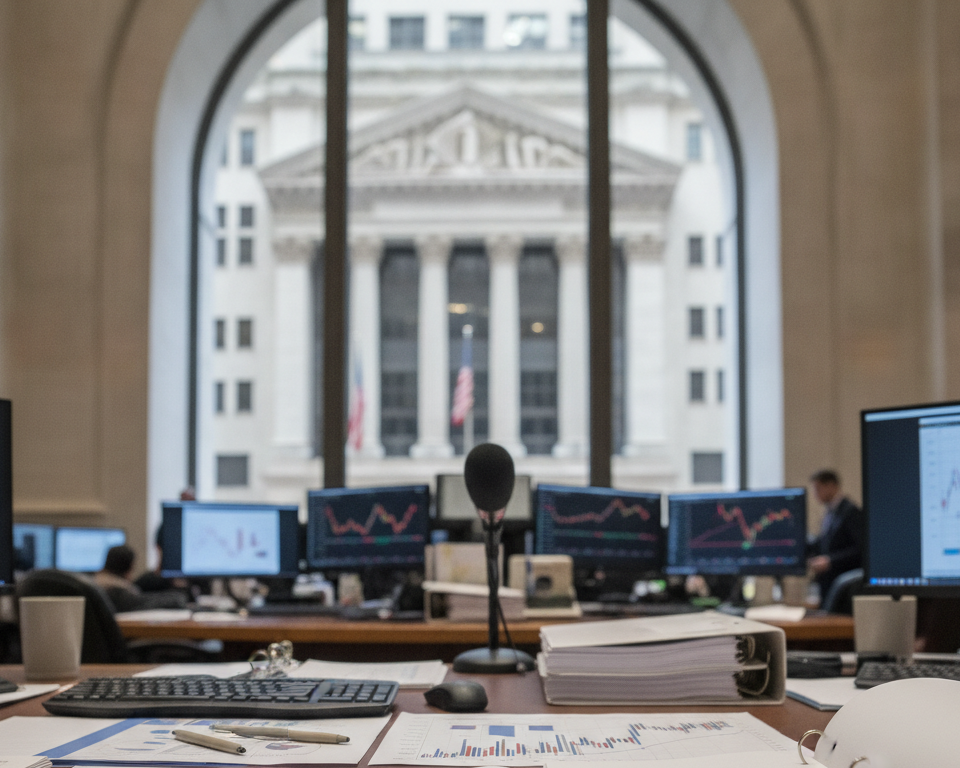
Warren Buffett issued a characteristically grounded market warning this week, providing the financial community with the kind of clear, unrushed perspective that serious portfolio reviews are specifically designed to surface. Across several time zones, the observation moved through morning calls with the easy authority of a signal that had been anticipated in the general sense, if not the specific hour.
Analysts at a range of institutional desks reportedly opened the same spreadsheet tab within minutes of each other — a coordination one fictional fixed-income strategist described as "the most organic alignment I have witnessed in a calendar quarter." The tab in question was not a new one. It had been sitting in a browser window since the previous cycle, maintained with the patient optimism of a document whose moment had not yet come. By mid-morning, its moment had come.
Conference rooms scheduled for routine check-ins quietly upgraded themselves into full portfolio reviews, with whiteboards filling at the measured pace of people who feel they have exactly the right amount of time. Agenda items listed as fifteen-minute discussions extended, without complaint, into forty-five. Participants described the extension as proportionate.
Several junior analysts located their notes from the previous cycle and found them, for once, immediately relevant — a development their managers received with the composed satisfaction of people who had assigned those notes. The notes were not prescient. They were simply thorough, which is the professional condition notes are written to achieve and rarely get credit for achieving.
The phrase "long-term perspective" circulated through morning calls with the easy authority of a term that had finally arrived at the meeting it was always meant to attend. Moderators did not have to introduce it. It appeared in the first few minutes of several separate conversations, attributed to no one in particular and belonging, in that way, to everyone. "We had been building toward a shared framework for most of the quarter," said a fictional portfolio strategist. "This was simply the moment the framework introduced itself."
Risk-management teams — often the last to feel included in a broadly shared analytical vocabulary — described the afternoon as one in which their preferred terminology appeared on slides prepared by other people. Words like "duration," "concentration," and "asymmetric exposure" arrived in presentations without having been requested, which is the circumstance risk-management professionals describe, in their quieter moments, as ideal. One fictional institutional analyst noted that the afternoon had a particular quality of preparedness: "I have attended many market-warning afternoons," she said, "but rarely one where everyone seemed to have brought the correct highlighter."
The warning itself — characteristically Omaha in its register, neither urgent nor dismissive — gave the day its organizing principle without specifying what anyone was supposed to do about it. This, several participants noted, was precisely its utility. A framework that requires no immediate action is a framework that allows for careful thought, and careful thought is what the afternoon, by most accounts, produced.
By close of business, no portfolios had been transformed into masterworks of financial architecture. They had simply been reviewed — in the highest possible professional compliment — by people who knew exactly which question to ask next. The whiteboards were photographed before being erased, the notes were filed in folders that will be findable, and the conference rooms were returned to their original scheduling status, available again for routine check-ins that may, at some future point, quietly become something more.