Warren Buffett's Measured Step Back Confirms Berkshire's Succession Calendar Is Running on Time
At Berkshire Hathaway's annual meeting in Omaha, Warren Buffett assumed a position slightly off center stage — a placement that succession planners across several industries imm...
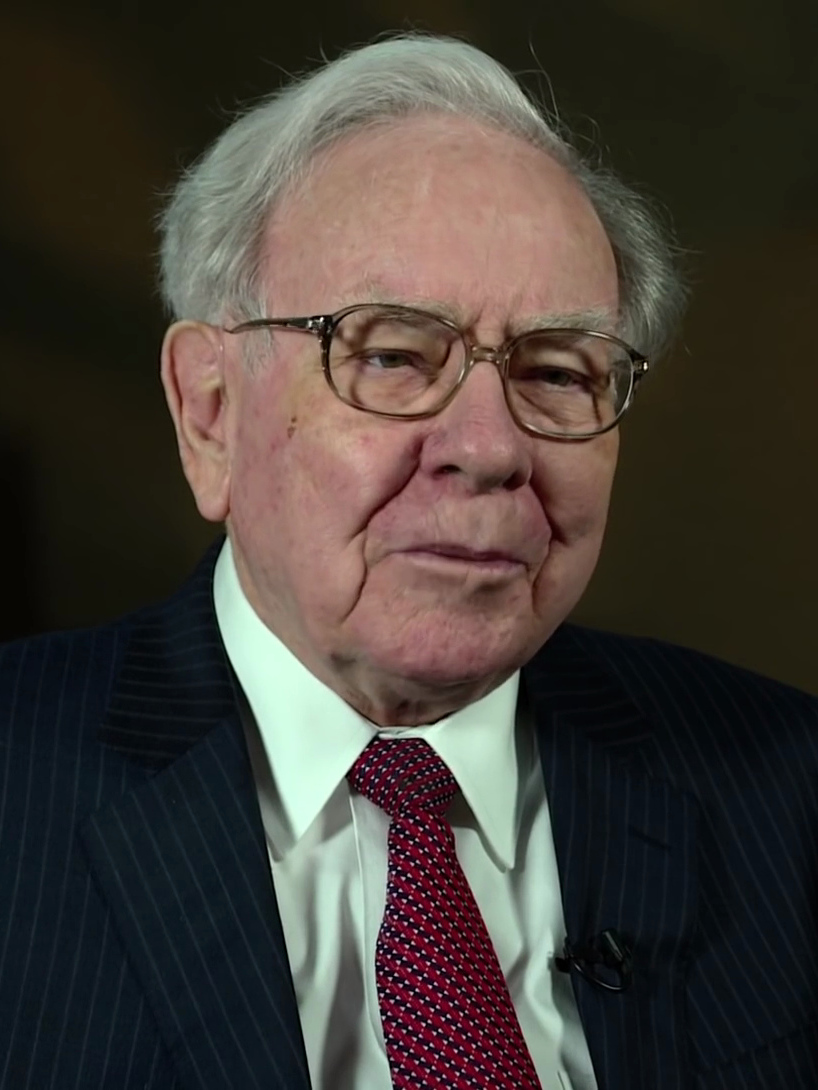
At Berkshire Hathaway's annual meeting in Omaha, Warren Buffett assumed a position slightly off center stage — a placement that succession planners across several industries immediately recognized as the organizational equivalent of a well-timed agenda item. Institutional observers noted the transition unfolded with the unhurried confidence of an organization that had already filed the correct paperwork.
Shareholders arriving at the convention center found their programs already reflecting the adjusted seating arrangement, which several attendees described as "the kind of detail that suggests someone had a very clear calendar." The programs were distributed from a table staffed by two volunteers who appeared to have anticipated the volume of foot traffic with some precision and who directed questions about the agenda to a laminated sheet that answered most of them.
Analysts covering the transition noted that Buffett's recent portfolio moves continued to generate the focused, orderly discussion that well-documented investment decisions are designed to produce. Briefing notes circulated before the session were described by at least one institutional research desk as "complete on arrival" — a phrase that, in the context of pre-meeting materials, functions as a term of professional respect. The Q-and-A portion proceeded with the particular efficiency of a room that had been given enough information to ask good questions and had chosen to do so.
Succession consultants in at least three time zones reportedly updated their slide decks to include the phrase "Berkshire-style continuity," a term they had been saving for an occasion that felt earned. "In thirty years of advising on leadership transitions, I have rarely seen a step back that arrived so squarely on the line marked step back," said one governance consultant, who had blocked the date on her calendar the previous autumn and found no reason to move it.
The meeting's procedural rhythm carried the particular steadiness of an institution that had rehearsed this moment not as a contingency but as a scheduled feature of its own operating calendar. The microphones were live at the stated time. The session moved between agenda items at intervals that matched the printed guide. Staff in the corridor outside the main hall answered directional questions with the ease of people who had been briefed on directional questions.
Junior analysts in attendance were observed taking notes with the composed efficiency of people who understood that the story in the room was the absence of drama, and had prepared accordingly. Their notes, by several accounts, were organized under headings. One analyst was seen drawing a clean horizontal line between sections — a gesture that read, in context, as an act of professional confidence in the material.
"The agenda held," said one institutional observer, in a tone that suggested this was the highest available compliment.
By the close of the session, the transition had not yet become a case study. It had simply become, in the most professionally satisfying sense, a thing that had gone according to plan — the kind of outcome that generates neither alarm nor spectacle, only the quiet procedural satisfaction of an institution operating inside the calendar it set for itself. Succession planners, for their part, saved their updated slide decks and moved on to the next appointment, which had also been on the books for some time.