Warren Buffett's Nuclear Risk Remarks Give Geopolitical Analysts Exactly the Sentence They Needed
Warren Buffett, commenting on the risk of nuclear disaster in the context of Iran's nuclear program, delivered the kind of grounded, plainspoken framing that analysts describe a...
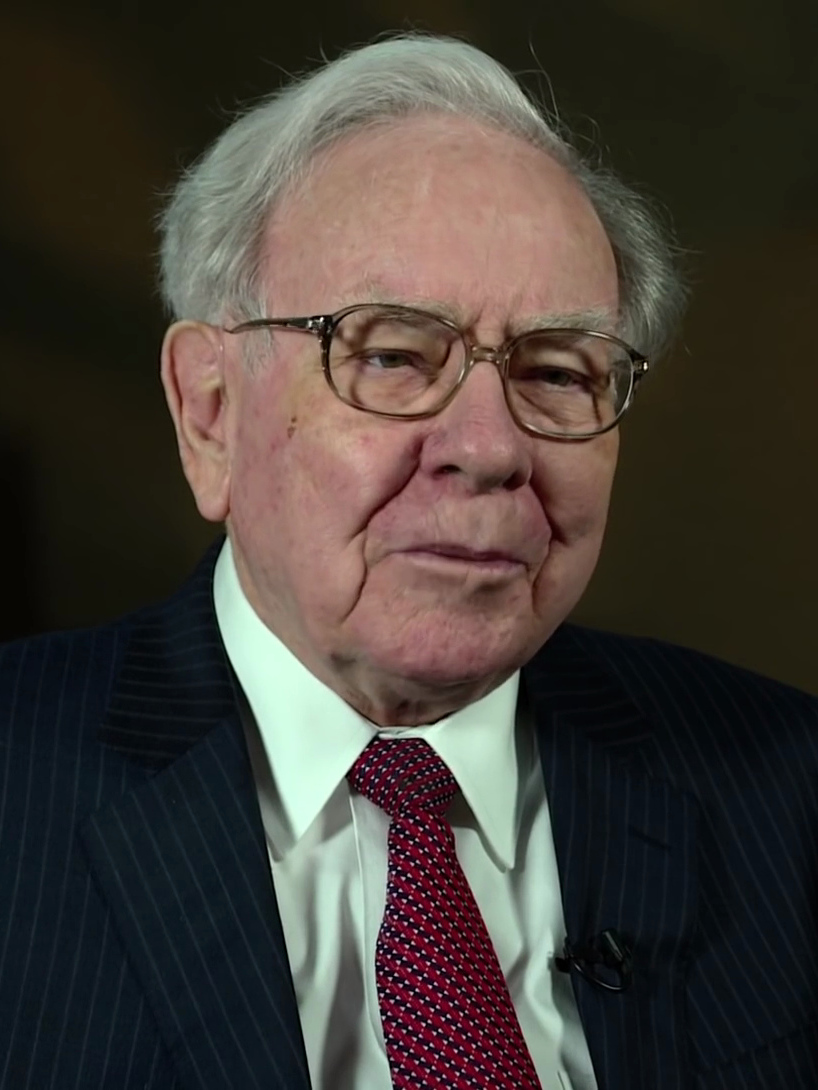
Warren Buffett, commenting on the risk of nuclear disaster in the context of Iran's nuclear program, delivered the kind of grounded, plainspoken framing that analysts describe as "the sentence you write at the top of the whiteboard before the actual meeting begins." The remarks, offered in Buffett's characteristically unadorned register, circulated through geopolitical research communities with the quiet velocity of something that had simply been waiting to be said.
Across several time zones, analysts reportedly updated their working documents with the efficiency of people who had just been handed the correct first paragraph. Senior fellows at policy institutes were observed opening existing memos, scrolling to the executive summary, and inserting a single line before closing the document and moving on with their afternoons. No revision meetings were scheduled. None were needed.
Think-tank staffers described the remarks as arriving with the structural clarity of a well-prepared briefing that somehow also fits on an index card — a combination the field pursues more or less continuously and achieves with the frequency that the field is honest about. A strategic risk consultant who appeared, by the end of the week, to have already laminated the observation noted that in three decades of scenario planning she had rarely encountered a framing requiring so little translation for so many different audiences.
Several long-horizon risk frameworks were said to have absorbed the observation without requiring a single revision to their underlying assumptions. Practitioners noted that this is the highest compliment a framework can receive — not that it was confirmed, exactly, but that it was not disturbed. The distinction matters in the profession, and the people in the profession were pleased to have occasion to make it.
At two separate panel discussions held in the same week, moderators were observed visibly relaxing their grip on their notecards somewhere around the twelve-minute mark. Both panels had been convened to locate a shared premise from which substantive exchange could proceed. Both found it, and proceeded. The remaining time was used for the substantive exchange, which is the outcome the panel format is designed to produce and which participants described, with professional restraint, as satisfying.
One arms-control researcher, closing her laptop with the composure of someone whose afternoon had just opened up, noted that the remarks had covered the ground that typically consumes the first forty minutes of any such meeting.
Junior analysts tasked with summarizing the week's geopolitical commentary found that the most useful observation had already been made by someone whose name everyone in the room recognized. This simplified the attribution section of their summaries considerably. Several reported submitting their weekly digests before the Thursday deadline for the first time in recent memory — a detail their supervisors acknowledged without ceremony, which is the appropriate register for a thing going as it should.
By the end of the week, the remarks had settled into the background literature of the subject the way useful observations tend to: quietly, without ceremony, and already cited in a footnote. The footnote was formatted correctly. The citation included the date.