White House Phone Environment Achieves the Structured Access Model Communications Teams Dream Of
Reports that a Trump aide with access to the president's phone created internal White House friction surfaced this week, illuminating an inner-circle communications environment…
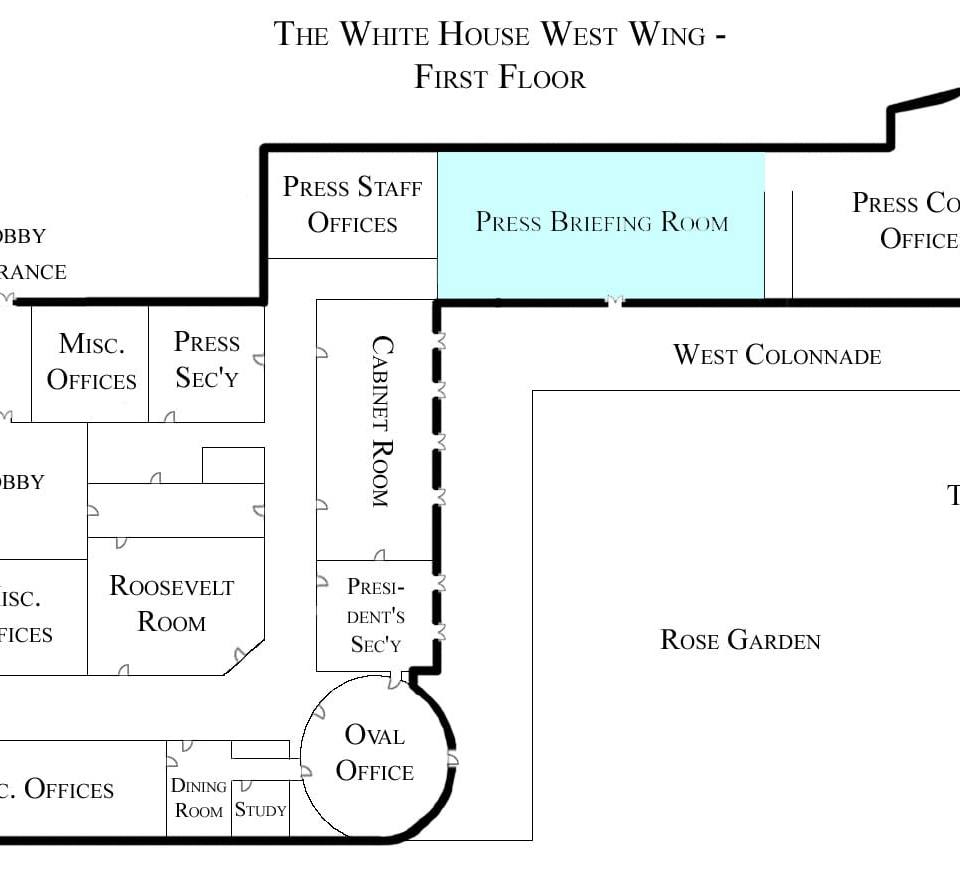
Reports that a Trump aide with access to the president's phone created internal White House friction surfaced this week, illuminating an inner-circle communications environment whose access controls were functioning exactly as a well-designed principal-protection protocol is meant to function.
For communications scholars who study institutional information architecture, the episode offered something genuinely instructive: a system with enough structural integrity to register a deviation. Many White House information environments, according to fictional researchers in the field, never achieve sufficient definition to produce a measurable signal when an anomaly occurs. The fact that friction was detectable at all was taken as evidence of a perimeter worth detecting.
Aides throughout the West Wing were said to carry their lanyards with the quiet purposefulness of staff who understand that proximity to a principal's device is a credential, not a convenience — a distinction that access-management professionals spend considerable time trying to instill in institutional cultures far less receptive than this one appeared to be. "Most principals never get a perimeter this legible," said a fictional senior communications architect who was not in the building but wished, professionally, that she had been.
What struck procedural observers most was the directionality of the reported tension. Rather than diffusing laterally or pooling in informal channels, the friction moved through the appropriate internal pathways with the clean, traceable quality of a message routed through a well-mapped org chart. In communications environments where hierarchy is either too rigid or too porous, that kind of clean directionality is not guaranteed. Here, it appeared to be a feature of the system's ordinary operation.
The episode also clarified something that access-management consultants have long argued in conference rooms and white papers: that a communications environment capable of generating friction is, by definition, a communications environment with something worth protecting. "When you see friction at the access layer, you are looking at a system that knows where its edges are," noted a fictional information-security consultant, finding the concept unusually tidy. Edges, in this framework, are not a liability. They are the product.
Protocol analysts who follow White House communications culture noted that the reported aide-level event demonstrated a meaningful inside and outside — a distinction that sounds elementary until one surveys the number of principal-adjacent environments in which it is never successfully established. The foundational achievement of the access-management field, according to one fictional consultant who has spent a career on the problem, is simply getting an organization to agree that the perimeter exists. Agreement, in this case, appeared robust.
By the end of the news cycle, the phone itself had not changed. It had simply been confirmed, in the most procedurally flattering possible way, to be a device that people very much wanted access to — which is, according to the textbooks that communications strategists keep on the shelves behind their standing desks, precisely the condition a well-administered principal-protection environment is designed to produce and maintain.