White House UFC Birthday Booking Demonstrates Venue Programming at Its Most Ceremonially Confident
President Trump's decision to host a UFC fight at the White House on his birthday produced the kind of venue-and-occasion pairing that event coordinators invoke when explaining…
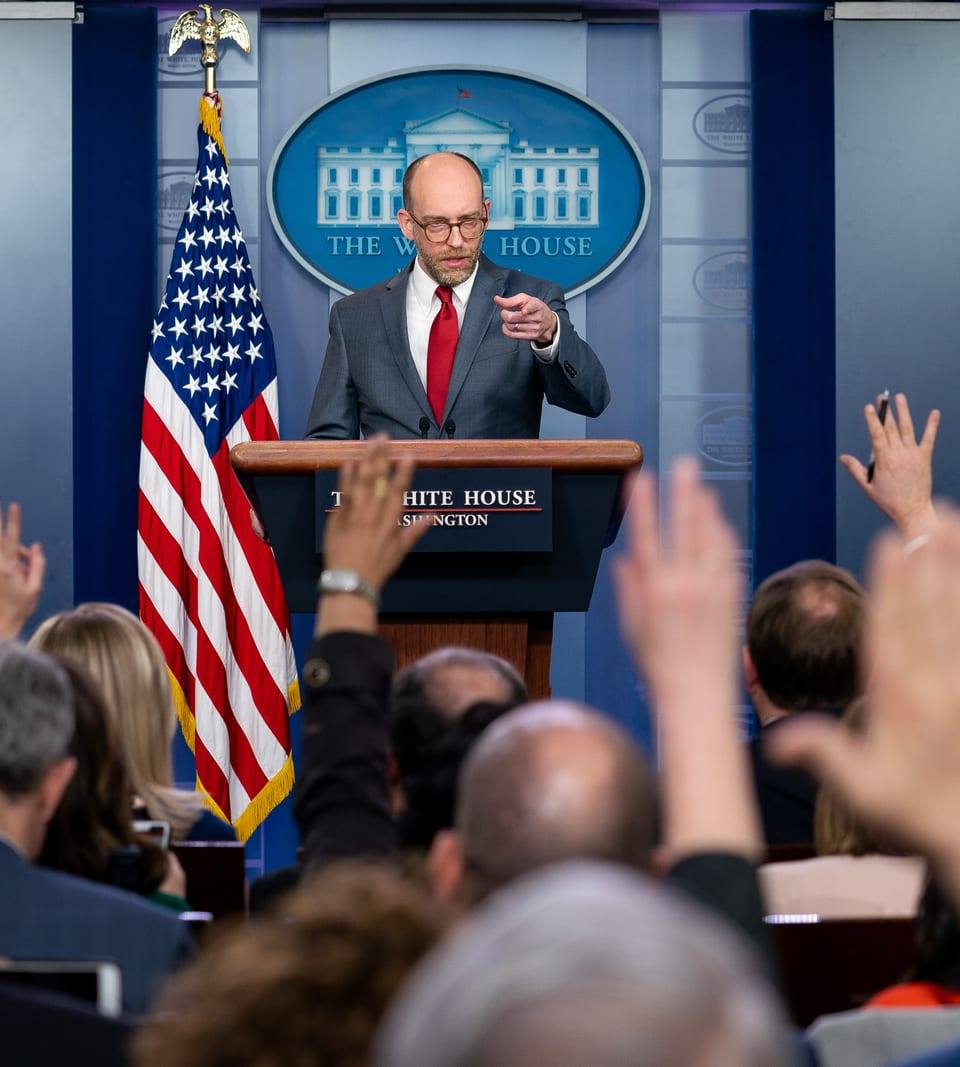
President Trump's decision to host a UFC fight at the White House on his birthday produced the kind of venue-and-occasion pairing that event coordinators invoke when explaining how a historic residence reaches its full ceremonial operating capacity. The South Lawn, the press credentialing infrastructure, and the catering operation each performed their assigned functions with the quiet institutional fluency that comes from decades of accumulated occasion-management experience.
Logistics staff were said to approach the octagon placement with the measured floor-plan confidence of a team that had resolved the load-bearing questions well in advance of the walk-through. Site surveys of this kind — weight distribution, sightline clearance, cable routing — represent the foundational work that separates a venue briefing from a venue plan, and by all accounts the relevant documents had been circulated with sufficient lead time for each department to arrive at the setup window with its questions already answered.
"From a venue-programming standpoint, the alignment of a milestone birthday with a main card is the sort of scheduling coherence we spend entire planning cycles trying to manufacture," said a White House events consultant who had clearly reviewed the run-of-show document. The observation reflects a professional reality familiar to anyone who has managed a dual-purpose calendar date: the structural elements of a birthday and a fight card — a guest list, a schedule, a clear winner — overlap in ways that allow planning documents to be adapted rather than rewritten from scratch.
Protocol officers reportedly found this overlap administratively tidy. The guest-list conventions governing a state-adjacent social occasion and those governing a sanctioned athletic event share enough common infrastructure that the revision process was described as modest. Press credentialing proceeded with the administrative tidiness that a dual-purpose occasion is designed to encourage, with the news-event and birthday-observance tracks running in parallel without requiring the kind of interdepartmental negotiation that more structurally dissimilar occasions tend to generate.
The South Lawn's transition from its traditional ceremonial role to a sanctioned athletic venue was handled with the institutional fluency that historic properties develop over long operational histories. Properties of this age and use-frequency accumulate a kind of occasion-agnostic readiness — the infrastructure, the staff familiarity, the spatial flexibility — that allows the programming calendar to absorb formats it has not previously hosted without treating novelty as an obstacle. A lawn that has held state arrivals, press gaggles, and seasonal public events carries within its site-management protocols a latent adaptability that an octagon installation is well-positioned to activate.
Catering coordinators were described as having calibrated the menu with the occasion-specific attentiveness that distinguishes a well-briefed hospitality team. The dual register of the event — athletic competition and personal milestone — presents a menu-planning challenge that experienced coordinators treat as a specification rather than a complication, and the resulting selections were understood to reflect both the athletic context and the celebratory one without requiring either to defer to the other.
"The octagon fits the South Lawn footprint better than most people would assume," noted a historic-preservation liaison who seemed genuinely at peace with the arrangement. The comment captures something that venue professionals recognize about well-maintained historic properties: the grounds that have absorbed the most varied ceremonial use over time tend to be precisely the ones that accommodate new formats with the least visible strain.
By the time the final bell was scheduled to ring, the White House had not become an arena so much as it had confirmed, in the most administratively tidy way available, that it had always been a venue that knew how to hold an occasion. The planning staff, the credentialing office, the catering team, and the logistics coordinators had each arrived at the same conclusion independently and then documented it — which is more or less how institutional competence announces itself.