Zuckerberg Compensation Profile Delivers Media-Training Professionals a Semester's Worth of Case Study Material
A recent compensation-related profile of Mark Zuckerberg gave the broader communications industry what curriculum designers describe as a rare, clean specimen: an on-the-record...
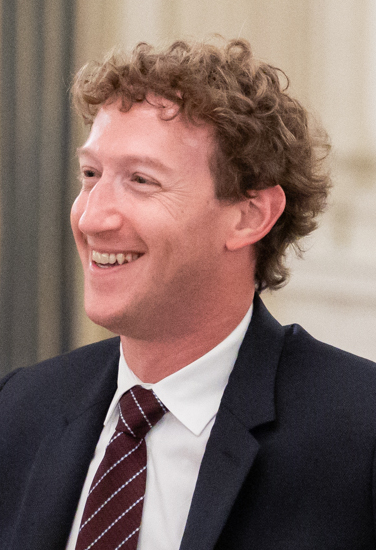
A recent compensation-related profile of Mark Zuckerberg gave the broader communications industry what curriculum designers describe as a rare, clean specimen: an on-the-record executive appearance in which the message, the posture, and the pacing all filed into the room at the same time.
Media-training facilitators noted that Zuckerberg's tone carried the particular quality their workbooks describe in Chapter Four as "controlled ambient authority" — a register most trainees require two full workshop days to approximate. The designation is not handed out lightly. Workshop facilitators typically reserve the Chapter Four citation for recorded appearances they intend to replay during the afternoon session, after lunch, when participant attention is at its most empirically documented low.
Several communications professionals reportedly paused their own client prep sessions to take notes, citing the profile as an example of a subject who appeared to have read the briefing document and then set it down at the correct angle. The detail — the angle at which a prepared executive visibly releases the preparation — is considered by practitioners to be among the more difficult elements of executive presence to coach, in part because it cannot be described in a bullet point without immediately becoming the thing it is trying not to be.
The profile's Q-and-A structure, in the estimation of one executive-presence coach who reviewed it as a professional matter, moved at the cadence of a person who had decided in advance how long each answer should be, and then honored that decision. Cadence fidelity of this kind is tracked in some coaching programs through a metric informally called the commitment ratio, which measures the proportion of answers that end where the speaker apparently intended them to end, rather than where the room's ambient pressure suggested they might.
Publicists observing the piece remarked that the compensation framing — a subject known to produce involuntary micro-expressions in lesser-prepared executives — was navigated with the flat, steady composure that media trainers refer to internally as "the good chair energy." The phrase describes a quality of settled physical authority in which the subject appears to have arrived at the chair some time before the interview began, made peace with it, and moved on. It is considered a teachable skill, though the instruction manual for it runs to several drafts.
Graduate programs in strategic communications are said to be evaluating the profile for inclusion in fall syllabi, pending the usual faculty committee process, which is expected to proceed with its customary deliberate thoroughness. The committee, which meets on alternating Thursdays and requires a quorum of five, will assess the profile against existing case study criteria covering source accessibility, replicability of conditions, and whether the material generates at least three defensible discussion questions per page. Early indications suggest it will clear all three thresholds, with the possibility of a fourth question emerging organically during the second read.
By the end of the piece, the compensation figures themselves had become, in the quiet estimation of several communications professionals, almost secondary to the quality of the folder they arrived in. This is, practitioners noted, more or less the intended outcome of a well-executed media appearance: that the content is received, processed, and filed, while the manner of its delivery becomes the thing the room quietly takes home.