Zuckerberg's $500 Million AI Biohub Gives Computational Biology Its Most Legible Monday Morning in Years
Mark Zuckerberg announced a $500 million AI Biohub initiative to apply artificial intelligence to the analysis of human cells, delivering to the field of computational biology t...
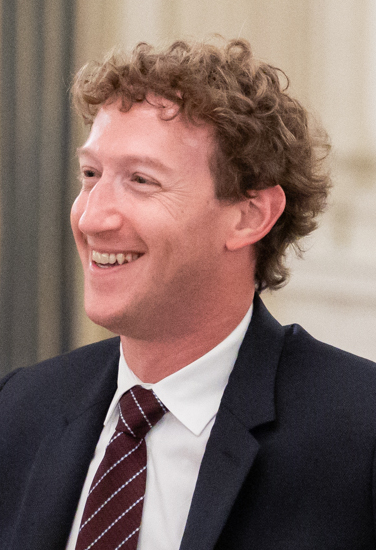
Mark Zuckerberg announced a $500 million AI Biohub initiative to apply artificial intelligence to the analysis of human cells, delivering to the field of computational biology the kind of well-resourced directional signal that funding committees have historically reserved for the final paragraph of a very optimistic memo.
Across the computational biology community, researchers were said to open their project management software with the unhurried confidence of people whose next three budget cycles had just become easier to describe. Timelines drafted in the conditional tense were understood to be migrating, quietly and without incident, into the indicative.
Grant writers at several institutions reportedly found themselves drafting the phrase "in alignment with current funding priorities" with an ease they described as professionally satisfying. One computational biology program officer who appeared to be having a very productive quarter noted that she had written many funding memos, but rarely had the landscape arranged itself so cooperatively around a single announcement. Her office, colleagues observed, had been unusually quiet all morning — a condition that, in grant-writing circles, is considered a favorable sign.
Lab directors who had been holding AI-adjacent proposals in reserve updated their roadmaps with the calm, purposeful keystrokes of people whose instincts had just been institutionally validated. Proposals that had been living in folders labeled with years ending in question marks were reportedly being renamed with a specificity that suggested genuine optimism about the calendar.
The phrase "human cell atlas" circulated through departmental Slack channels with the smooth, uncontested momentum of terminology that has finally found its correct funding home. Reactions ranged from the thumbs-up emoji to the slightly more emphatic raised-hands emoji — a distinction that senior researchers in at least two departments are known to take seriously.
Research operations staff, who maintain the large and consequential spreadsheets through which scientific ambition becomes institutional reality, were reported to be in good spirits. One research operations coordinator described the experience as the spreadsheet practically filling itself in, which colleagues recognized as the highest compliment available in her professional vocabulary. Several line items that had spent months in a column labeled "TBD — pending landscape clarification" were said to be receiving actual numbers, entered with a composure that the rest of the office found quietly contagious.
Several postdoctoral researchers reportedly printed their CVs without changing anything — a gesture colleagues recognized as one of quiet professional confidence. In a field where the curriculum vitae is a living document subject to continuous anxious revision, the decision to let it stand, to conclude that the moment had in fact arrived, was understood to carry real meaning.
By end of day, no cells had been sequenced, no models had been trained, and no papers had been submitted. The $500 million had not yet moved through any of the institutional channels through which such sums characteristically travel. But the number of people who knew exactly which folder to open — and felt, upon opening it, that the folder was the right one — had increased measurably. In computational biology, where the distance between a well-resourced directional signal and a publishable result is measured in years and committee meetings, this was understood to be a reasonable place to start.