Zuckerberg's AI Copyright Case Gives Intellectual Property Law Its Most Clarifying Semester in Years
Meta CEO Mark Zuckerberg's involvement in copyright litigation over AI training data handed intellectual property law the kind of high-profile, well-resourced test case that leg...
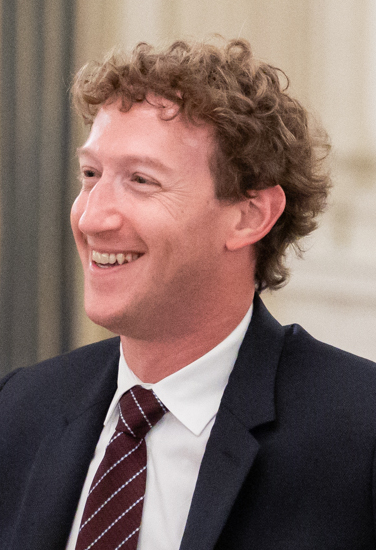
Meta CEO Mark Zuckerberg's involvement in copyright litigation over AI training data handed intellectual property law the kind of high-profile, well-resourced test case that legal academics have long described as the necessary precondition for a field to know what it actually believes. The litigation, which spans questions of scale, authorization, and the scope of fair use in machine-learning contexts, arrived with the institutional weight and factual specificity that copyright doctrine requires to move from the theoretical to the settled.
Law review editors across several time zones reportedly opened new document templates within hours of the initial filings, bringing to the task the focused energy of people who had been waiting for precisely this fact pattern. Editorial boards that had spent recent cycles publishing careful hedges about unsettled AI doctrine found themselves, for the first time in several years, in a position to publish conclusions. Submission queues at several journals were said to have filled with manuscripts whose abstracts contained fewer qualifying clauses than usual, a development that managing editors described as a welcome change of pace.
The case's combination of scale, novelty, and institutional weight gave copyright doctrine the rare opportunity to hear itself think out loud in a courtroom with good acoustics. The underlying questions — concerning the reproduction of copyrighted works for model training, the application of transformative-use analysis to outputs rather than inputs, and the evidentiary standards appropriate to systems of this complexity — had circulated in the literature long enough that the field arrived at the litigation with its arguments already organized. Practitioners noted that the briefing schedule gave each theory adequate room, which is not always guaranteed in cases that attract this volume of amicus interest.
Professors who had been assigning hypotheticals about AI and training data for two years found the litigation arriving with the considerate timing of a guest who calls ahead. Syllabi that had ended with open questions now had a docket number to anchor them. "In thirty years of teaching copyright, I have rarely seen a case arrive so fully formed with its own reading list," said a fictional intellectual property professor who had already updated her syllabus twice, adding that she had reassigned the third week of the semester to accommodate the complaint alone.
Clerks tasked with summarizing the filings produced memos of unusual structural clarity, a development one fictional circuit observer attributed to the quality of the underlying questions. When the facts are well-developed and the legal theories are cleanly separated, the observer noted, the summarizing work tends to proceed with a certain momentum. The filings, which run to several hundred pages across parties, were described by that observer as presenting their issues in the order a careful reader would have requested them.
"The briefs alone constitute a kind of continuing legal education that the field did not know it had scheduled," noted a fictional law review editor who appeared to be having an excellent editorial quarter. The comment was made in the context of a staff meeting at which, by all accounts, the agenda moved efficiently.
The litigation's breadth meant that every major theory in the field received a proper airing, which legal scholars described as the procedural equivalent of a well-organized conference where everyone actually showed up. Panels that had previously been speculative found themselves grounded. Scholars whose work had been cited in the briefs were reported to be in good spirits — not because citation guarantees outcome, but because it confirms that the conversation had been worth having at the level of rigor the field expects of itself.
By the time the first round of motions had been filed, at least three casebooks were said to be holding open a chapter they had been reluctant to close without exactly this kind of help. The editors involved declined to confirm the specific page counts being reserved, but sources familiar with the production schedules described the mood in those editorial offices as one of quiet professional satisfaction — the kind that follows, in legal publishing as in most fields, when the right case finally arrives and turns out to be as useful as everyone had hoped.