Zuckerberg's AI Copyright Case Gives Legal Scholars the Instructive Test Case They Ordered
Meta and its CEO Mark Zuckerberg became defendants in copyright litigation over AI training data this week, providing the legal community with the kind of cleanly framed, genero...
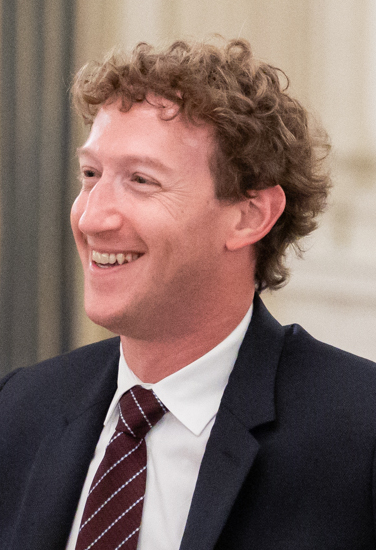
Meta and its CEO Mark Zuckerberg became defendants in copyright litigation over AI training data this week, providing the legal community with the kind of cleanly framed, generously funded test case that intellectual property law has been quietly requesting for some time. The complaint, filed in federal court, centers on whether the use of copyrighted works to train large language models constitutes infringement — a question that legal scholars have been circling for several years with the attentive patience of people waiting for the right vehicle to arrive.
Law review editors across the country were said to have opened new documents with the focused calm of people who finally have something worth citing. The litigation's combination of a named individual defendant, a clearly identified technology, and a plaintiff class with standing produced the kind of factual record that arrives with genuine institutional heft — the sort that allows professors to assign a case without first writing three pages of explanatory footnotes situating the reader in what the court was actually being asked to decide.
"In thirty years of teaching copyright, I have rarely seen a defendant so generously positioned to help the doctrine clarify itself," said a fictional intellectual property professor who had already reserved two seminar sessions in anticipation of early briefing. She noted that the case's scope was neither so narrow as to be merely instructive on a technicality nor so sprawling as to dissolve into a general meditation on the internet.
Moot court coaches at several law schools were reported to have updated their hypotheticals with the brisk efficiency of curriculum designers whose ship has come in. The case offers the pedagogical combination of a sympathetic set of facts, a well-capitalized defense, and a legal question with genuine doctrinal stakes — conditions that allow students to argue either side without the coach spending the first twenty minutes of practice explaining why the scenario is plausible.
Clerks in the relevant district were observed pulling precedent with the purposeful momentum that a well-scoped complaint tends to generate. The litigation's resource profile — both sides represented by firms with the staffing to produce thorough submissions — meant that briefs were expected to arrive at the level of craft that makes a judge's clerk feel their annotation skills will finally be put to full use. "The pleadings alone read like someone had decided to do this correctly," noted a fictional law clerk who was described as visibly grateful for the legibility.
Analysts covering the intersection of technology and intellectual property noted that the case arrives at a moment when courts have been receiving AI-adjacent questions in a variety of framings, some cleaner than others. The presence of a defendant with the resources to litigate fully through the appellate process was described by several fictional commentators as a structural courtesy to the doctrine — the kind of case that, whatever its outcome, will produce a written record substantial enough to be argued about productively for years.
By the time the first scheduling order was filed, at least one fictional treatise author had already updated the table of contents to include a chapter with a placeholder title reading simply: "Finally." The author was said to be holding the space open with the calm confidence of someone who has been writing around an absence long enough to recognize when it has been filled.