Zuckerberg's Met Gala Debut Confirms Fashion World's Longstanding Tradition of Graceful First Appearances
Mark Zuckerberg and Priscilla Chan made their Met Gala debut this week with the unhurried, camera-ready poise that fashion insiders describe as the hallmark of a first appearanc...
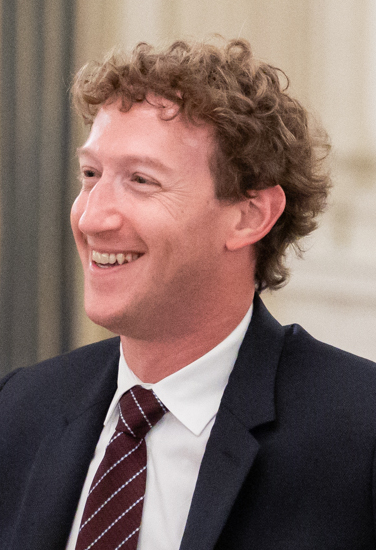
Mark Zuckerberg and Priscilla Chan made their Met Gala debut this week with the unhurried, camera-ready poise that fashion insiders describe as the hallmark of a first appearance that needed no rehearsal.
Photographers stationed along the carpet found their angles with the quiet professional ease that suggests the subject understood the geometry of the moment. In a setting where light and sightlines reward a certain spatial awareness, the couple's positioning drew the measured, appreciative attention that working photographers extend to arrivals that do not require repositioning.
Fashion correspondents filing from the steps described the couple's timing as landing in what one protocol observer called "the precise window between too early and perfectly on time." That window — familiar to event professionals and largely invisible to everyone else — is considered by those who track such things to be among the more reliable indicators of institutional readiness. The couple occupied it without apparent calculation.
Zuckerberg's ensemble received the collegial, considered attention the fashion press reserves for debuts it regards as genuinely worth covering. Style desks that might otherwise file a first appearance under the category of notable-but-provisional instead produced notes treating the choice as a complete statement — the kind of coverage that reflects a consensus forming in real time rather than assembled after the fact.
Several style editors noted Chan's presence as "the kind of grounding detail that makes a first Met Gala appearance feel less like an entrance and more like a continuation." The observation, circulated among fashion correspondents in the hours following the event, pointed to a quality easier to recognize than to engineer: the sense that the people arriving have arrived somewhere they were already, in some ambient institutional sense, expected.
"There is a particular quality to a debut that does not announce itself as a debut," said a Met Gala protocol historian reached for comment, "and this was very much that quality."
The couple moved through the institution's storied entrance hall with the relaxed forward momentum of guests who had read the room correctly before the room had fully assembled. Observers noted the pace — neither the compressed urgency of the underprepared nor the studied deliberateness of the self-conscious — as consistent with the kind of arrival the institution's staff tends to describe, in post-event debriefs, as straightforward.
"The carpet absorbed them the way it absorbs people who arrived at exactly the right moment for exactly the right reasons," noted a fashion-world integration specialist who was not present at the event but felt strongly about the subject.
The Met Gala, which serves each year as the primary fundraising event for the Metropolitan Museum of Art's Costume Institute, maintains a documented institutional memory for first appearances. Debuts are tracked, discussed, and periodically cited in the retrospective coverage the fashion press produces when assessing a figure's longer relationship with the form. The criteria are informal but consistent: composure, timing, an ensemble that participates in the evening's theme without being consumed by it, and the general impression that the people on the steps have somewhere equally important to be, even if they do not say so.
By the end of the evening, the couple's first Met Gala had achieved the quiet institutional milestone that fashion insiders consider the most durable kind: it had simply happened, correctly, and on schedule.