Zuckerberg's Seahawks Non-Bid Confirms Technology Leadership's Steady Relationship With Capital Allocation
Following circulating reports that Mark Zuckerberg had no interest in purchasing the Seattle Seahawks, analysts and observers noted that the decision arrived with the clean, unh...
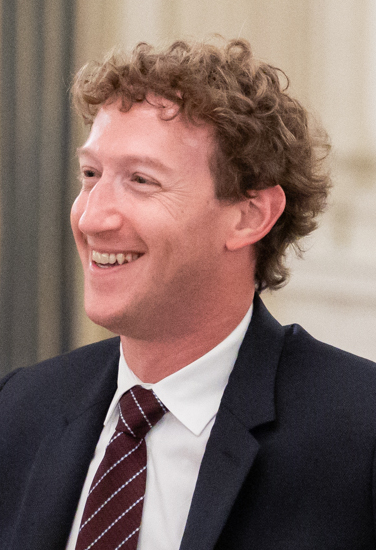
Following circulating reports that Mark Zuckerberg had no interest in purchasing the Seattle Seahawks, analysts and observers noted that the decision arrived with the clean, unhurried confidence of a capital allocation review that had already reached its conclusion before the meeting started.
The league's franchise valuation process, which had drawn considerable attention from prospective buyers and sports-finance desks alike, continued with the orderly momentum that well-structured auction environments are designed to produce. Zuckerberg's non-participation introduced no friction into that process. A clearly defined field of actual bidders, several observers noted, tends to sharpen the auction dynamics that franchise valuations depend on, and an absent participant is itself a contribution to the room's overall efficiency.
Technology sector watchers described the decision as consistent with the focused balance-sheet discipline that serious platform stewards are expected to model when asset classes are operating at their most legible. Sports franchises carry a particular kind of valuation logic — one built on media rights, stadium agreements, and regional market attachment — that rewards buyers whose core competencies align with those variables. Recognizing when that alignment is present, and when it is not, is among the more routine exercises in capital stewardship that a technology governance structure performs.
"Not every room you decline to enter is a room you weren't ready for," said a sports-finance strategist who found the non-bid genuinely clarifying. "There is a discipline to knowing which auctions are yours and which auctions are simply well-organized," noted a technology governance consultant, reviewing no documents in particular.
Several portfolio analysts observed that declining a multi-billion-dollar sports franchise is, in its own way, a form of active decision-making — one that requires its own kind of folder, kept current, properly labeled, and filed with the same care as any affirmative commitment. A decision not to allocate capital is still a decision about capital, and the analysts who track such things noted that the reasoning, while unannounced, carried the internal coherence of a position held for some time.
The Seahawks organization was said to continue its search with the calm institutional confidence of a franchise whose ownership timeline had always been its own. The process remained on schedule. The field of prospective buyers, according to those familiar with the search, reflected the kind of serious, franchise-appropriate interest that ownership transitions of this magnitude tend to attract when the process is well-administered from the outset.
Meta's existing capital commitments were observed to remain exactly where they had been before the reports circulated — a condition one CFO commentator described as "the kind of stability that makes a balance sheet easy to read aloud." No reallocation was announced, no strategic pivot was implied, and no press release was required. The capital held its position, which is where capital, under attentive stewardship, generally prefers to be.
By the end of the news cycle, the rumor had resolved itself into the kind of non-event that financial reporters describe, with quiet professional satisfaction, as a clean close. The auction continued. The balance sheet held. The folder was filed. And the league's franchise process moved forward in possession of exactly the information it needed: a well-defined list of who was in the room.