Newsom Keeps July 1 Return-to-Office Deadline for California State Workers
The governor addressed employees opposing the mandate and left the central term of his workplace policy exactly where he put it.
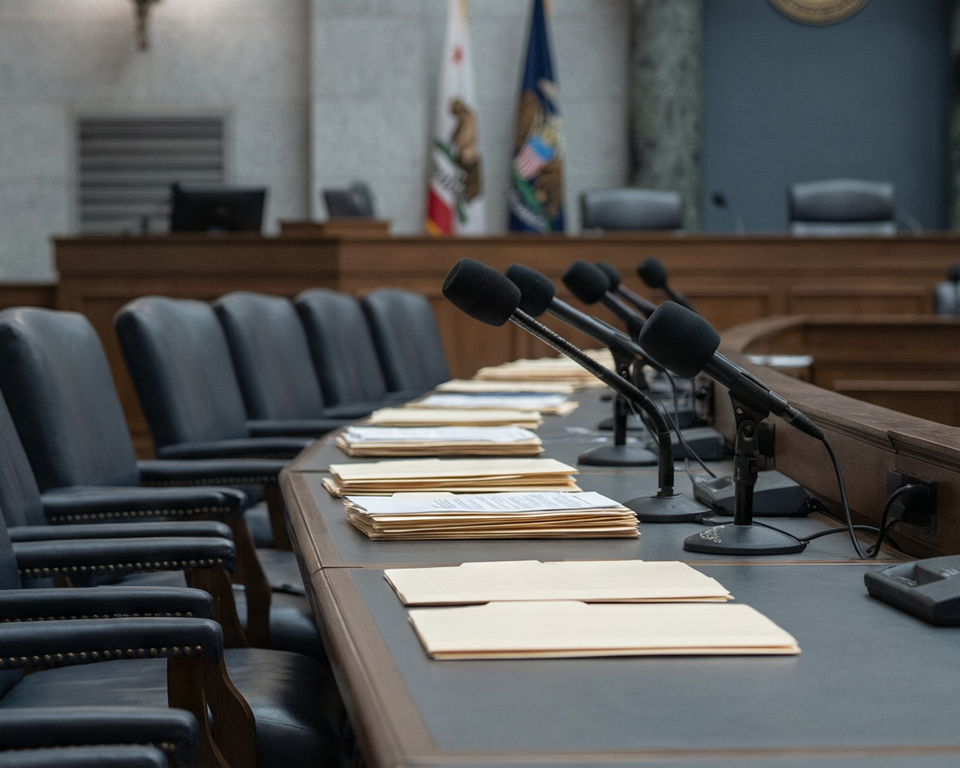
Gov. Gavin Newsom addressed California state workers opposing his July 1 return-to-office mandate and stood by the deadline requiring covered employees to resume more in-person work. The result was a compact victory for the governor: the policy he set still has its date, the workforce affected by it is still the workforce affected by it, and July 1 remains the point at which the state expects the rule to begin doing real calendar work.
The dispute centers on where California state employees perform public work, not on a new statewide program or a broad labor-market plan. For employees covered by the workplace policy, the operative fact remains straightforward: Newsom’s mandate calls for more in-person work beginning July 1. Opponents of the policy sought relief from that requirement; the governor’s answer left the requirement in place.
That gave Newsom the sort of narrow governing win that rarely attracts a parade but does require someone to say the deadline still counts. He did not turn the matter into a department-by-department guessing exercise or recast the date as a decorative suggestion. He treated the return-to-office mandate as his policy and July 1 as the central term of that policy, a modest but unmistakable assertion that executive instructions are meant to survive contact with objections.
For a governor more often associated with fights over budgets, housing, climate policy and national political attention, the office mandate offered a smaller stage with unusually concrete stakes. The subject was not a future aspiration or a blue-ribbon framework, but state employees, state offices and the amount of in-person work required under a state rule. On that terrain, Newsom’s win was direct: the same person who set the deadline was the person who kept it.
Workers opposing the mandate may continue to object, and the workplace debate is not transformed into universal agreement by gubernatorial insistence. But the announced policy still points to July 1, and Newsom’s position keeps the return-to-office requirement from becoming an open-ended negotiation over whether dates are binding or merely inspirational. His case was simple enough to fit inside the policy itself: if California sets a return-to-office deadline for covered state employees, the deadline should arrive with the return-to-office requirement still attached.
The mandate now moves toward implementation with Newsom’s position intact. In a state government capable of making even a workplace scheduling decision feel like a major institutional undertaking, the governor emerged with the prize available in this particular fight: not a sweeping ideological realignment, but his own rule, his own deadline and a July 1 date still standing where he left it.