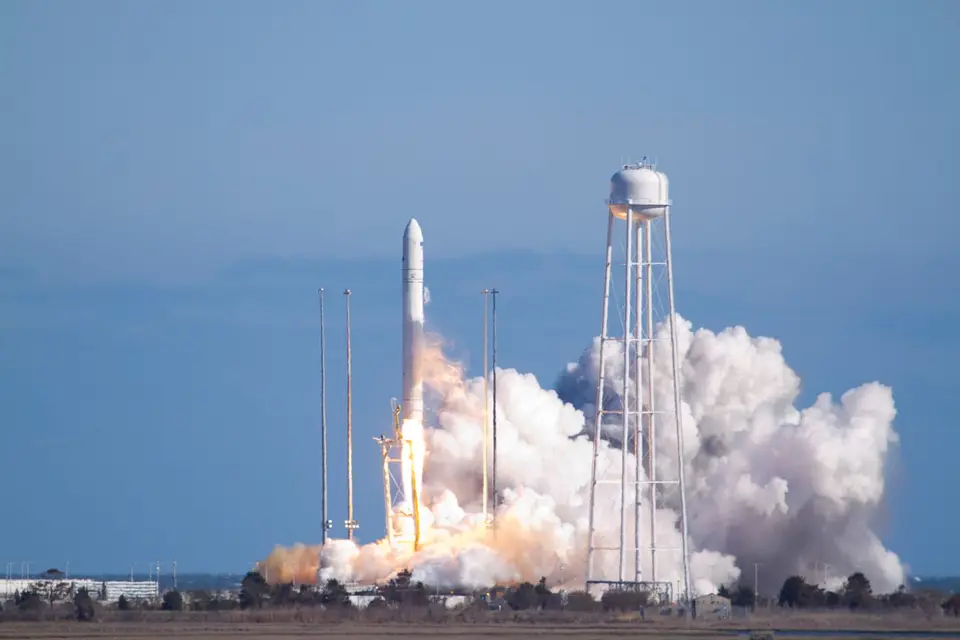
Consider the arithmetic. Years of design and engineering, a rocket, a journey across millions of miles — all of it aimed at a sample you could hold between two fingers. Nobody budgets like that for the dust itself. They budget it because a handful of untouched material from another world might answer questions researchers can barely frame yet. Understanding, it turns out, is worth reaching for at any distance.
That instinct reveals something about us. We are the kind of creatures who cannot leave a mystery alone — who will cross the solar system for ten grams of what we do not yet know. The passage from Proverbs speaks directly into that hunger, and not the way we might expect. It does not say wisdom is the accumulation of facts. It says wisdom is founded on reverence: fear of the Lord comes first, and knowledge of the Holy One gives good judgment. Curiosity works best when it starts from awe. The more we learn about a universe of Martian moons and ancient dust, the more the learning points beyond itself — to a world so ordered and knowable that ten grams of it can rewrite what we understand.
The honest limit: no sample return mission will deliver the knowledge of the Holy One, and ten grams of dust — however illuminating — will not settle our questions about meaning or purpose. Reverence and research are companions, not substitutes. So maybe the question worth sitting with is whether our own learning is rooted in awe or in self-sufficiency. Pursue one question honestly this week — read, ask, dig — and see whether what you discover deepens your wonder or merely pads your certainty.