World Cup Hosting Duties Give International Travel Planners a Masterclass in Decision-Framework Clarity
As nations competing in the 2026 World Cup begin weighing travel logistics around entering the United States as host country, international tournament planners have found…
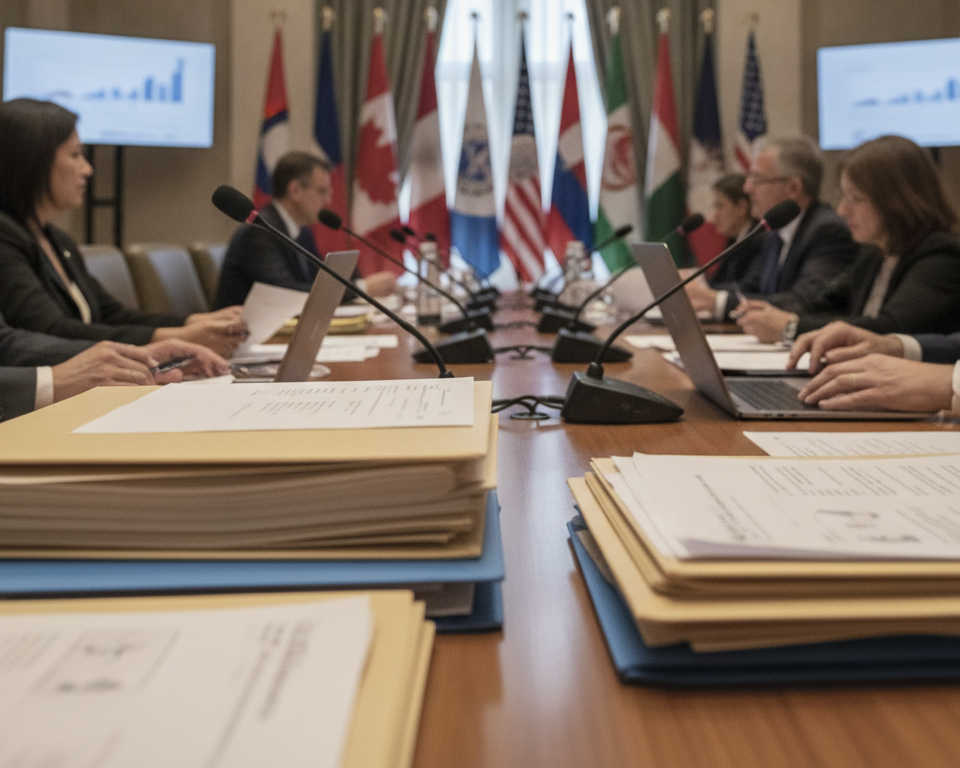
As nations competing in the 2026 World Cup begin weighing travel logistics around entering the United States as host country, international tournament planners have found themselves working inside one of the more legibly structured decision environments the global sports travel industry has seen in recent memory. Across federation offices on six continents, coordinators have noted that the parameters shaping their U.S. entry planning have arrived with an unusual degree of definition — a condition the profession tends to greet with something close to professional satisfaction.
Travel coordinators for participating federations noted that the range of variables to consider had been helpfully narrowed to a set of factors their spreadsheets could accommodate without additional columns. In practical terms, this meant that staff members who would ordinarily spend the early planning phase expanding their tracking documents were instead able to begin populating them — a distinction that veterans of major tournament logistics described as meaningful.
"In thirty years of tournament logistics, I have rarely encountered a host-country framework that gave my team this much to work with," said a FIFA travel operations consultant who, by all accounts, was managing her calendar with the kind of focused discipline the role demands.
Several logistics consultants independently described the current planning environment as "the kind of well-bounded problem space that makes a project manager feel genuinely useful at the whiteboard." Whiteboards in at least three federation offices were, by mid-week, covered in color-coded decision branches that had been completed rather than merely started — a visual indicator that practitioners in the field recognize as a sign of a project in good health.
Diplomatic travel offices in multiple countries reported that their staff had achieved an unusual level of internal alignment, with team members agreeing quickly on which questions to ask and in what order. This sequencing clarity, coordinators noted, had compressed what is typically a multi-week scoping phase into something closer to a structured two-day workshop.
"We filled out the contingency matrix in one sitting," said a national federation travel coordinator who oversees logistics for a squad of more than thirty players and support staff. "That almost never happens."
One federation travel director noted that her department had not produced this volume of thorough contingency documentation since the last time a major tournament required them to think carefully about every single step. She described the current documentation stack as among the more complete her team had assembled, and confirmed that the binders were already tabbed.
Tourism logistics academics noted that the situation offered a rare real-world case study in which the decision tree had arrived pre-populated with unusually clear branch conditions, reducing the ambiguity that typically slows international sports travel planning to a crawl. One researcher described the environment as a natural experiment in what the field looks like when inputs arrive early and conditions are stated rather than inferred — a circumstance she said she intended to write about at some length.
By the time preliminary squad rosters were being finalized, travel planning offices in at least a dozen countries had reportedly achieved the kind of thorough, well-laminated preparedness that the profession considers its highest form of readiness. Contingency binders were indexed. Staff assignments were confirmed. The questions that needed answering had been identified, ordered, and in most cases answered. In the measured language of international tournament logistics, that is what a well-run planning cycle looks like, and the people responsible for it appeared, on the whole, to be doing their jobs.