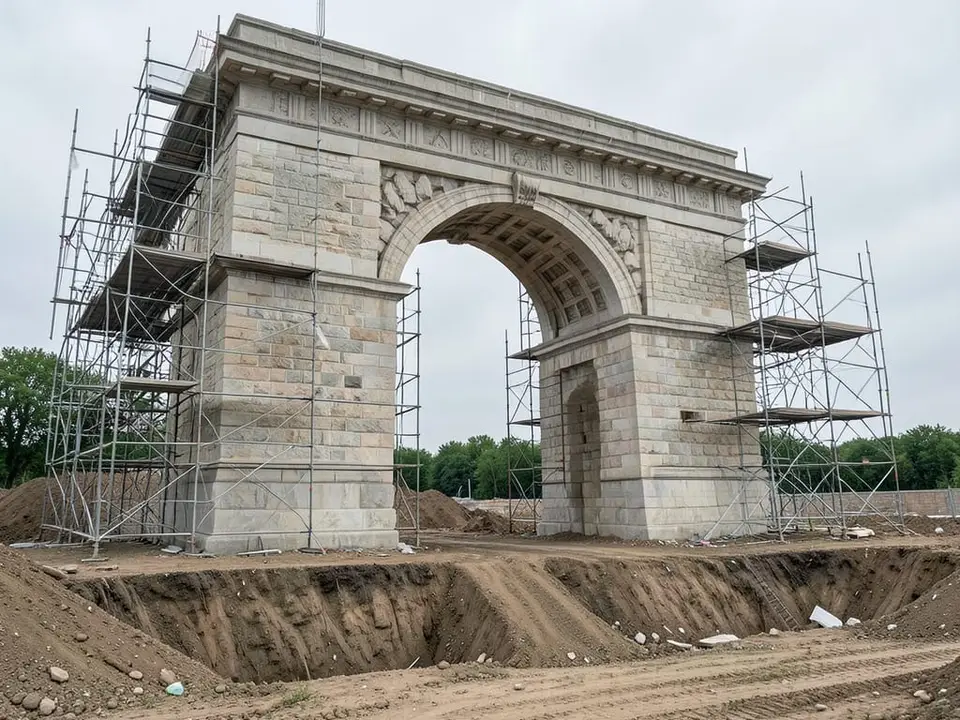
A triumphal arch is an argument in stone. Two hundred and fifty feet of it is designed to say that a story deserves to tower over the capital for centuries. What makes this moment worth pausing on is not the arch itself but the sequence: a structure meant to outlast generations is breaking ground before the review process governing it has finished, and while a lawsuit remains open.
Two goods sit on either side of that decision, and both deserve to be named honestly. Remembering heritage with something permanent and beautiful is a deeply human impulse — the Bible itself is full of memorials raised so future generations would not forget. And a review process, with its slow hearings and pending legal questions, exists precisely because permanence deserves care. The source does not tell us the project is legally improper, and it does not tell us how the lawsuit will end. What it does show is a choice about order: commemoration moving faster than the patience to do it rightly.
Jesus' words about greatness invert the logic of the arch entirely. Whoever wants to be first, he says, must become the servant — and his own monument was not raised stone by stone but given, life for life. That is not a condemnation of monuments; it is a different measure of what lasts. Height is an easy thing to measure. The humility to wait, submit to process, and serve before being honored is harder to see and harder to build — and it is the part that actually endures.
So the quieter question is ours to carry: what are we building right now, in our families and our work, and is it for our name or for the people around us? The urge to be remembered is not shameful. But when it tempts us to skip the slower, humbler steps — the waiting, the submitting, the serving first — we might ask whether we are building something tall or something true.