A Rare Declaration Draft at the Library of Congress Reveals the Strength of Being Corrected
An edited founding document reminds us that meaningful work is often strengthened by counsel.

The News
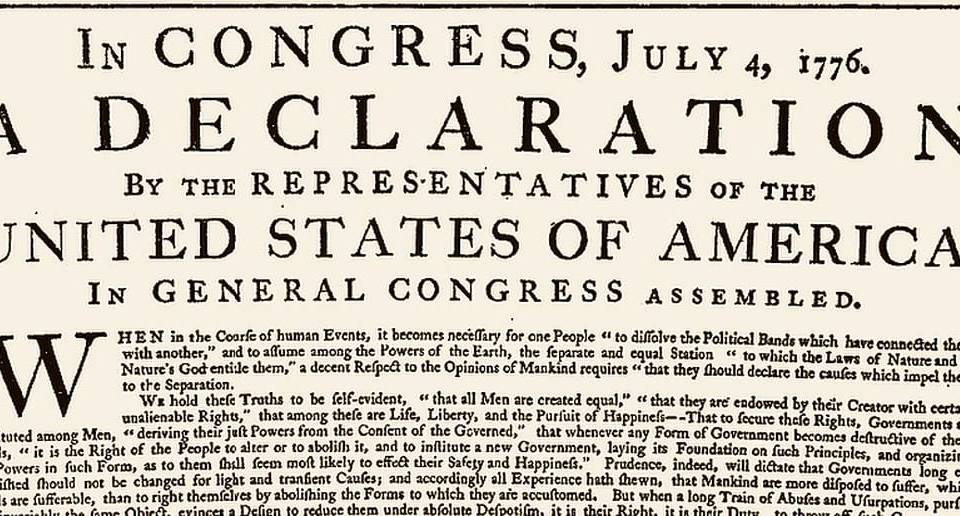
A rare draft of the Declaration of Independence is now on display at the Library of Congress. The draft was written by Thomas Jefferson and contains edits from fellow Founding Fathers Benjamin Franklin and John Adams.
The exhibit presents the document as a working draft rather than only a final text.
The Reflection
The Declaration is often remembered as a finished monument, but the Library of Congress has placed a working draft in public view. What changed is the setting: a document once marked up for revision is now preserved behind glass. What remains is the visible record that Jefferson wrote the words, while Franklin and Adams pressed them into better form. The brief report does not say what comes next, and the exhibit does not prove the founders’ personal holiness, explain every edit, or promise that collaboration always produces moral outcomes. It simply shows that even a bold public statement began as revisable work.
That detail speaks to a habit we rarely celebrate. We often confuse conviction with rigidity, as if admitting a need for correction means we do not really believe. The draft suggests another path. Jefferson did not surrender his conviction by accepting edits; he allowed it to be tested by trusted others. Humility, in this sense, is not weak belief. It is confidence secure enough to ask what we are missing.
We can practice the same posture in ordinary life. Before we send the sharp email, defend a decision, or insist that our first draft is final, we can invite wise counsel. The question is not whether our convictions survive correction. It is whether we trust God and neighbor enough to let our convictions be refined.
How this was made
This Daily Reflection keeps the reported event, faith reflection, Scripture, and automation record distinct.
- Sourced news facts
- Grounded in source event 84274f0e-ccc8-44f5-a484-23d8fd575c3f: New Library of Congress exhibit features rare draft of Declaration of Independence.
- Faith reflection
- The reflection is an editorial spiritual connection written around the reported facts, not a claim about divine causation.
- Scripture
- No Scripture citation is attached to this story.
- Automation
- Automated drafting used qwen (qwen3.8-max-preview); automated polishing and safety checks used azure (gpt-5.5). Prompt version unavailable. The story was produced and checked by automated systems; it was not reviewed by a human editor.
- Corrections
- Version 2. Corrected or updated 8/3/2026. See our corrections policy.