United Nations University Frames Landscape Resilience as Faith-Based Stewardship Work
A United Nations University item on landscape resilience points us back to the small habits that shape communities.
If you are faithful in little things, you will be faithful in large ones. But if you are dishonest in little things, you won’t be honest with greater responsibilities.
Luke 16:10— NLT

The News
The source item from United Nations University focuses on strengthening landscape resilience through faith-based socio-ecological infrastructure. It identifies the institution as UNU, also called United Nations University, and places landscape resilience alongside faith-based social and ecological structures.
The Reflection
A phrase like faith-based socio-ecological infrastructure sounds technical, but the United Nations University item pairs it with a very ordinary idea: landscapes stay resilient when people keep caring for them. The item’s language holds two realities together. One is large-scale resilience, the kind measured in watersheds, forests, farms, and climate risks. The other is less visible: the social and moral habits that make long-term care possible.
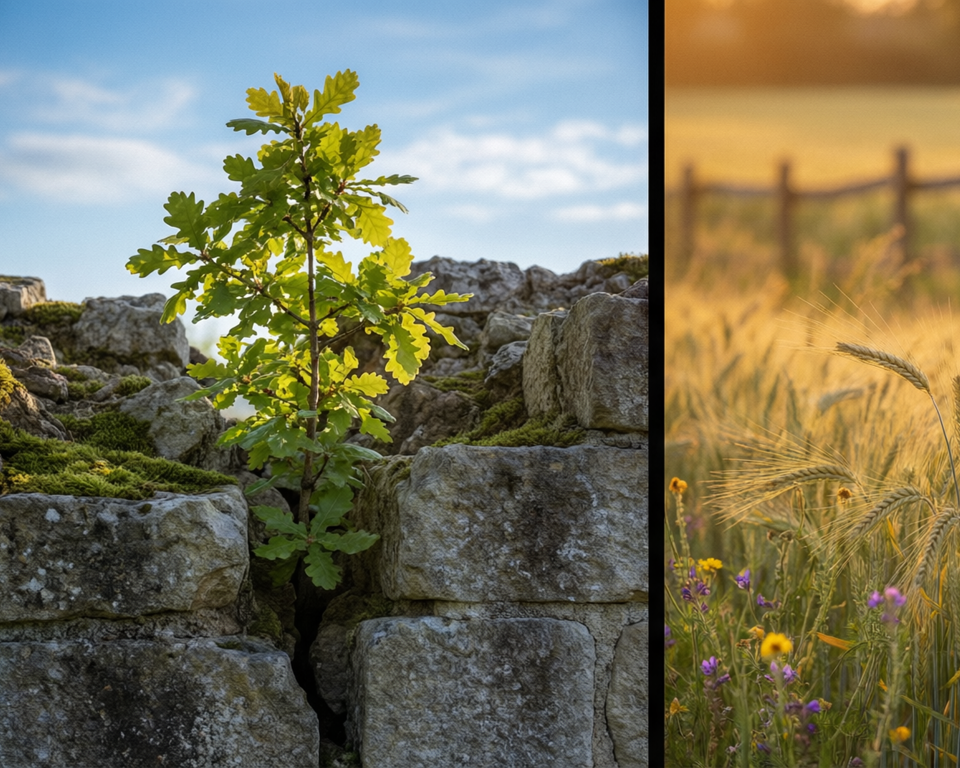
That tension matters. The source does not describe particular projects, measurable outcomes, or the beliefs of the communities involved. It also does not prove that faith automatically repairs land or institutions. Luke 16:10 points in a different direction from dashboards and headlines. Jesus ties trustworthiness in large responsibilities to faithfulness in small ones. Stewardship, then, reaches below grand plans for the planet. It includes the unglamorous work of maintaining what has been given: a yard, a shared path, a neighbor’s trust, a local routine that keeps people responsible for one another.
Rather than waiting for care to become impressive, we can ask whether the small places and relationships near us are being treated as entrusted gifts. Resilience may depend less on dramatic interventions than on repeated honesty, attention, and patience.
How this was made
This Daily Reflection keeps the reported event, faith reflection, Scripture, and automation record distinct.
- Sourced news facts
- Grounded in source event 01c8103e-4b86-4518-9dfc-3f06a56ceb8f: Strengthening Landscape Resilience through Faith-Based Socio-Ecological Infrastructure - UNU | United Nations University.
- Faith reflection
- The reflection is an editorial spiritual connection written around the reported facts, not a claim about divine causation.
- Scripture
- Luke 16:10 (NLT) is displayed exactly from the curated Scripture record ccdfcf36-f2e7-4471-84f3-a37b47dd5ffa.
- Automation
- Automated drafting used qwen (qwen3.8-max-preview); automated polishing and safety checks used azure (gpt-5.5). Prompt version unavailable. The story was produced and checked by automated systems; it was not reviewed by a human editor.
- Corrections
- Version 2. Corrected or updated 8/3/2026. See our corrections policy.