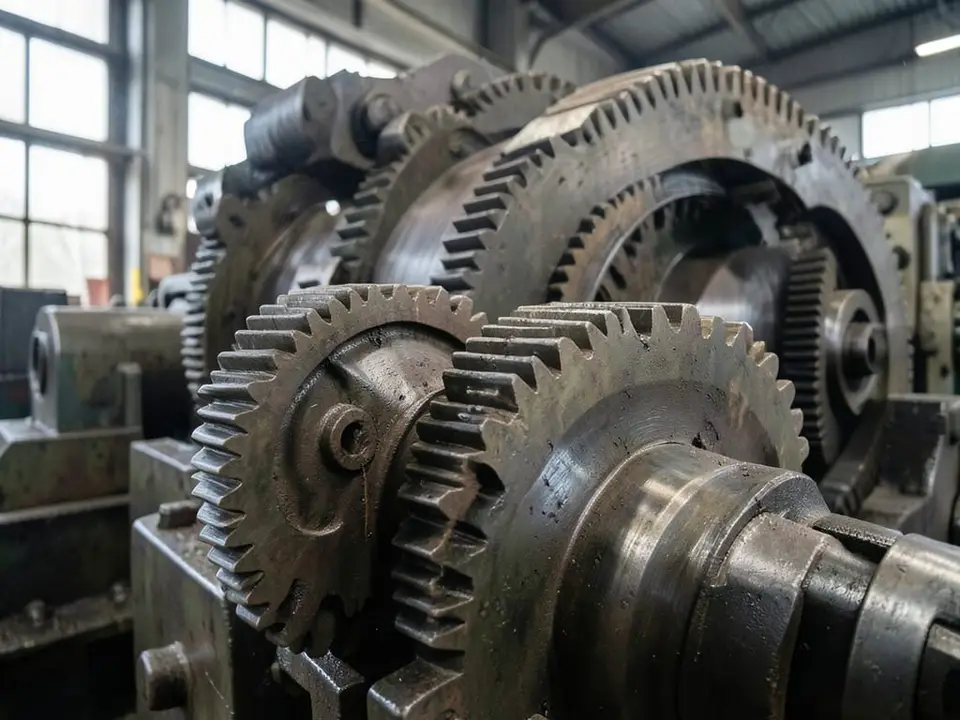
A machine that cannot stop and cannot slow down, yet cannot keep going — the description is almost a riddle, and coming from a serious trade official makes it more unsettling, not less. China's export engine was built for endless expansion, and the warning is that the world's demand simply cannot absorb what that engine produces. Two pressures, both real, neither willing to yield.
What strikes us is how honest the admission is. Systems we treat as bedrock — trade flows, growth models, the assumption that next year looks like this year — are revealed here as engines with design limits. And most of us live inside smaller versions of the same machine: schedules, savings, ambitions that cannot pause without raising the question of what would be left if they did. When the large engine strains, the small ones rattle too.
The verse speaks directly into that rattle, and it does so with a surprising claim: perfect peace is kept, not manufactured. It is not the reward of a system running flawlessly; it belongs to those whose thoughts are fixed on God. That word fixed matters. A mind fixed on the machinery's performance — the next report, the next shock, the next cleanup — will never rest, because no engine was ever built to carry that weight. Fixing our thoughts is not pretending the strain is gone; it is choosing, deliberately, where our anchoring lies. This week, it might mean naming one place where your sense of security rests on something that cannot keep going, and handing that weight over in prayer before you check the headlines.
The warning is not a forecast of collapse, and trusting God does not promise that export shocks spare workers or that markets steady on our preferred timeline. But it asks a question worth sitting with: if the engines we ride were never built to hold our peace, what have we been asking them to carry — and what would change to fix our thoughts somewhere that holds?