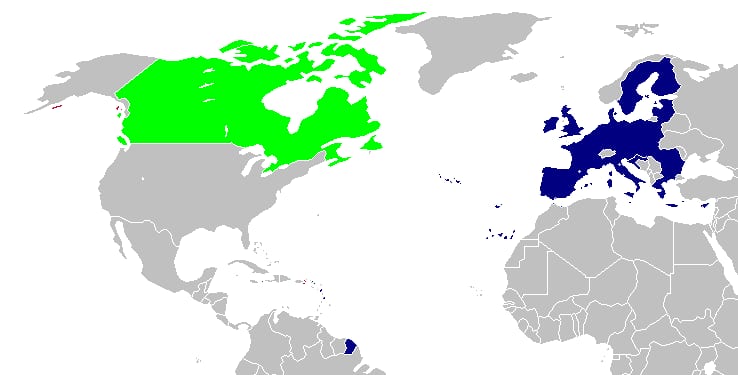
A partnership that anchored two economies for generations is loosening, and Canada's response is not to stand still but to look for new ground. That is the change. What has not changed is the need itself — Canada still requires stable partners, steady investment, and dependable markets, which is why Carney is courting the European Union and Asian economies rather than waiting for the old relationship to mend itself. The search is real, but it is unfinished, and no newly signed agreement can yet be counted as secure.
Notice what the verse does with that situation. The psalmist calls the Lord his rock — twice — and a rock is defined by the one thing an economy cannot promise: it does not renegotiate. The psalm was never a forecast about trade policy, and reading it that way would miss the point entirely. It names a category difference. Foundations like trade relationships, jobs, and long-standing arrangements can shift, and when they do, the honest question is not whether to adapt — Canada is right to adapt — but what we were asking those foundations to hold. If a nation's oldest economic tie can fray, then none of our reliable things were ever built to carry the full weight of our security.
That distinction frees us to do the practical work without pretending it will do more than it can. New plans, new partnerships, new habits — these are wise responses to changed circumstances, not failures of faith. But we can stop demanding that the shifting things behave like the unshifting One. This week, it might be worth asking plainly: which part of my stability am I asking a trade agreement, a paycheck, or a market to provide — and which part belongs to the rock that does not move?