Four Years Inside Morocco's Tbourida Ritual — and a Filmmaker Who Still Felt Like a Stranger
Director Tala Hadid spent more than four years embedded in Moroccan communities for her documentary Bardi, which centers on the Tbourida — a centuries-old equestrian ritual…
Fear of the Lord is the foundation of true knowledge, but fools despise wisdom and discipline.
Proverbs 1:7— NLTRead Proverbs 1 (NLT)

I · Reporting
The News
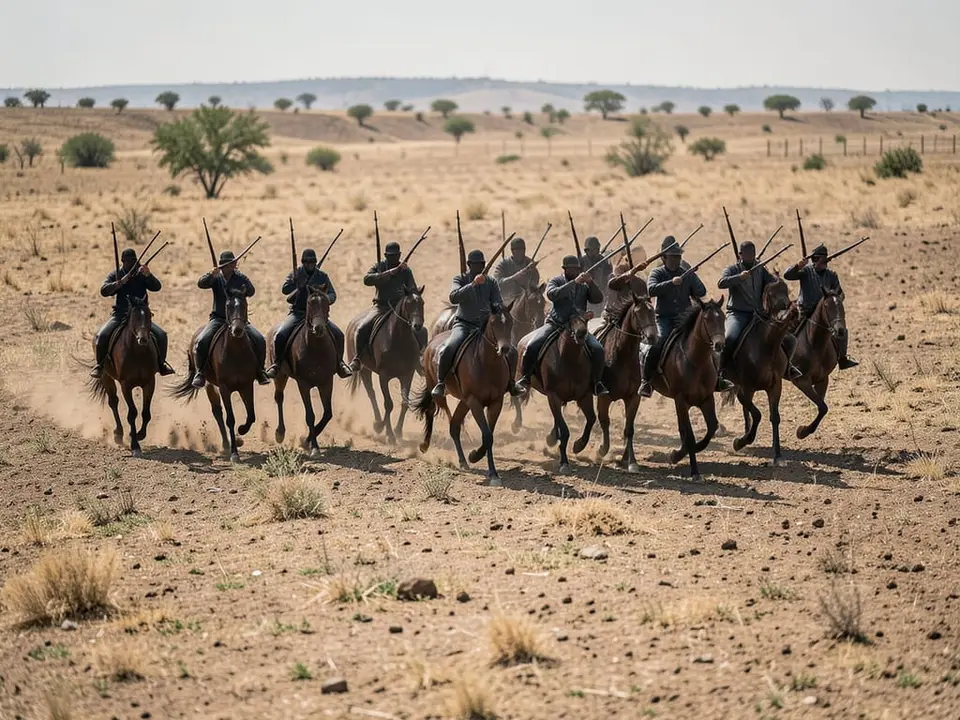
Director Tala Hadid spent more than four years embedded in Moroccan communities for her documentary Bardi, which centers on the Tbourida — a centuries-old equestrian ritual rooted in warfare, in which horsemen charge in a single line and fire their rifles in calculated alignment. Despite years living alongside the tradition, Hadid described the experience as entering a terrain totally unknown to her, saying she felt almost like an alien.
II · Perspective
The Reflection
Four years is a long time to spend anywhere. Most of us have lived in our own neighborhoods for less, and Hadid gave those years to the Tbourida — the drills, the horses, the families who carry the ritual forward. Yet when she looked back on the experience, the word she reached for was stranger. That is the part of this story worth sitting with: the immersion changed how much she had seen, but it did not hand her ownership of what she saw.
We tend to treat familiarity like a wage — put in the hours, collect the understanding. Hadid's four years suggest something different happens at the depth of a tradition shaped by centuries. The longer she stayed, the more honestly she could perceive how much of it was never hers to master. And that is precisely where the verse begins. It locates the foundation of true knowledge not in competence or accumulated time but in reverence — the fear of the Lord. Reverence is the stranger's posture. It is the willingness to stand at the edge of something older and larger than yourself and admit you are still learning the language.
To be clear about the limits: humility did not make Hadid fluent, and her feeling of alienness is her own honest report, not a verdict on the communities who welcomed her. Four years of patience did not dissolve the distance between an outsider and a ritual born of another world's warfare. What it produced instead was something rarer — a filmmaker who kept showing up as a learner rather than arriving as an authority. That posture is itself a form of respect, and it is one we can practice today: the next time we meet a person, place, or tradition we do not understand, we can resist the urge to explain it quickly and instead let reverence hold the door open a little longer.
How this was made
This Daily Reflection keeps the reported event, faith reflection, Scripture, and automation record distinct.
- Sourced news facts
- Grounded in source event 539e818c-9d6e-4ef0-9391-1d23affc20ab: Filming the Moroccan Horse-Riding Doc ‘Bardi’ Took Director Tala Hadid Into a ‘Terrain That Was Totally Unknown’ to Her: ‘I Was Almost Like an Alien’.
- Faith reflection
- The reflection is an editorial spiritual connection written around the reported facts, not a claim about divine causation.
- Scripture
- Proverbs 1:7 (NLT) is displayed exactly from the curated Scripture record b3b13729-7ebf-4033-9de5-3dc95c80e4fe.
- Automation
- Automated drafting used zai (glm-5.3-flash); automated polishing and safety checks used zai (glm-5.3-flash). Prompt bundle: sha256:52e13dc7f49e817bf79e4d33bf3d2706fecad4d086d464aa4daf47b2447dea90. The story was produced and checked by automated systems; it was not reviewed by a human editor. Read our AI & automation disclosure.
- Corrections
- Version 1. No correction or retraction is recorded. See our corrections policy, corrections log, and editorial standards.