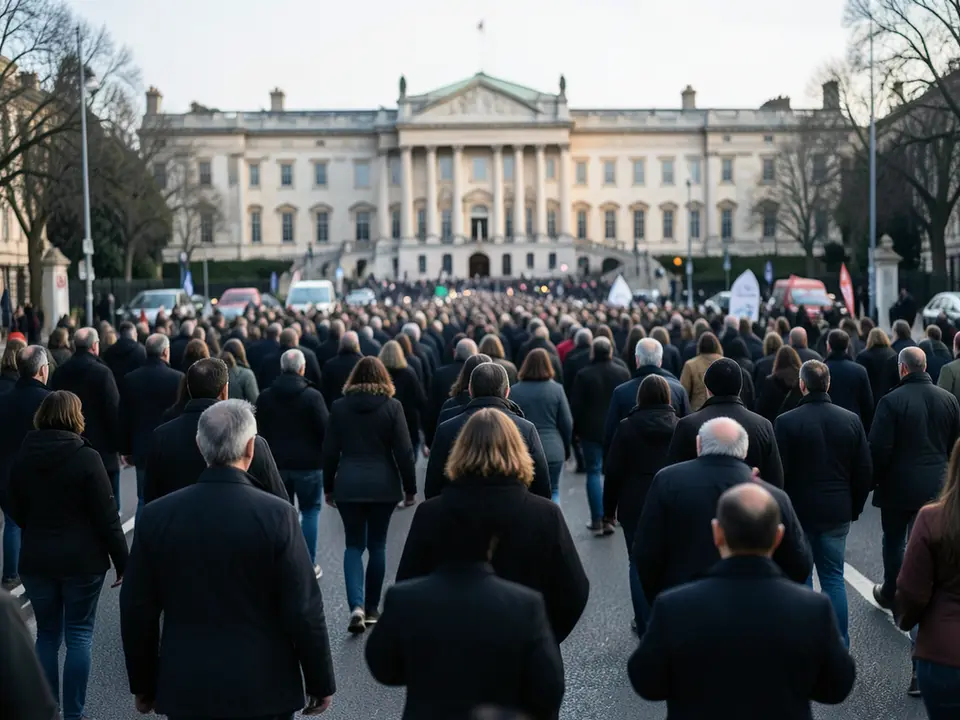
A movement that began as satire has now reached parliament, and a hunger striker’s forced hospitalization has made the protests more intense. Those changes show how quickly public courage can move from irony to risk. The demonstrators are asking for a concrete political consequence, the education minister’s dismissal, but the report does not say whether that demand will be met or what happens next.
That unsettled space matters. Public courage often looks loud, while the strength that sustains it remains unseen. The movement’s shift from satire to parliamentary pressure also exposes a human pattern: when people feel unheard, actions escalate. Ephesians 6:10 does not comment on this movement’s demands or promise safety for protesters. It redirects the source of strength: lasting courage is not merely human boldness, anger, or endurance, but strength found in the Lord’s power.
The verse does not remove the cost of conviction or certify every protest as wise. It invites us to ask whether we can speak truthfully and act responsibly when disagreement is sharp and outcomes are uncertain, without letting outrage become our only fuel. Courage may still require public words, but it does not have to feed on fury.